

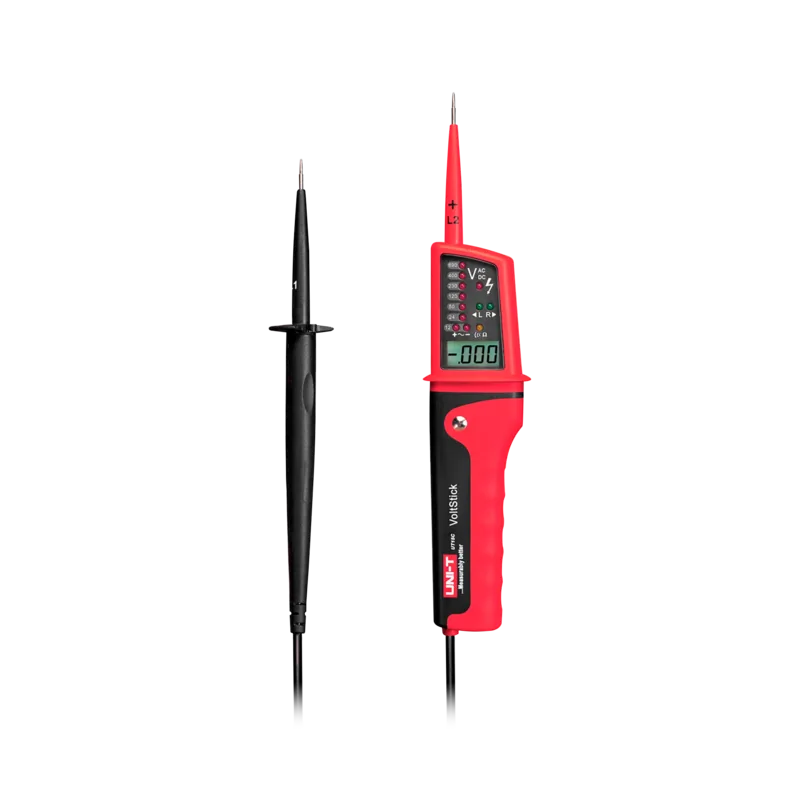
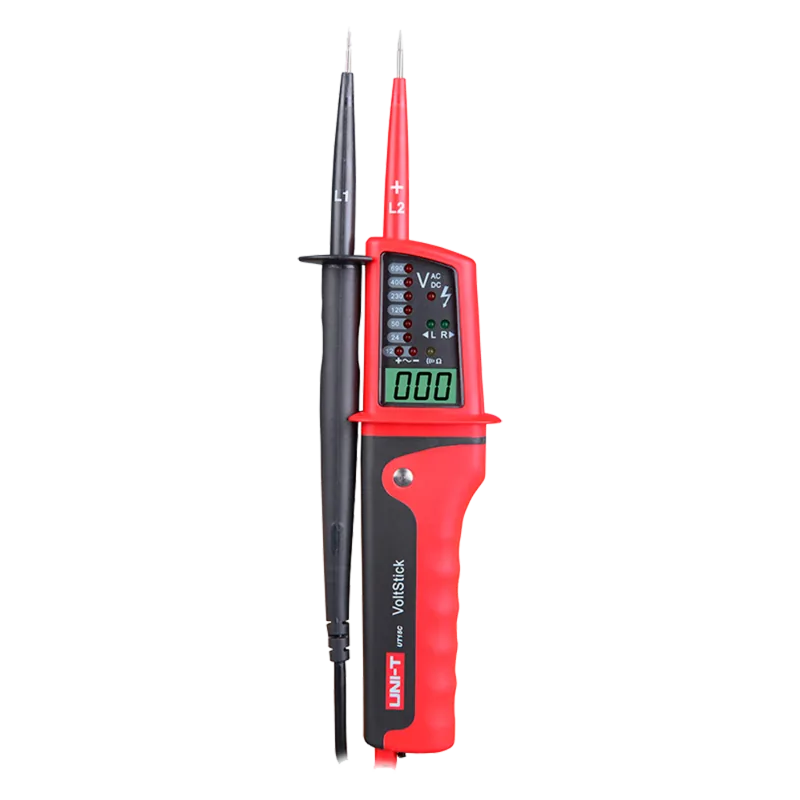
UNI-T UT15C Manual
PDF manual · 1 Pages
English


Quick check
Incorrect answer, please try again.
Chat with your UNI-T UT15C manual using AI
Get instant AI answers from your UNI-T UT15C manual
Ask anything about the UNI-T UT15C. Answers come from this manual, with the pages they are based on.
Ask a Question
Do you recommend UT15C?
Yes NoDo you recommend UT15C?
Yes NoFrequently Asked Questions
The CAT IV rating indicates the device is applicable for test and measuring circuits connected at the source of the building's low-voltage mains installation. It ensures safety during live working tasks where high transient overvoltage conditions might occur.
Is this answer helpful?
It is importance to check the state of the battery before use and to replace it if necessary. A valid battery is crucial for the detector signals to function correctly during electrical inspections.
Is this answer helpful?
No. The different indicating signals of the voltage detector are not to be used for measuring purposes. It is designed for detection and safety verification only, not for precise voltage measurement values.
Is this answer helpful?
Before using the voltage detector at locations with a high background noise level, it has to be determined whether the audible signal is perceptible. Users should verify they can hear the signal before relying on it.
Is this answer helpful?
The voltage detectors are designed to be used by skilled persons and in accordance with safe methods of work. Untrained individuals should not operate this equipment on live installations.
Is this answer helpful?
Yes. It conforms to UL STD 61010-1 and certified to CSA STD C22.2 NO.61010-1 and 61010-2-030. This ensures it meets the necessary regulatory requirements for North American electrical safety.
Is this answer helpful?
Yes. The voltages marked on the voltage detector are nominal voltages and the voltage detector is only to be used on installations with the specified nominal voltages. Using it outside these limits is restricted.
Is this answer helpful?
Advantages and Disadvantages
Advantages

- CAT IV rated for high safety margin in mains installation circuits
- Complies with multiple international EN and IEC safety standards
- Audible and visual signals suitable for live working scenarios
- Durable construction validated by UL and CSA certifications
Disadvantages

- Requires skilled operators to maintain electrical safety protocols
- Restricted usage to specific nominal voltage ranges only
- High background noise levels may mask audible warning signals
- Battery status must be verified before each individual use session
Product Description
Introduction to the UNI-T UT15C Voltage Tester
The UNI-T UT15C Voltage Tester represents a significant advancement in electrical safety equipment designed for professional use in modern industrial environments.
Safety and Standards Compliance
When working with complex electrical systems, safety remains paramount for all technicians to prevent accidental injury or equipment damage during operations. This device ensures professionals operate within safe limits while maintaining high efficiency during diagnostic tasks. It is specifically designed for skilled persons and adheres to strict guidelines found in the official UNI-T UT15C Voltage Tester Manual. This manual outlines the operational boundaries required for safe deployment and full compliance with local regulations.
Application in High Voltage Environments
The tool is suitable for live working tasks and is rated CAT IV. This specific classification means it applies to circuits connected at the source of the building low-voltage mains installation. This capability is vital for main distribution boards where high transient overvoltage conditions occur during grid fluctuations. Before any use, checking the battery state is absolutely crucial to ensure consistent functionality. If voltage levels are not nominal, usage is restricted to prevent dangerous accidents on site. The device provides distinct indicating signals to alert users effectively when contact is made. However, it should not be used for precision measuring purposes beyond basic detection capabilities as intended.
Noise and Environmental Considerations
Operators must verify audible signals in areas with high background noise levels to ensure they are audible by workers. Protection might be impaired if used outside manufacturer specifications provided in the detailed text documentation available. The standards comply with UL STD 61010-1 and CSA C22.2 regulations. These certifications validate the safety across different regions and ensure legal compliance. Proper maintenance ensures longevity and protection for the equipment over many years of heavy use. Always verify the nominal voltages marked on the detector match the installation voltage exactly. This ensures reliability during critical diagnostic sessions where mistakes could be very costly.
Conclusion on Operational Safety
Using this equipment requires strict adherence to safe methods of work defined by major regulatory bodies. By following these protocols, technicians can minimize risks during live testing procedures effectively without compromising safety. The comprehensive safety data serves as a vital reference for daily operations in industrial settings to ensure uniformity. Ensuring calibration and proper handling keeps the environment secure for all personnel involved in the installation process. Regular checks prevent unexpected failures during critical measurements and avoid downtime. The P/N code also serves as an identifier for warranty claims if the product requires service. Warranty claims are processed based on these specific codes to verify authenticity. This ensures the user receives genuine support services tailored to the model. Users should store the manual safely for future reference during maintenance checks. Keeping records of battery replacements helps track usage history and performance trends over time.
Search for 67,732 Manuals online


Type-in Brand or Model