
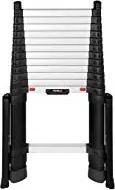
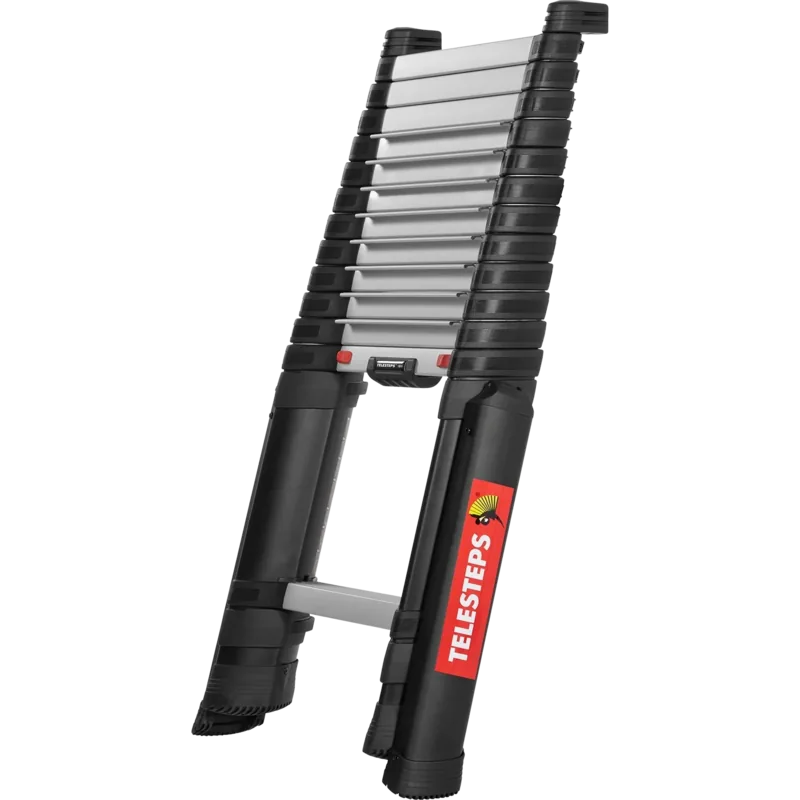
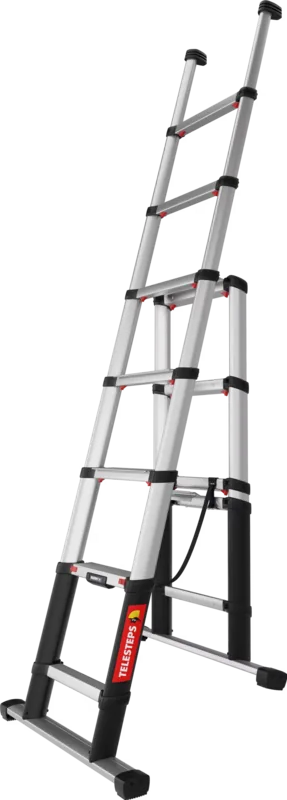
Telesteps Prime Line 4.1 m Manual
PDF manual · 110 Pages
English



Quick check
Incorrect answer, please try again.
Chat with your Telesteps Prime Line 4.1 m manual using AI
Get instant AI answers from your Telesteps Prime Line 4.1 m manual
Ask anything about the Telesteps Prime Line 4.1 m. Answers come from this manual, with the pages they are based on.
Prime Line 4.1 m Maintenance Schedule
Visually check stiles, tubes, fixings, rungs, feet, cleanliness, and locking catches for damage or wear before each working day.
Wipe away dirt, filings, paint spots, and glue after every use before closing. Use a rag with solvent and treat tubes with silicon spray.
Replace when the pattern starts getting worn or before red dots are visible underneath to ensure stability.
Replace when they start to wear to prevent dust and debris from entering the telescopic tubes.
Order a new one if the decal begins to wear and becomes difficult to read.
Ask a Question
Do you recommend Prime Line 4.1 m?
Yes NoFrequently Asked Questions
Place it upright on a firm, level surface and stabilize with a foot on the bottom rung. Start opening from the top section by pulling upward until the section locks. Continue section by section until fully extended, then verify all locking catches protrude completely and rungs are horizontal before climbing.
Is this answer helpful?
Yes. The manual allows partial extension for intermediate height needs. Choose the highest rung you will use, pull upward until the selected segment locks, and ensure any opened sections below are fully locked. Unused segments should remain packed at the top. Again, confirm all locking catches and keep the correct 75-degree angle.
Is this answer helpful?
The ladder is rated for a maximum load of 150 kg. Stay within this limit and do not exceed safe climbing rules, such as not stepping beyond the last safe meter and not using the ladder as a bridge.
Is this answer helpful?
Set the ladder at an inclination of 75 degrees relative to the ground. The rungs must be horizontal. The leaning ladder should rest on a flat, non-fragile surface and be secured before use to prevent slipping.
Is this answer helpful?
After each use, wipe away dirt, debris, paint spots, and glue residues, especially on the telescopic tubes and rungs. Clean with a rag and a small amount of solvent, then treat telescopic tubes with silicon spray and wipe dry. Keep the ladder dry so dust does not cling, and store it fully closed.
Is this answer helpful?
Do not use it if any pre-use check fails. Inspect for bent or damaged telescopic tubes, missing or loose fittings, damaged or missing rungs, worn or missing rubber feet or end caps, contaminated surfaces, and malfunctioning or corroded locking catches.
Is this answer helpful?
Advantages and Disadvantages
Advantages

- Telescopic design expands from compact size to full length or intermediate length for flexible jobs.
- Each extended section locks automatically, with clear checks for fully engaged locking catches.
- Stability-focused setup: recommended 75-degree angle and horizontal rungs on a firm surface.
- Includes safety-critical accessories like rubber feet and top end caps to support grip and protect tubes.
- Practical maintenance guidance: wipe clean after each use, silicon treatment for telescopic tubes, store fully closed.
Disadvantages

- Must always be properly locked and fully checked before climbing, or it is unsafe.
- Maximum load is limited to 150 kg, and use is intended for light, short-duration work.
- Not suitable for dirty work or water-filled wells, as contaminants can impair telescopic function.
- Closing requires careful handling to avoid hand pinching near rungs and locking buttons.
- Regular inspections and replacement of worn rubber feet and end caps are required for safe performance.
Product Specification
Type
Telescopic ladder
Material
Aluminium
Steps
13
Working height
max. 208.66in
Load capacity
max. 330.69lbs
Special features
Anti-slip feet
Weight
33.50lbs
Product Description
Telesteps Prime Line 4.1 m Telescopic Ladder (13 Steps) - Manual Overview
The Telesteps Prime Line 4.1 m Telescopic ladder 13 steps Manual is designed for tasks that need reliable reach without storing a full-size ladder. Thanks to its telescopic construction, the ladder expands smoothly from a compact, easy-to-handle format to a longer working length. For everyday home projects and many light professional jobs, this approach helps you position the ladder more conveniently while keeping the overall footprint smaller.
Built around safety and proper locking
A key feature emphasized throughout the manual is the ladder lock system. Each extended rung section has its own locking device, and the ladder must always be properly locked before you climb. Before ascending, check that all opened sections are secured, the locking catches fully protrude, and the rungs sit horizontal. The recommended setup angle is 75 degrees to the ground, with the ladder standing on a firm, level, non-fragile surface and secured against slipping.
Full vs intermediate extension
The ladder can be deployed to full length or to an intermediate length. Full extension follows a step-by-step procedure that begins from the top section, while intermediate extension allows you to choose a higher rung position and keep unused segments packed at the top. In both cases, the manual stresses the same verification routine: confirm every opened section is locked before use.
Maximum capacity and daily checks
The ladder is rated for a maximum load of 150 kg. Before each use, inspect stiles, telescopic tubes, fittings, rungs, locking catches, and the condition of rubber feet and end caps. These accessories are essential for stability and for preventing dust and debris from entering the telescopic tubes.
Care, cleaning, and storage
After use, wipe away dirt, paint spots, glue residues, and debris, especially from the telescopic tubes and rungs. The manual recommends cleaning with a rag and a small amount of solvent, then treating tubes with silicon spray and drying fully. For transport and storage, keep the ladder fully closed in its compact format and store it away from moisture, excessive heat, and conditions that can damage or contaminate it.
Key results
- Telescopic design expands from compact storage to full or intermediate working length for flexible access.
- Automatic locking per section requires a complete pre-climb verification to ensure all rungs are secured.
- Maximum load is 150 kg, with a 75-degree setup angle and horizontal rungs for stable use.
- Longevity depends on cleanliness, intact end caps, and rubber feet, plus careful transport and compact storage.
Notes
- Do not use the ladder if any inspection item fails.
- Avoid dirty or water-filled environments that can impair telescopic function.
- Take extra care during closing to reduce pinching risk near rungs.
Search for 67,732 Manuals online


Type-in Brand or Model