
Supermicro X11SBA-LN4F Manual
PDF manual · 100 Pages
English



Quick check
Incorrect answer, please try again.
Chat with your Supermicro X11SBA-LN4F manual using AI
Get instant AI answers from your Supermicro X11SBA-LN4F manual
Ask anything about the Supermicro X11SBA-LN4F. Answers come from this manual, with the pages they are based on.
Ask a Question
Do you recommend X11SBA-LN4F?
Yes NoFrequently Asked Questions
It is best for compact, low-power systems such as embedded devices, network appliances, light servers, and other professional use cases where efficiency and stability matter.
Is this answer helpful?
It supports up to 8 GB of DDR3L non-ECC SO-DIMM memory across two horizontal slots, with speeds up to 1600 MHz.
Is this answer helpful?
The board uses the Intel Pentium N3700 Braswell SoC, a quad-core, low-power processor designed for efficient everyday computing and embedded workloads.
Is this answer helpful?
Yes. It includes IPMI and BMC support, a dedicated LAN port for management, system health monitoring, and software tools for remote oversight.
Is this answer helpful?
It supports a standard 24-pin ATX power connector or a 4-pin 12V DC input for special embedded setups. Both should not be used at the same time.
Is this answer helpful?
Not really. It is designed for efficiency, compact size, and manageability rather than heavy multitasking, gaming, or workstation-level performance.
Is this answer helpful?
Advantages and Disadvantages
Advantages

- Low 6W TDP Braswell SoC delivers efficient operation for always-on systems.
- Built-in IPMI, BMC, watchdog, and health monitoring improve remote administration.
- Flexible I/O includes SATA 3.0, USB 3.0, serial headers, HDMI, DP, and VGA.
- Dual power options support both standard ATX and 12V DC embedded deployments.
Disadvantages

- Memory capacity is limited to 8 GB of DDR3L, which is modest by modern standards.
- Expansion is modest, with only one PCIe x1 slot and one mini-PCIe/mSATA connector.
- The board is intended for technicians, so installation and tuning may be less beginner-friendly.
Product Specification
Form factor
Mini-ITX
CPU
Intel Pentium N3700, 4C/4T, 1.60-2.40GHz, 2MB Cache, 6W TDP, Codename "Braswell" (Airmont, Intel 14nm)
Chipset
System-on-Chip (SoC)
RAM
2x DDR3 SO-DIMM, dual PC3L-12800S/DDR3L-1600, max. 8GB (UDIMM)
Expansion slots
1x PCIe 2.0 x8 (x1), 1x PCIe Mini Card (shared)
Internal connectors
2x USB 2.0 Header (480Mb/s, 4x USB 2.0), 1x USB-A 2.0 port (480Mb/s), 2x SATA 6Gb/s, 1x mSATA 6Gb/s (shared), 2x serial, 1x TPM-Header
Cooling headers
2x CPU fan 4-Pin
Lighting headers
N/A
Audio
7.1 (Realtek ALC888S)
Graphics
ASPEED AST2400 - Onboard
Wireless
N/A
RAID Level
N/A
Multi-GPU
N/A
Lighting
N/A
Special features
All solid capacitors, passively cooled, IPMI 2.0
USB notation
Link
Product Description
Supermicro Braswell Manual: Compact Server-Grade Value
The Supermicro Braswell Manual centers on a compact motherboard built for reliable, low-power computing in space-conscious systems. At its heart is the Intel Pentium N3700 Braswell SoC, a quad-core processor designed to balance performance and efficiency. With a 6W TDP, DDR3L memory support, and integrated Intel HD graphics, this platform is a practical fit for lightweight servers, embedded appliances, network security boxes, and cost-aware web hosting setups.
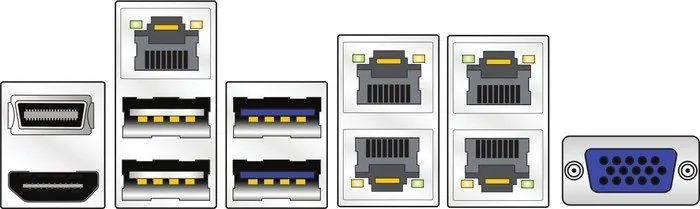
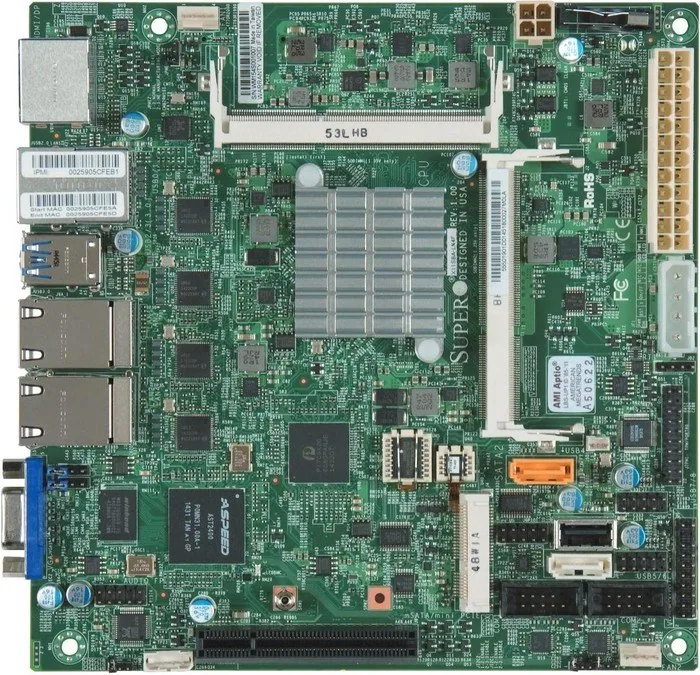
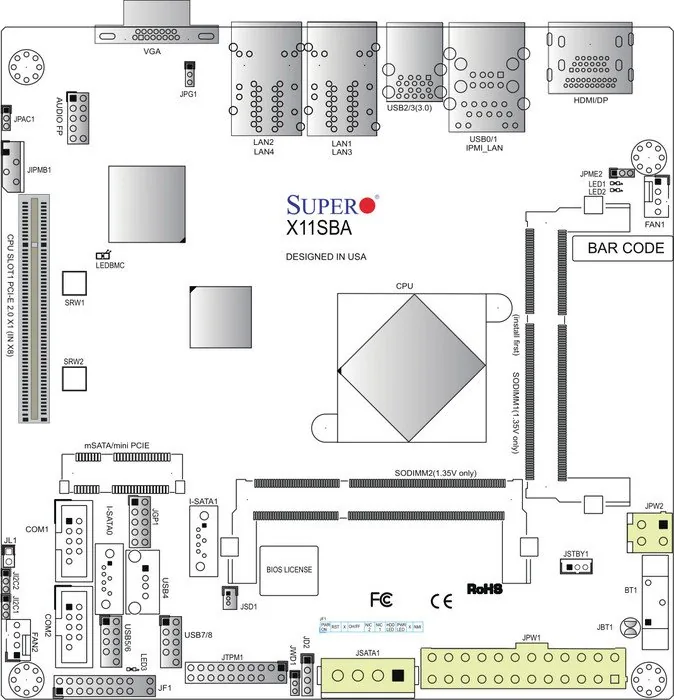
What makes this board appealing is its mix of utility and flexibility. It supports up to 8 GB of DDR3L memory across two SO-DIMM slots, offers SATA 3.0 storage connectivity, and includes expansion through PCIe and mini-PCIe/mSATA options. For builders who need dependable I/O in a small footprint, the rear panel and internal headers cover everyday needs such as USB, serial communication, HDMI, DisplayPort, and VGA. The board is especially attractive where efficient operation and stable uptime matter more than raw desktop-class power.
A major strength is the built-in management stack. The presence of BMC/IPMI support, health monitoring, fan control, watchdog functionality, and remote access options gives administrators better visibility and control. That makes the platform more than just a small motherboard—it becomes a manageable foundation for systems that may live in racks, kiosks, or embedded enclosures. The Supermicro Braswell Manual also emphasizes careful installation, jumper configuration, and BIOS tuning, helping users tailor the board to specific deployment needs.
Power flexibility is another highlight. The board can run from a standard 24-pin ATX supply or a 4-pin 12V DC input for embedded use cases, which broadens its deployment range. Combined with AC power loss recovery, ACPI support, and thermal safeguards, the platform is built to behave predictably in always-on environments.
Overall, this is a practical solution for integrators who want a compact motherboard with solid management features, low energy use, and broad connectivity. It is not aimed at high-end gaming or heavy workstation tasks, but it excels where dependable operation, easy servicing, and efficient design are the priorities.
Notes
- Best suited for embedded, networking, and light server roles.
- Professional installation is recommended.
- Check power limits carefully when using 12V DC input.
Search for 67,706 Manuals online


Type-in Brand or Model