
Supermicro Q370 Series Manual
PDF manual · 116 Pages
English



Quick check
Incorrect answer, please try again.
Chat with your Supermicro Q370 Series manual using AI
Get instant AI answers from your Supermicro Q370 Series manual
Ask anything about the Supermicro Q370 Series. Answers come from this manual, with the pages they are based on.
Ask a Question
Do you recommend Q370 Series?
Yes NoFrequently Asked Questions
It combines stable Intel Q370 chipset support with practical features like dual LAN, multiple storage options, TPM, and hardware monitoring. That makes it well suited for office, POS, and embedded deployments.
Is this answer helpful?
The board supports up to 64GB of DDR4 memory at speeds up to 2666MHz. The exact memory type depends on the model, with ECC support available on the -F version and non-ECC on the -Q version.
Is this answer helpful?
Yes. The board includes an M.2 M-key slot for PCI-E 3.0 x4 or SATA storage devices, which helps improve boot and application load times compared with older storage interfaces.
Is this answer helpful?
It includes dual Gigabit Ethernet ports for standard network connectivity. Some related Supermicro variants also add dedicated IPMI networking, but that is model-specific.
Is this answer helpful?
The broader family includes management-focused features, but remote management capabilities depend on the SKU. The -F model is the one associated with IPMI and BMC functions.
Is this answer helpful?
Confirm CPU compatibility, memory type, power connections, chassis fit, and cooling support. It is also important to follow ESD precautions and use the correct jumper settings.
Is this answer helpful?
Advantages and Disadvantages
Advantages

- Intel Q370 support with 8th Gen Core compatibility for reliable business performance.
- Up to 64GB DDR4 memory support with strong multitasking headroom.
- Useful I/O mix including M.2, SATA 3.0, USB 3.1, and dual Gigabit LAN.
- Built-in monitoring, TPM support, and fan control improve system reliability.
Disadvantages

- Not aimed at gaming or high-end enthusiast features.
- Installation and servicing are intended for professional technicians.
- Some advanced management features vary by SKU and may not be available on every model.
- Cooling and power planning must be handled carefully to avoid instability.
Product Specification
Socket
Intel 1151 v2
Chipset
Intel Q370
CPU Compatibility
Core i-9000, Core i-8000, Pentium Gold G5000, Celeron G4000
Header Lighting
N/A
Buttons/Switches
N/A
Graphics
iGPU
Wireless
N/A
RAID Level
0/1/5/10 (Q370)
Multi-GPU
N/A
Lighting
N/A
Special Features
All solid capacitors, TPM module, remote management with compatible CPU (Intel vPro)
USB Notation
Link
Product Description
Supermicro Q370 Motherboard Overview
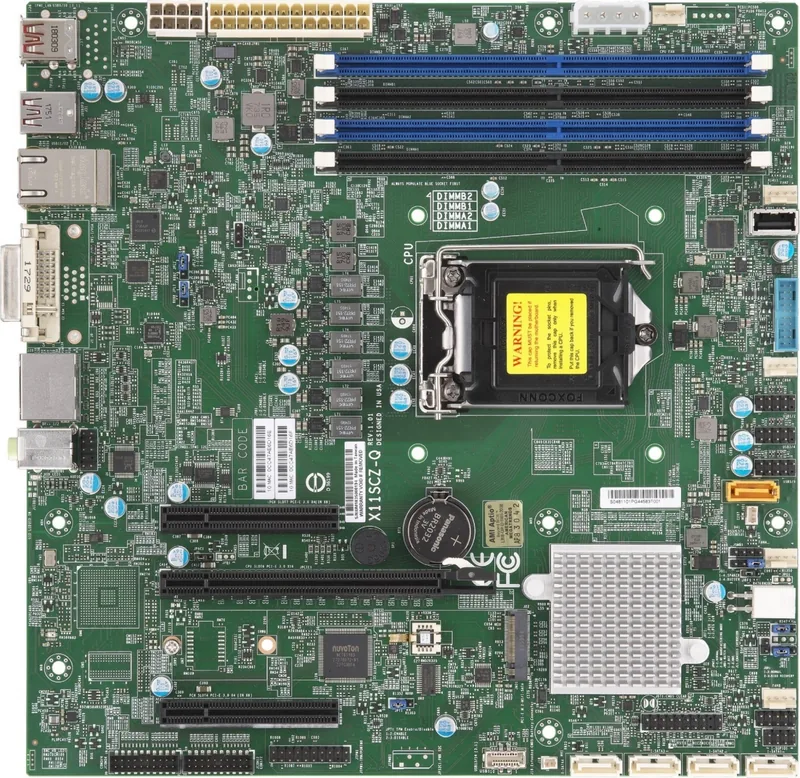
Supermicro’s Q370-based motherboard is built for users who want dependable performance, flexible connectivity, and a compact layout that fits a wide range of professional systems. In this family, the -Q model centers on Intel 8th Generation Core processors and the Q370 chipset, making it a strong fit for workstations, business desktops, point-of-sale terminals, digital signage, and security-focused builds. It balances practical expansion with the kind of stability that matters in long-running deployments.
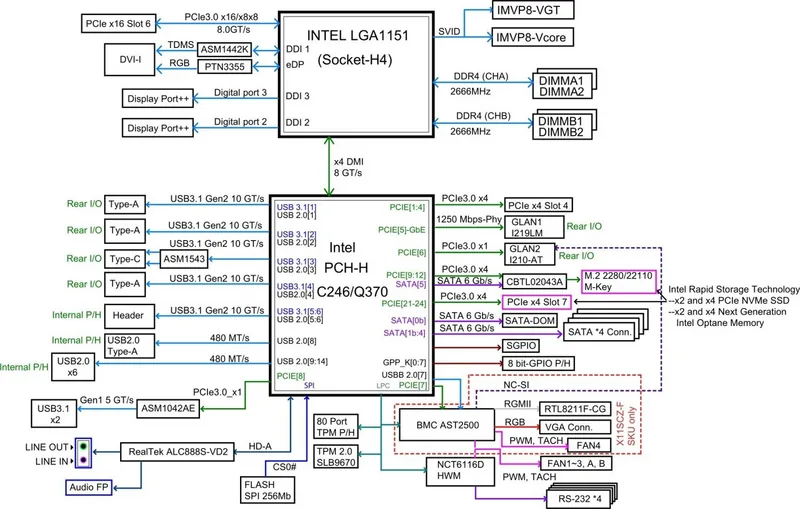
A major strength of the board is its support for up to 64GB of DDR4 memory at speeds up to 2666MHz. That gives it enough headroom for multitasking, imaging, monitoring software, and everyday server-style workloads. The inclusion of PCI-E 3.0 x16 expansion, M.2 storage support, five SATA 3.0 ports, and RAID options adds flexibility for storage-heavy projects and faster system builds. For users searching for a Supermicro Q370 Manual, the platform is clearly designed with thoughtful layout decisions and straightforward serviceability in mind.
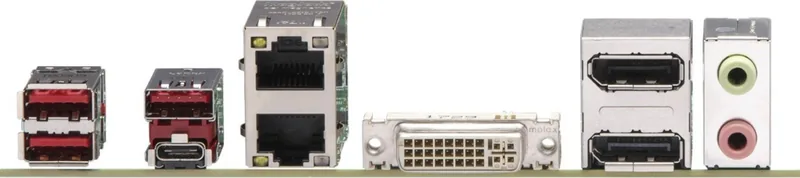
Connectivity is another highlight. Dual Gigabit LAN ports, multiple USB 3.1 Gen 2 connections, USB 3.1 Gen 1 headers, and legacy USB 2.0 headers make integration easier across mixed hardware environments. Video support through DisplayPort and DVI-I also helps the motherboard serve roles where display compatibility matters, especially in commercial or embedded installations. The board’s compact 9.6-inch square form factor further improves its versatility in smaller chassis.
The Q370 model also emphasizes reliability and control. Features like ACPI power management, fan monitoring, temperature thresholds, voltage monitoring, watchdog support, TPM compatibility, and chassis intrusion detection contribute to safer operation and easier administration. These are the kinds of practical features that make the board appealing to integrators who need a stable, repeatable platform rather than a flashy consumer product.
Notes
- Best suited for business and embedded use cases rather than gaming-first builds.
- Pairing matched DIMMs and proper cooling improves overall stability.
- BIOS, jumper settings, and storage options should be checked carefully during installation.
- The Q370 platform is especially attractive where reliability and expandability matter more than aesthetics.
Search for 67,706 Manuals online


Type-in Brand or Model