
Supermicro Dual AMD EPYC 7001 Series Manual
PDF manual · 130 Pages
English



Quick check
Incorrect answer, please try again.
Chat with your Supermicro Dual AMD EPYC 7001 Series manual using AI
Get instant AI answers from your Supermicro Dual AMD EPYC 7001 Series manual
Ask anything about the Supermicro Dual AMD EPYC 7001 Series. Answers come from this manual, with the pages they are based on.
Ask a Question
Do you recommend Dual AMD EPYC 7001 Series?
Yes NoFrequently Asked Questions
Supports ECC DDR4 2666 MHz or up to 3200 MHz.
Is this answer helpful?
Download from website, use USB, follow flash instructions.
Is this answer helpful?
Yes, but disable IOMMU for version 2012 compatibility.
Is this answer helpful?
BIOS settings allow auto-power on or stay-off modes.
Is this answer helpful?
Use JBT1 jumper, power off system, short pads for 4 seconds.
Is this answer helpful?
Yes, supports internal SATA and NVMe for high speed storage.
Is this answer helpful?
Normal consumer use only, requires RMA number for return.
Is this answer helpful?
Advantages and Disadvantages
Advantages

- Supports Dual EPYC Processors for maximum performance
- High Memory Capacity up to 4TB with ECC DDR4
- Robust IPMI Remote Management via BMC Chip
- Extensive PCIe 3.0 Expansion Slot Options
- Comprehensive System Health Monitoring Alerts
Disadvantages

- Requires Professional Level Knowledge for Installation
- Complex BIOS Configuration for New Users
- Sensitive Components Need Static Protection Handling
- Higher Power Consumption Compared to Single CPU
- Specific Motherboard Revisions Limit DDR4 Speeds
Product Specification
Chipset
System-on-Chip (SoC)
Header Lighting
N/A
Audio
N/A
Graphics
ASPEED AST2500 - Onboard
Wireless
N/A
Multi-GPU
N/A
Lighting
N/A
Features
All solid capacitors, IPMI 2.0
USB Naming
Link
Product Description
Discovering the Power of the Supermicro Dual AMD Epyc 7001 Platform
Unleashing Enterprise Performance
The Supermicro Dual AMD Epyc 7001 motherboard represents a significant leap in server computing capabilities. Designed for intensive workloads, this hardware utilizes advanced 14nm and 7nm process technology to deliver superior graphics and system performance. It consumes minimal power while maximizing throughput for cloud computing and networking applications.
Memory and Processing Power
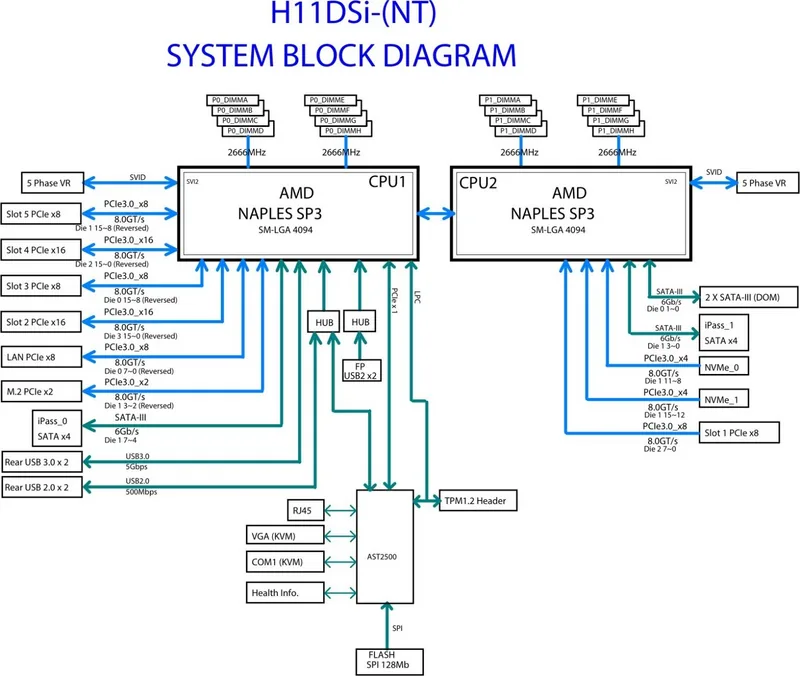
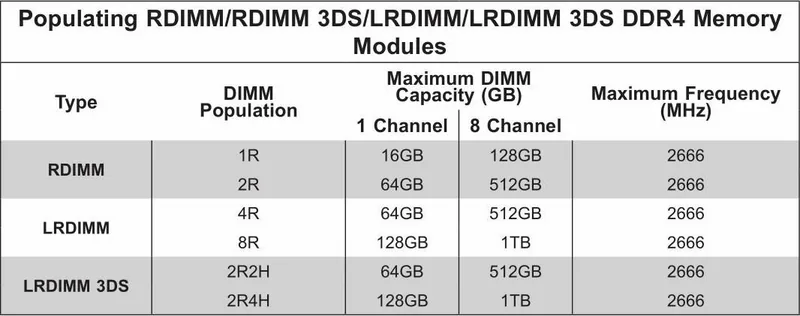
Users can install dual EPYC 7001 or EPYC 7002 series processors in Socket SP3. This configuration supports up to 16 memory slots, allowing for substantial ECC DDR4 memory expansion. Standard configurations run at 2666 MHz, reaching speeds of 3200 MHz with specific board revisions. Total capacity can reach 4TB with the right components installed. This flexibility supports demanding database and virtualization tasks.
Connectivity and Expansion
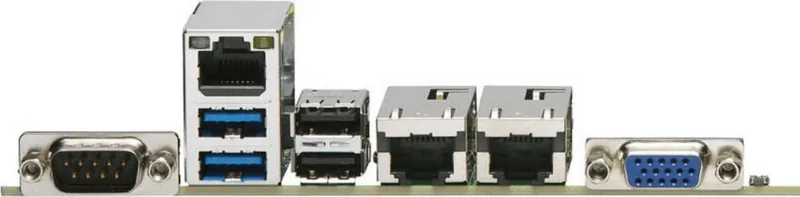
The platform features extensive connectivity options including multiple PCIe 3.0 slots for high-speed add-on cards. Eight SATA 3.0 ports and internal NVMe connections provide versatile storage options. Network interfaces include dual RJ45 LAN ports and a dedicated IPMI LAN port for remote management. USB ports on the rear panel support legacy peripherals and high-speed data transfer for modern devices.
System Management and Health
Integrated health monitoring ensures stability through voltage and temperature checks. The ASPEED AST2500 BMC chip facilitates remote access via IPMI. Users can configure power management settings to recover automatically after AC power loss. System alerts notify administrators of potential issues before they cause downtime. Supervisors can monitor fan speeds and CPU thermal status in real time.
BIOS and Power Features
Advanced BIOS menus enable fine-tuning of voltage regulators and fan control curves. The system includes automatic recovery options for AC power loss events. Administrators benefit from the ability to set power-on states based on the last known configuration. This reduces downtime significantly. Configuration options include CPU core management and virtualization features like SVM mode.
Final Remarks
This solution is ideal for enterprise environments requiring high availability. It integrates seamlessly with existing server racks and power distribution units. Compatibility with Windows Server and Linux ensures broad software support. Detailed guides provide instructions for heatsink and DIMM placement to ensure optimal airflow and cooling efficiency.
Search for 67,706 Manuals online


Type-in Brand or Model