
Supermicro C246 Series Manual
PDF manual · 119 Pages
English



Quick check
Incorrect answer, please try again.
Chat with your Supermicro C246 Series manual using AI
Get instant AI answers from your Supermicro C246 Series manual
Ask anything about the Supermicro C246 Series. Answers come from this manual, with the pages they are based on.
Ask a Question
Do you recommend C246 Series?
Yes NoFrequently Asked Questions
It supports Intel Xeon E-2100, 8th Gen Core i3, Pentium, and Celeron processors using the LGA 1151 socket. This gives it a broad range of compatibility for entry server and embedded builds.
Is this answer helpful?
Yes. It supports DDR4 ECC UDIMM memory across four DIMM slots, up to 64GB total. Using matched modules is recommended for the best stability and performance.
Is this answer helpful?
The board includes eight SATA 3.0 ports with RAID 0, 1, 5, and 10 support, plus two M.2 slots for PCIe 3.0 x4 SSDs and Intel Optane Memory compatibility.
Is this answer helpful?
The X11SCH-F has dual 1GbE LAN ports, while the X11SCH-LN4F provides four 1GbE LAN ports. Both include a dedicated IPMI LAN port for remote management.
Is this answer helpful?
Yes. The motherboard uses an ASpeed AST2500 BMC with IPMI support, allowing remote monitoring, power control, and system access even when the operating system is unavailable.
Is this answer helpful?
Verify CPU support, memory compatibility, proper cooling, and both the 24-pin ATX and 8-pin CPU power connections. Static protection and careful handling are also important.
Is this answer helpful?
Advantages and Disadvantages
Advantages

- Supports Xeon E-2100 and 8th Gen Intel desktop CPUs for flexible builds.
- Includes ECC DDR4 support, helping improve stability and data protection.
- Offers IPMI with AST2500 BMC for remote monitoring and system control.
- Provides strong storage options with SATA RAID and dual M.2 slots.
Disadvantages

- Maximum memory capacity is limited compared with larger server platforms.
- Compact layout may require careful planning during installation and servicing.
- Only 1GbE networking is available, which may be limiting for some workloads.
- CPU cooling and PSU selection must be matched carefully to avoid issues.
Product Specification
Socket
Intel 1151 v2
Chipset
Intel C246
RAM
4x DDR4 DIMM, dual PC4-21300E/DDR4-2666, max. 128GB (UDIMM)
Header Lighting
N/A
RAID Level
0/1/5/10 (C246)
Multi-GPU
N/A
Lighting
N/A
USB Notation
Link
Product Description
Supermicro C246 Motherboard Overview
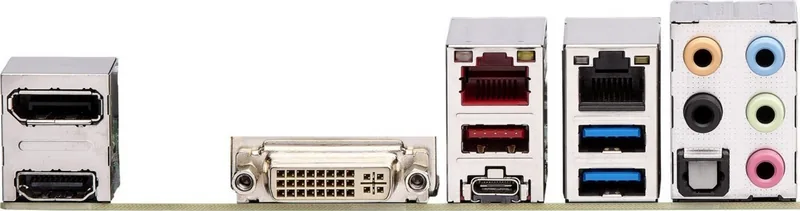
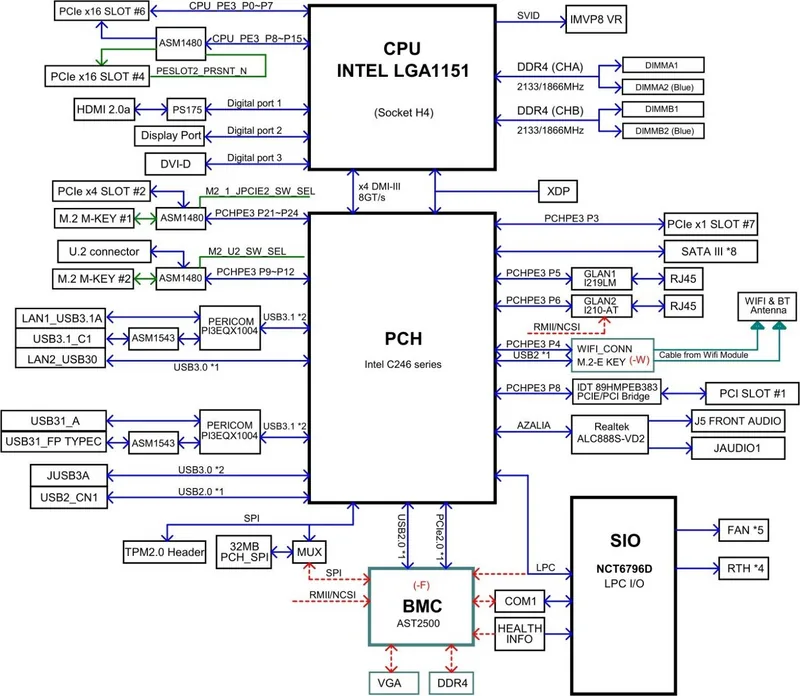
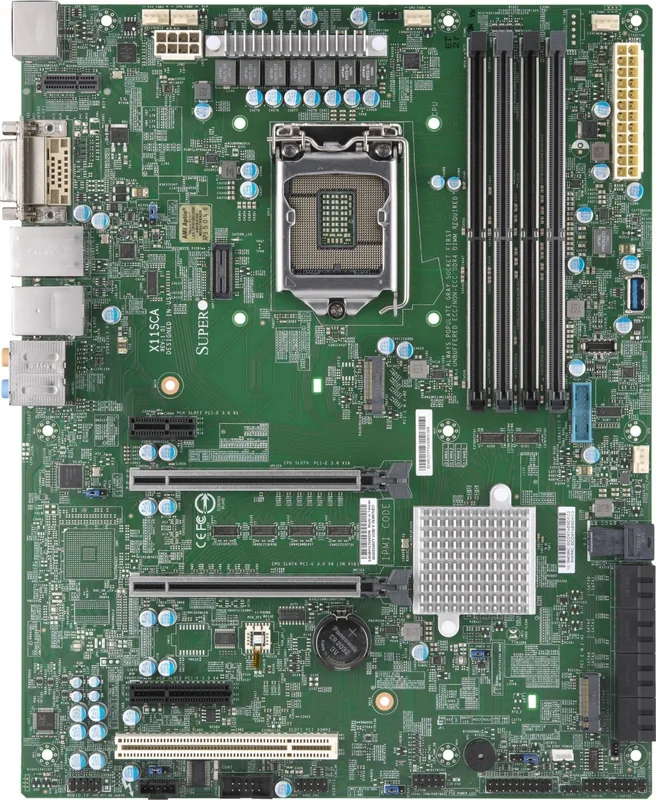
The Supermicro X11SCH-F and X11SCH-LN4F bring compact server-class design to builds that need reliability, remote management, and efficient performance in a small footprint. Built around the Intel C246 chipset, this platform supports Intel Xeon E-2100, 8th Gen Core i3, Pentium, and Celeron processors, making it a flexible choice for SMB servers, embedded systems, and light cloud workloads. If you are browsing the Supermicro C246 Manual for setup guidance, the board layout and feature set show a clear focus on practical deployment.
One of the strongest points of this motherboard family is its balanced feature mix. It supports up to 64GB of DDR4 ECC UDIMM memory across four slots, with speeds up to 2666MHz, which helps improve data integrity in business-critical environments. Storage and expansion are also well covered, with eight SATA 3.0 ports, RAID support, two PCIe 3.0 x8 slots, and two M.2 connectors with Intel Optane Memory support. That combination makes it useful for fast boot drives, caching, and compact storage configurations.
Networking differs by model, with the X11SCH-F offering dual 1GbE LAN and the X11SCH-LN4F expanding that to quad 1GbE LAN. Both versions include a dedicated IPMI LAN port and an ASpeed AST2500 BMC for remote administration. That means administrators can monitor health, manage power, and troubleshoot systems without needing to be physically present. For systems that must stay online and easy to service, this is a major advantage.
The board also places emphasis on safety and monitoring. Voltage, temperature, and fan activity are tracked through onboard sensors and firmware control, while LEDs and headers provide clear system status feedback. Features like watchdog support, chassis intrusion detection, AC power recovery settings, and TPM support further strengthen its appeal for professional deployments. The manual also reinforces careful installation practices, especially around CPU mounting, memory population, and static protection.
Overall, the X11SCH-F/-LN4F feels like a purpose-built server motherboard rather than a general desktop board. It is compact, efficient, and packed with management tools that make it suitable for environments where stability matters more than flashy extras. For technicians and integrators, it offers a dependable foundation with enough connectivity and control to handle modern server tasks.
Notes
- Best suited for professional installation and managed environments.
- ECC memory and BMC support help improve reliability and remote control.
- Check CPU cooling and power requirements carefully before deployment.
Search for 67,706 Manuals online


Type-in Brand or Model