
Supermicro Apollo Lake Series Manual
PDF manual · 103 Pages
English


Quick check
Incorrect answer, please try again.
Chat with your Supermicro Apollo Lake Series manual using AI
Get instant AI answers from your Supermicro Apollo Lake Series manual
Ask anything about the Supermicro Apollo Lake Series. Answers come from this manual, with the pages they are based on.
Ask a Question
Do you recommend Apollo Lake Series?
Yes NoFrequently Asked Questions
It is best for embedded, industrial, networking, and edge-computing systems where compact size, low power use, and reliable connectivity matter more than high-end desktop performance.
Is this answer helpful?
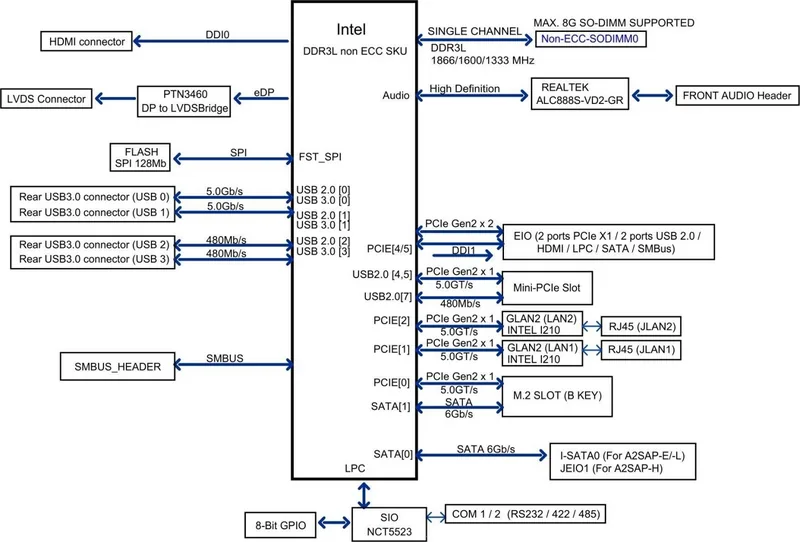
The board supports up to 8GB of DDR3L non-ECC SO-DIMM memory. It uses a single-channel setup, so memory planning should focus on compatibility and cooling rather than expansion.
Is this answer helpful?
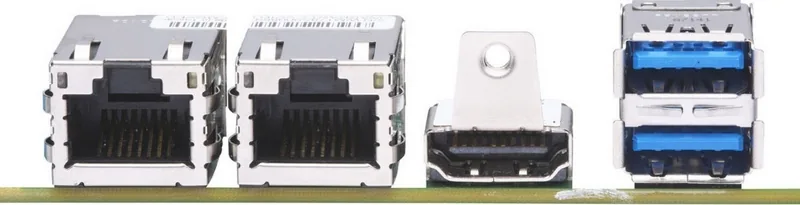
The board supports HDMI and LVDS output. That makes it useful for devices with monitors, kiosks, or custom LCD panels that need direct onboard video support.
Is this answer helpful?
Yes. It features dual Intel I210 Gigabit Ethernet controllers, which provide strong wired networking options for small servers, appliances, and industrial systems.
Is this answer helpful?
Yes. BIOS settings allow the system to stay off, power on, or return to its last state after AC power is restored. A jumper setting must be adjusted first in some cases.
Is this answer helpful?
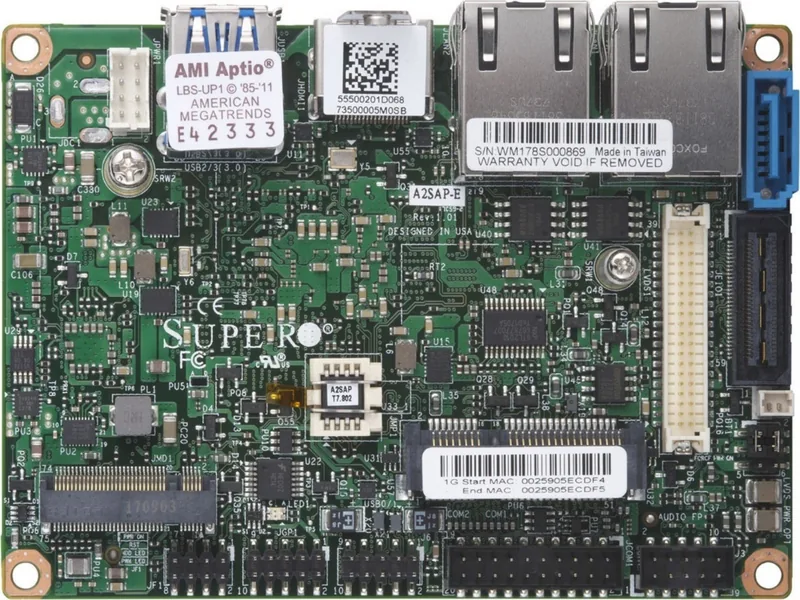
It includes M.2 and Mini PCI-E slots, plus headers for USB, COM, SMBus, and GPIO. Some versions also support a flexible Supermicro EI/O connector for custom I/O modules.
Is this answer helpful?
No. The board is not intended for life-support, medical, nuclear, aviation, or other ultra-hazardous applications where failure could cause serious harm.
Is this answer helpful?
Advantages and Disadvantages
Advantages

- Low-power Intel Atom design suits always-on embedded deployments.
- Dual Intel I210 LAN ports support reliable network connectivity.
- HDMI, LVDS, M.2, Mini PCI-E, and GPIO improve integration flexibility.
- BIOS and ACPI features help with power recovery, boot control, and management.
Disadvantages

- Memory ceiling is limited to 8GB, which may restrict heavier workloads.
- Professional installation is recommended, so it is not ideal for casual users.
- Feature set differs by model, especially around SATA and connector options.
- Thermal limits depend on chassis and heatsink choices, adding planning overhead.
Product Specification
Chipset
System-on-Chip (SoC)
Header Lighting
N/A
Wireless
N/A
Multi-GPU
N/A
Lighting
N/A
USB Notation
Link
Product Description
Supermicro Apollo Lake Board Overview
Supermicro’s A2SAP-H/-E/-L platform is a compact embedded motherboard built for projects that need efficiency, flexible I/O, and dependable 24/7 operation. In a Supermicro Apollo Lake Manual-style overview, the board stands out for pairing Intel Atom SoC performance with low power consumption, making it a strong fit for networking appliances, industrial control, signage, and edge computing systems.
Compact design with practical performance
At the heart of the board is an Intel Atom x5 processor family option, tuned for light server and embedded workloads. The result is a small board that still delivers useful graphics capability, responsive memory bandwidth, and solid media handling. HDMI and LVDS support make it especially attractive for systems that need direct display output, while dual Intel I210 Ethernet controllers help support stable network connectivity.
Built for integration and customization
The A2SAP series is designed with system builders in mind. It supports DDR3L SO-DIMM memory up to 8GB and includes expansion through M.2 and Mini PCI-E slots for wireless, storage, GNSS, or other specialty modules. The board also offers serial COM headers, USB options, GPIO, SMBus, and an optional EI/O connector that expands flexibility for custom installations. This makes it well suited to compact, purpose-built hardware where every port matters.
Reliable operation and management features
Beyond raw connectivity, the platform includes power management and health-monitoring tools that matter in real deployments. ACPI support, wake-on-LAN, watchdog capability, thermal monitoring, and BIOS-level recovery options help the system remain manageable over time. The board is also intended for professional installation, which reflects its industrial focus and the importance of proper thermal and electrical setup.
Notes
- Best suited for embedded and industrial environments
- Memory and thermal limits should be matched to the chassis design
- Some features vary by model, especially around SATA and connector layout
- Always verify BIOS settings before enabling power-recovery behavior
Overall, the A2SAP-H/-E/-L is a practical choice for builders who want a small footprint without giving up essential connectivity, remote management, or dependable operation. It combines Apollo Lake efficiency with Supermicro’s ecosystem of headers, utilities, and configuration options, making it a versatile foundation for specialized systems.
Search for 67,706 Manuals online


Type-in Brand or Model