
Sungrow SBR Manual
PDF manual · 46 Pages
English



Quick check
Incorrect answer, please try again.
Chat with your Sungrow SBR manual using AI
Get instant AI answers from your Sungrow SBR manual
Ask anything about the Sungrow SBR. Answers come from this manual, with the pages they are based on.
SBR Maintenance Schedule
Check for nearby flammables, secure wall fixing, corrosion at fixing points, damage, paint peeling, and oxidation.
Power off all internal battery devices first. Check for short circuits, compliant cable layout, water seepage, and loose cables; tighten as specified.
Check that current, voltage, and temperature in the battery operation record are within operating ranges.
With a supported Sungrow PCS and grid or PV power available, the battery automatically calibrates capacity every half year.
If stored more than 6 months under specified conditions, charge the system once to 50%-80% SOC, preferably using PCS forced charging.
Check for damage, deformation, abnormal noise, excessive temperature, humidity, and dust. Clean the battery module if necessary.
Check that warning signs and labels are legible and not dirty. Clean them if necessary.
Check that the switch gear and PCS are connected correctly.
Check battery modules for internal oxidation or rust.
Free maintenance reminders
Timed to your purchase date. Always free, unsubscribe anytime.
Ask a Question
Do you recommend SBR?
Yes NoFrequently Asked Questions
The SBR family includes SBR096, SBR128, SBR160, SBR192, SBR224 and SBR256, each differing in nominal voltage, usable energy and power ratings. Systems are modular (3–8 modules) and up to four units can be paralleled.
Is this answer helpful?
SBR batteries feature an integrated BMS providing over/under voltage protection, overcurrent protection, thermal monitoring, DC isolator, grounding terminal and CAN communication for coordinated protection with compatible PCS units. They include detailed emergency and fire response guidance.
Is this answer helpful?
Yes. SBR units are IP55 rated for indoor and outdoor installations, but they still require sheltered placement, proper ventilation, protection from direct sun/rain, correct mounting clearance and adherence to the recommended ambient temperature and humidity ranges.
Is this answer helpful?
Commissioning involves checking mechanical and electrical installation, closing the DC isolator to enter BMS self-test, and following the black start procedure if PCS has no power. Initial capacity calibration is performed via coordinated discharge/charge with a compatible Sungrow PCS to establish SOC and SOH.
Is this answer helpful?
Recommended maintenance includes annual inspections of module condition, wiring, grounding and cleanliness, with more frequent checks every six months in demanding environments. Follow manufacturer guidance for cable torque, corrosion checks and firmware updates.
Is this answer helpful?
Do not reuse a flooded battery. Isolate the area, switch off system power and contact Sungrow or an authorized service partner. Damaged batteries must be stored safely, not repaired by users, and handled per manufacturer disposal instructions.
Is this answer helpful?
Full functionality, including automatic capacity calibration and black start behavior, is supported with specific Sungrow PCS models listed by Sungrow (e.g., select SH series models). Verify PCS firmware compatibility and consult Sungrow documentation for exact pairings.
Is this answer helpful?
Advantages and Disadvantages
Advantages

- Scalable high-voltage LiFePO4 architecture (models SBR096–SBR256) suitable for residential storage.
- Integrated BMS with protections for over/under voltage, overcurrent and temperature events.
- IP55 rated for indoor/outdoor use and natural convection cooling for passive reliability.
- Modular design (3–8 modules) and up to four systems parallelable for capacity expansion.
- Clear installation, commissioning and maintenance procedures with PCS integration.
Disadvantages

- Requires qualified installers and adherence to local codes; not for DIY untrained users.
- Limited PCS compatibility—full features like automatic calibration need specific Sungrow PCS models.
- Significant weight and footprint; wall or floor mounting and structural support required.
- Long-term storage beyond 6–12 months can cause irreversible capacity loss if not maintained.
- Damaged or flooded units must be handled by manufacturer/service partner; user repair prohibited.
Product Specification
Note
Prices partly include 0% VAT tax rates for AT and DE
Battery Type
LiFePO4
Operating Temperature
32 F to +122 F
Lifespan
10 Years
Display
no
Mounting Type
freestanding (stackable)
Protection Class
IP55
Product Description
Sungrow SBR — Reliable High-Voltage LFP Battery
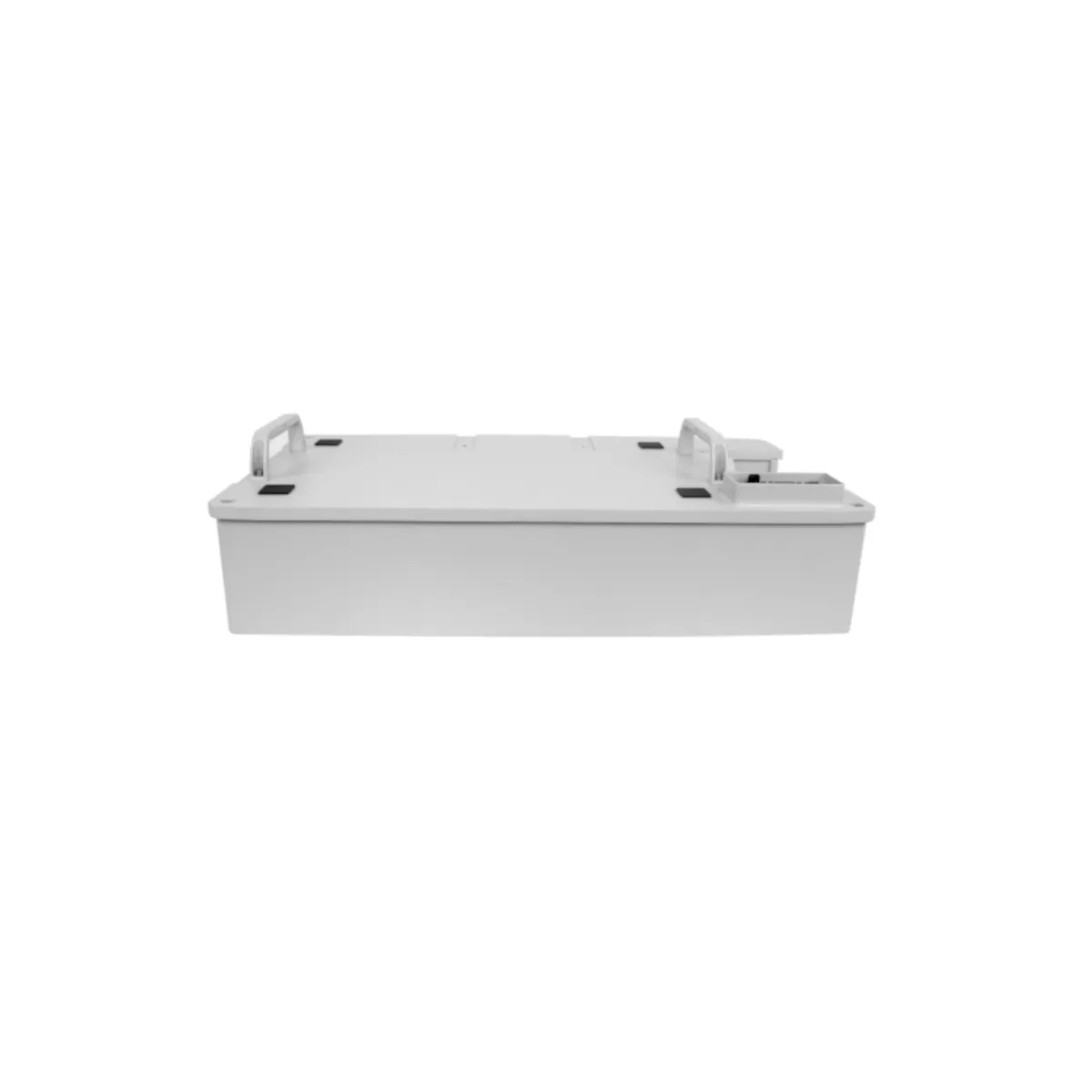
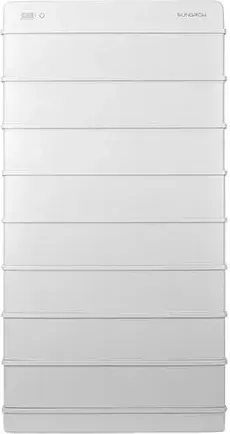
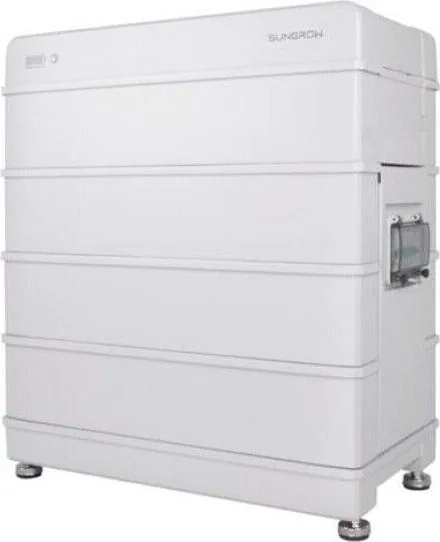
Sungrow SBR is a family of high-voltage lithium‑iron‑phosphate (LiFePO4) battery systems designed for residential energy storage. Available in multiple capacities (SBR096, SBR128, SBR160, SBR192, SBR224, SBR256), each SBR unit is built from 3–8 modular battery packs wired in series, with up to four systems paralleling for larger installations. Operating voltages span roughly 150 V to 584 V depending on model, delivering scalable usable energy and continuous DC power tailored for small to medium household PV-plus-storage setups.
The SBR lineup integrates a Battery Management System (BMS) that monitors cell voltages, temperatures and state of charge (SOC) while providing protections for over/under voltage, overcurrent and thermal events. The units include an LED SOC/status indicator, DC isolator, earth terminal and CAN communication port for interconnection with compatible Power Conversion Systems (PCS). Typical applications are grid‑connected home storage to maximize self‑consumption, provide backup power via black start, and support PV system stability.
Installation and commissioning emphasize safety and professional handling: the batteries are IP55 rated for indoor/outdoor use, require correct grounding, proper ventilation and secure mounting, and must be installed by qualified personnel following local codes. The SBR units include detailed guidance on unpacking, storage, cable and connector preparation (SUNCLIX/MC4 options), and commissioning steps including initial self‑test, SOC calibration and PCS pairing. Maintenance routines and troubleshooting procedures are provided for periodic inspection, cleaning, cable checks, and fault diagnosis via app or PCS interface.
Safety features and emergency guidance are comprehensive: the manual outlines handling of leaks, immersion, thermal runaway, fire response (use of sand or CO2 extinguishers and specialist firefighting teams), and procedures for damaged modules. Storage recommendations include temperature and humidity ranges, stacking limits, and periodic top‑up charging for long‑term storage to preserve capacity.
Models vary by energy, nominal voltage, continuous and peak charge/discharge power, dimensions and weight. Typical module energy is 3.2 kWh per module with complete system energies from ~9.6 kWh to 25.6 kWh (usable depends on model). Cooling is by natural convection and warranty and quality assurance processes are provided through Sungrow support channels.
Notes:
- Designed specifically to work with select Sungrow PCS models for full feature support (automatic calibration, black start).
- Follow local electrical codes and manufacturer guidance for safe installation and disposal.
- Regular inspection intervals depend on environment; harsher conditions require more frequent checks.
Search for 67,706 Manuals online


Type-in Brand or Model