
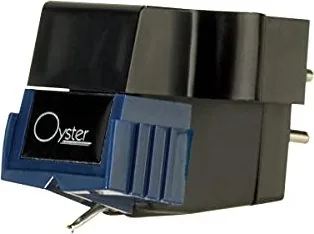
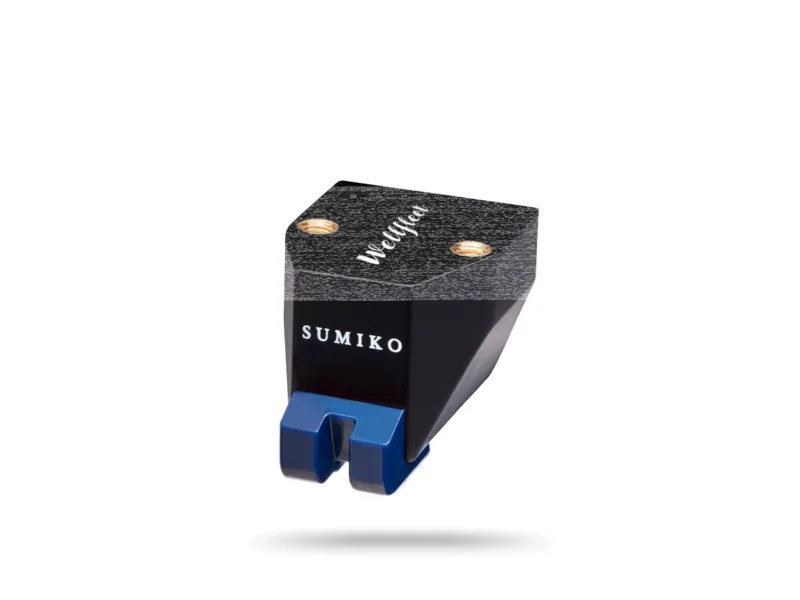

Sumiko Oyster Manual
PDF manual · 16 Pages
English



Quick check
Incorrect answer, please try again.
Chat with your Sumiko Oyster manual using AI
Get instant AI answers from your Sumiko Oyster manual
Ask anything about the Sumiko Oyster. Answers come from this manual, with the pages they are based on.
Oyster Maintenance Schedule
Use the supplied brush after each play if records are kept clean. Turn volume down or select another input, and brush only back to front.
Have the stylus microscopically inspected yearly to preserve the record collection. Replace it if inspection shows replacement is necessary.
Free maintenance reminders
Timed to your purchase date. Always free, unsubscribe anytime.
Ask a Question
Do you recommend Oyster?
Yes NoVideo Manual
Don't Go - Yaz [ Pro-Ject 1 Expression III • Sumiko Oyster • Phasemation EA-200 ]
Frequently Asked Questions
Recommended tracking force varies by model, typically between 1.7–2.3 grams. Each model lists an optimum value (e.g., Blue Point Special EVO III = 2.0 g). Set the arm to the specified value to avoid excess wear or loss of dynamics.
Is this answer helpful?
Attach the color-coded leads without soldering: Red = Right +, Green = Right –, White = Left +, Blue = Left –. Use small needle-nose pliers to secure connections; avoid soldering to prevent heat damage to the cartridge.
Is this answer helpful?
For moving magnet Oyster models, set anti-skate approximately equal to the tracking force. For lower-compliance, higher-mass moving coil models (e.g., Blue Point series), set anti-skate to roughly half the tracking force (e.g., 1.0–1.5 for a 2.0 g tracking force).
Is this answer helpful?
Use a soft brush supplied with the cartridge after each play, moving back-to-front only. For compacted debris, use recommended stylus cleaners. Exercise extreme caution—front-to-back strokes or harsh tools can damage the cantilever and stylus.
Is this answer helpful?
Moving magnet models accept replaceable stylus/cantilever assemblies. Moving coil cartridges are not user-replaceable and generally require trade-in or factory service; Sumiko offers trade-in/trade-up options for upgrades or replacement.
Is this answer helpful?
Most Oyster moving magnet and high-output moving coil cartridges are designed for a 47 kΩ load. If your preamp offers capacitance loading, keep it below 200 pF and preferably under 100 pF for high-output MC cartridges.
Is this answer helpful?
Never use a tape-head or bulk demagnetizer; these can permanently damage the cartridge and cause significant loss of output. Use a proper cartridge demagnetizer and remove the stylus assembly on MM types before demagnetizing.
Is this answer helpful?
Advantages and Disadvantages
Advantages

- Affordable entry into high-end analog with decades of cartridge design expertise.
- Clear setup guidance covering mounting, tracking force, alignment, anti-skate, VTA and azimuth.
- Models available in both moving magnet and moving coil types to suit varied systems.
- Maintenance and demagnetizing guidance to preserve performance and avoid damage.
- Trade-in/trade-up program available for upgrades and end-of-life options.
Disadvantages

- Moving coil models require factory service or trade-in for stylus replacement.
- Blue Point Special EVO III ships without a stylus guard, increasing handling risk.
- Some setup adjustments (VTA, azimuth) require careful listening and time to optimize.
- High-output MC cartridges require attention to capacitance loading limits.
- Warranty excludes damage from misuse, modification, or unauthorized repairs.
Product Specification
Type
Pickup
Stylus profile
spherical
Tracking force
0.05-0.09 oz
Frequency range
30Hz-20kHz
Weight
0.19 oz
Product Description
Sumiko Oyster Manual — Sumiko Oyster Phono Cartridges
The Sumiko Oyster Series represents an accessible entry into high-end analog playback, offering thoughtfully engineered phono cartridges that blend durability, musicality, and real-world usability. Drawing on more than three decades of cartridge design, the Oyster family — including moving magnet (MM) models like Oyster, Pearl, and Black Pearl, and moving coil (MC) models like the Blue Point No. 2 and Blue Point Special EVO III — aims to deliver excellent sound quality at reasonable prices.
Installation and setup are emphasized throughout the manual. Users are advised to handle the stylus and cantilever with extreme care and to keep the stylus guard in place when possible. Mounting is straightforward: loosely attach the cartridge to the headshell, connect the four color-coded tonearm leads (Red: Right +, Green: Right –, White: Left +, Blue: Left –) without soldering, then balance the tonearm and set the recommended tracking force for each model. Tracking force recommendations typically fall between 1.7–2.3 grams depending on the model; incorrect force can accelerate record or stylus wear or reduce dynamics.
Alignment, anti-skate, azimuth, and vertical tracking angle (VTA) guidance is provided to optimize tracking accuracy and tonal balance. Sumiko recommends a quality alignment protractor or following tonearm manufacturer guidelines for overhang and offset angle. Anti-skate settings are matched to cartridge type and mass: MM Oyster-series cartridges generally use an anti-skate equal to the tracking force, while the lower-compliance, higher-mass MC Blue Point models usually require roughly half the tracking force value. Adjusting VTA/rake and azimuth incrementally while listening helps refine soundstage focus, tonal balance, and surface noise performance.
Electrical loading guidance notes that Oyster moving magnet and high-output moving coil cartridges are designed for the common 47 kΩ load. Capacitance loading for high-output MC types should ideally remain below 100 pF and not exceed 200 pF. The manual also lists model specifications such as frequency response, output, channel separation, compliance, stylus shape, tracking force ranges, and recommended forces.
Maintenance tips stress careful cleaning of stylus and records, using a rear-to-front brush motion and reputable products for stubborn debris. Sumiko warns against improper demagnetization methods (never use tape-head or bulk demagnetizers) and suggests a cartridge demagnetizer when needed, with the stylus assembly removed for MM types. Stylus inspection annually is recommended; MM models accept replaceable stylus/cantilever assemblies while MC models typically require trade-in or factory service for replacement. Sumiko offers trade-in/trade-up options to enable upgrades.
The manual concludes with warranty details: a one-year limited warranty for original owners covering defects in material and workmanship, with repair or replacement procedures defined and exclusions listed.
Notes
- Handle the stylus/cantilever with extreme care; use the stylus guard when possible.
- Match anti-skate to cartridge type: MM = tracking force; MC ≈ half tracking force.
- Use 47 kΩ load; keep capacitance under 100–200 pF for high-output MCs.
- Annual microscopic stylus inspection recommended.
Search for 67,706 Manuals online


Type-in Brand or Model