
Manual.ly Logo

Stanley SXFPW20E Manual

0.0 · 0 Ratings

PDF manual · 280 Pages

English

M: QW-35-FL
page

/ 280

Loading...
00a5f1bd23a5241a91998028ded72f59aee3 page d
13
7
ADJUSTMENTS FIG.3/PAGE 6
7.1 Adjusting the spray nozzle (for models with this feature)
Water flow is adjusted by regulating the nozzle (E).
7.2 Adjusting the detergent
To deliver detergent at the correct pressure, set the nozzle (E)
(where fitted) on "
" or fit the detergent kit (C13) (where available)
as shown.
The quantity of detergent delivered is adjusted using the regulator (F).
7.3 Adjusting the working pressure (on models with this feature)
The regulator (G) is used to adjust the working pressure. The pres-
sure is shown on the pressure gauge (where fitted).
8
INFORMATION ON USE OF THE APPLIANCE FIG.4/PAGE 6
8.1 Controls
- Starter device (H).
Set the starter switch on (ON/I) to:
a) start the motor (in models without TSS device);
b) set the motor ready to start (in models with TSS device).
If there is a pilot light on the starter device, it should light up.
Set the starter device switch on (OFF/0) to stop the appliance.
If there is a pilot light on the starter device, it should go out.
- Water jet control lever (I).
Warning - danger!
During operation the appliance must be positioned as
shown in fig. 4 on a firm, stable surface.
8.2 Start-up (see fig. 4)
1) Turn on the water supply tap fully.
2) Release the safety catch (D).
3) Depress the gun trigger for a few seconds and start up the appli
-
ance using the starter device (ON/I).
Warning - danger!
Before starting up the appliance check that it is receiv-
ing water correctly; use of the appliance without water will
damage it. Do not cover the ventilation grilles when the
appliance is in use.
TSS models - In TSS models with automatic delivery flow cut-off system:
- when the gun trigger is released the dynamic pressure automati-
cally cuts out the motor;
- when the gun trigger is depressed the automatic drop in pressure
starts the motor and the pressure is restored after a very slight delay;
- if the TSS is to function correctly, all gun trigger releasing and
depressing operations must be at least 4-5 seconds apart.
To prevent damage to the appliance, do not allow it to
operate dry and check that it is properly supplied with water.
For models without TSS, to prevent damage to the appliance
due to an increase in water temperature, do not cut off the jet
of water for more than 5 minutes with the appliance running.
8.3 Stopping
1) Set the starter device switch on (OFF/0).
2) Depress the gun trigger and discharge the residual pressure
inside the pipes.
3) Engage the safety catch (D).
8.4 Restarting
1) Release the safety catch (D).
2) Depress the gun trigger and discharge the residual air inside
the pipes.
3) Set the starter device on (ON/I).
8.5 Storage
1) Turn off the water supply tap.
2) Discharge the residual pressure from the gun until all the water
has come out of the appliance.
3) Switch the appliance off (OFF/0).
4) Remove the plug from the socket.
5) Drain and wash out the detergent tank at the end of the working ses-
sion. To wash out the tank, use clean water instead of the detergent.
6) Engage the gun safety catch (D).
8.6 Refilling and using detergent
The detergent must be delivered using the accessories and by
the procedures described in point 7.3.
Use of a high pressure hose longer than the one originally supplied
with the appliance, or the use of an additional hose extension, may
reduce or completely halt the suction of detergent.
Fill the tank (B6) with highly biodegradable detergent.
8.7 Recommended cleaning procedure
Dissolve dirt by applying the detergent mixed with water to the
surface while still dry.
When dealing with vertical surfaces work from the bottom upwards.
Leave the detergent to act for 1-2 minute but do not allow the
surface to dry. Starting from the bottom, use the high pressure jet
at a minimum distance of 30 cm. Do not allow the rinse water to run
onto unwashed surfaces.
In some cases, scrubbing with brushes is needed to remove dirt.
High pressure is not always the best solution for good cleaning
results, since it may damage some surfaces. The finest adjustable
nozzle jet setting or the rotating nozzle should not be used on
delicate or painted parts, or on pressurised components (e.g. tyres,
inflation valves, etc..).
Effective cleaning depends on both the pressure and volume of the
water used, to the same degree.
9
MAINTENANCE FIG.5/PAGE 279
Any maintenance operations not covered by this chapter should be
carried out by an Authorised Sales and Service Centre.
Warning - danger!
Always disconnect the plug from the power socket
before carrying out any work on the appliance.
9.1 Cleaning the nozzle
1) Disconnect the lance from the nozzle.
2) Remove any dirt deposits from the nozzle hole using the tool (C1).
9.2 Cleaning the filter
Inspect the inlet filter (L) and detergent filter (if fitted) before each
use, and clean in accordance with the instructions if necessary.
9.3 Unjamming the motor (on models with this feature)
In case of lengthy stoppages, limescale sediments may cause the
motor to seize. To unjam the motor, turn the drive shaft with a
tool (M).
9.4 Refilling the oil (for models with this feature)
Add oil through the intake hole to restore the correct level.
For oil characteristics, refer to the “Oil characteristics” table.
9.5 End-of-season storage
Treat the appliance with non-corrosive, non-toxic antifreeze before
storing it away for winter.
Put the appliance in a dry place, protected from frost.
10
STORAGE AND TRANSPORTATION FIG. 5/PAGE 279
Store the accessories as shown in fig. 5.
Transport the machine as shown in fig. 5.

Chat with your Stanley SXFPW20E manual using AI

Get instant AI answers from your Stanley SXFPW20E manual

Ask anything about the Stanley SXFPW20E. Answers come from this manual, with the pages they are based on.

SXFPW20E Maintenance Schedule

Remind me when maintenance is due
Yearly
Treat with antifreeze for winter storage

Run the appliance with non-corrosive, non-toxic antifreeze before storing it away for winter in a dry place.

Show in the manual (page 13)
Before each use
Inspect screws and parts for wear or damage

Check that all screws are fully tightened and there are no broken or worn parts before using the appliance.

Show in the manual (page 11)
Before each use
Clean the inlet and detergent filters

Inspect the water inlet filter and detergent filter. Clean them if necessary to ensure proper function.

Show in the manual (page 13)
After every session
Drain and wash out the detergent tank

Empty the detergent tank and rinse it with clean water at the end of each working session.

Show in the manual (page 13)
As needed
Clean the spray nozzle

Remove dirt deposits from the nozzle hole using the provided cleaning tool (C1) if the jet is blocked.

Show in the manual (page 13)

Free maintenance reminders

Timed to your purchase date. Always free, unsubscribe anytime.

By submitting you agree to the privacy policy. Unsubscribe with one click in any email.
M: qwen/qwen3.8-flash

Ask a Question

0/1000

Do you recommend SXFPW20E?

Yes No

Frequently Asked Questions

A

Yes, but avoid using the turbo lance or high-pressure settings directly on tires or painted parts. Always maintain a safe distance of at least 30 cm to prevent damage.

Is this answer helpful?

A

The maximum suction height from an open container is 0.5 meters. Ensure the suction hose is filled with water before starting the pump.

Is this answer helpful?

A

It is recommended to use highly biodegradable detergents supplied or recommended by the manufacturer to ensure safety and prevent corrosion of hoses.

Is this answer helpful?

A

If storing for a long period, unjam the motor by turning the drive shaft with a tool and treat the appliance with non-corrosive antifreeze before winter storage.

Is this answer helpful?

A

Yes, models like the SXFPW20E come with an electric cable and plug, but ensure it is protected against water jets during use.

Is this answer helpful?

A

Yes, provided the hose has a backflow preventer valve if connecting to mains drinking water. The hose should be reinforced and no longer than 25 meters.

Is this answer helpful?

A

Check if the voltage matches the data plate requirements. If using an extension cable, ensure it is suitable for outdoor use and has the correct cross-section.

Is this answer helpful?

M: QW-35-FL

Advantages and Disadvantages

Advantages

  • High pressure of 14 MPa ensures effective removal of stubborn dirt
  • Versatile with multiple nozzles and detergent capabilities
  • Includes safety features like overload cutout and safety catch
  • Compact design with wheels for easy portability
  • Biodegradable detergent usage supports environmental care
VS

Disadvantages

  • Requires careful adherence to safety protocols to prevent injury
  • May need specific extension cables for optimal performance
  • Not suitable for use on delicate or painted surfaces without caution
  • Water temperature limits must be respected to avoid damage
  • Maintenance requires regular checks of seals and filters
M: QW-35-FL

Product Specification

Operating mode

Cold water

Power

2000W

Pressure

max. 2030psi

Flow rate

max. 116gph

Inlet temperature

max. 122°F

Mobility

Trolley

Weight

24.69lbs

Delivery scope

High-pressure gun, high-pressure hose, lance/jet tube, 2x nozzle (rotary nozzle, detergent nozzle), hose reel, accessory holder, hose, water filter

M: QW-35-FL

Product Description

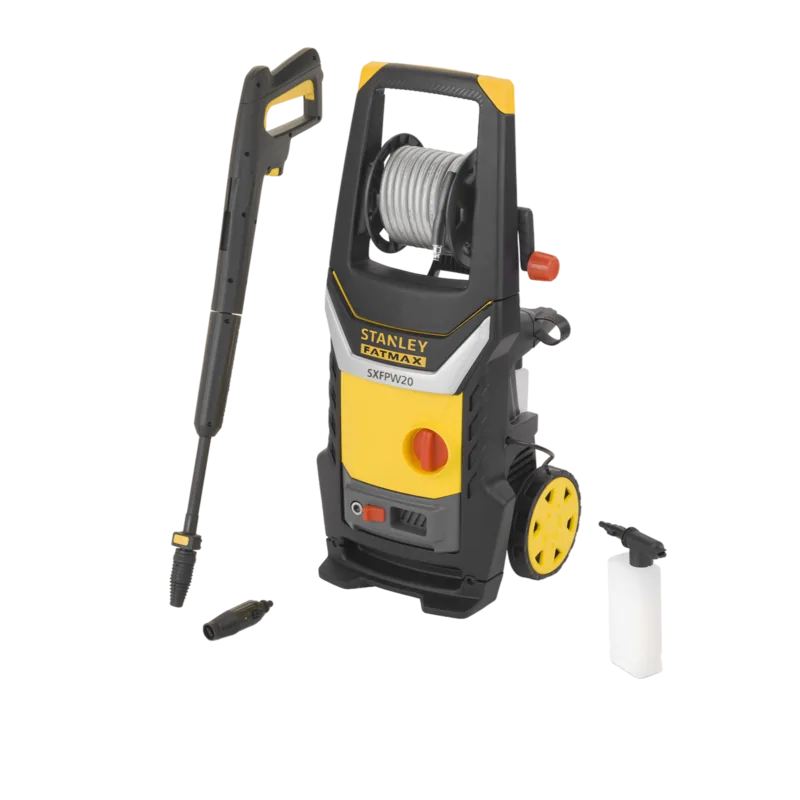
Discover the Power of the Stanley SXFPW20E Electric High-Pressure Washer

The Stanley SXFPW20E Electric High-Pressure Washer is a robust and versatile cleaning solution designed for both professional users and homeowners tackling tough jobs. This machine combines high performance with user-friendly features, making it an ideal choice for cleaning vehicles, machinery, boats, masonry, and other outdoor surfaces. With a powerful 2 kW motor, this washer delivers a maximum pressure of 14 MPa and a flow rate of up to 7.33 liters per minute, ensuring that stubborn dirt is removed quickly and efficiently.

One of the standout features of the SXFPW20E is its adaptability. It comes equipped with various nozzles and accessories, including a rotating nozzle kit that provides greater washing power through a dynamic water jet effect. The detergent tank allows for the application of biodegradable cleaning agents, enhancing the cleaning process without harming the environment. Safety is paramount in the design of this unit, featuring a starter device to prevent accidental use, a safety catch on the gun, and overload protection to safeguard the motor.

Proper installation and maintenance are crucial for optimal performance. The manual emphasizes the importance of using only clean or filtered water and connecting the unit to a water supply with adequate pressure. Users must also ensure that all electrical connections comply with safety standards, such as using residual current devices. Regular maintenance, including cleaning filters and checking seals, will extend the life of your washer.

Whether you are preparing your driveway for guests or detailing your car, the Stanley SXFPW20E offers the reliability and power needed to get the job done right. Its compact design and wheels make it easy to transport around your property, while the included accessories provide everything needed for a thorough clean. Remember to always follow the safety instructions to avoid injury and damage to surfaces.

Important Notes

Always wear protective gear when operating the high-pressure washer. Ensure the unit is disconnected from power before performing any maintenance. Do not point the water jet at people, animals, or electrical equipment. For best results, use the recommended detergents and maintain the correct distance from surfaces to prevent damage.

M: QW-35-FL

© Copyright 2026 Manual.ly