


Schneider Electric TeSys D LC1D Manual
PDF manual · 12 Pages
English



Quick check
Incorrect answer, please try again.
Chat with your Schneider Electric TeSys D LC1D manual using AI
Get instant AI answers from your Schneider Electric TeSys D LC1D manual
Ask anything about the Schneider Electric TeSys D LC1D. Answers come from this manual, with the pages they are based on.
Ask a Question
Do you recommend TeSys D LC1D?
Yes NoFrequently Asked Questions
This unit is designed to handle motors up to 55 kilowatts at 400 volts AC3 conditions. It supports a continuous current rating of 115 amperes. This makes it suitable for driving large industrial pumps, fans, and compressors reliably without overheating.
Is this answer helpful?
The coil requires 24 volts DC to activate. This allows integration with standard programmable logic controllers and safety relay circuits. It isolates the control signal from the high voltage main circuit, improving safety and reducing interference risks.
Is this answer helpful?
You must disconnect all power sources completely before starting work. Failure to do so creates risks of electric shock, explosion, or arc flash. Verify zero energy state using appropriate testing equipment to ensure personal safety.
Is this answer helpful?
Proper tightening torques prevent loose connections which cause overheating and fires. Using a torque wrench ensures consistent pressure on terminals according to manufacturer specifications. Neglecting this step voids warranties and compromises system integrity.
Is this answer helpful?
Yes, the product complies with limits on lead, mercury, cadmium, and hexavalent chromium. Certain components may contain these substances within regulated homogeneous material limits. This ensures environmental safety and legal compliance in most jurisdictions.
Is this answer helpful?
Yes, the series includes reversing contactor models. Auxiliary contacts support interlocking logic required for forward and reverse motor control. Ensure external interlocks are installed to prevent simultaneous energization of opposing directions.
Is this answer helpful?
Advantages and Disadvantages
Advantages

- High current rating supports heavy industrial motor loads effectively.
- Low voltage control coil enhances operator safety during routine operations.
- Compact design integrates easily into standard DIN rail mounting configurations.
- Energy efficient Class 2 rating reduces overall power consumption significantly.
- Auxiliary contacts provide flexible signaling options for automated systems.
Disadvantages

- Mandatory use of torque wrench adds complexity to installation procedures.
- High voltage hazards require strict lockout tagout protocols during service.
- Detailed multilingual warnings may cause confusion for non-specialist staff.
- Strict adherence to date coding is required for inventory management tracking.
- Limited color options available for visual differentiation in crowded panels.
Product Specification
Type
Other
Product Description
Understanding Industrial Motor Control Solutions
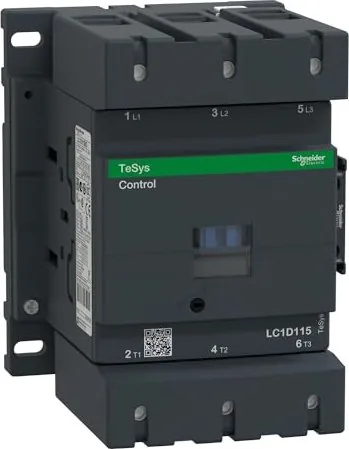
In modern industrial automation, selecting the right component ensures reliability and safety. The specific unit designated as Schneider Electric LC1D 3p, +1NC+1NO, 55 kW, 115 A, 400 V AC3, Coil 24 V DC Contactor Manual represents a robust solution for managing high-power motors. These devices form the backbone of electrical distribution systems across various sectors, enabling efficient control over heavy machinery.
Technical Performance Capabilities
The core functionality revolves around handling substantial electrical loads. With a rated operational current of 115 Amperes under AC3 conditions, this contactor supports motors up to 55 kilowatts. The control coil operates at 24 Volts DC, providing compatibility with standard logic control circuits. This low-voltage control interface enhances operator safety while maintaining the ability to switch high-energy AC lines efficiently. The configuration includes three main poles plus an auxiliary normally closed and normally open contact, offering flexibility for complex circuit logic.
Critical Safety Protocols
Safety remains paramount when working with these high-power components. Electrical shock and fire risks exist due to the potential energy stored in the system. Before servicing any equipment, all power supplies must be disconnected completely. This prevents unexpected equipment operation which could lead to severe injury or death. Technicians should adhere strictly to these guidelines to maintain a safe workspace environment for all personnel involved in maintenance tasks.
Environmental Compliance Standards
Manufacturing processes adhere to strict regulatory standards regarding hazardous materials. Products undergo testing to ensure compliance with international limits on toxic substances like lead and mercury. Efficiency ratings indicate a Grade 2 classification under specific global standards, ensuring energy consumption remains optimized. Maximum power consumption stays below 36.6 VA, contributing to reduced operational costs and lower heat generation within control panels.
Installation and Maintenance Guidelines
Proper mechanical assembly is essential for long-term durability. Using a calibrated torque wrench guarantees correct tightening forces on terminal connections. Incorrect torque settings can cause overheating or connection failures over time. Manufacturing dates follow a specific code pattern allowing traceability throughout the supply chain. Always verify serial identifiers and date codes upon receipt to ensure warranty coverage and stock freshness.
Search for 67,706 Manuals online


Type-in Brand or Model