
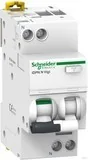
Schneider Electric Acti9 iDPN N Vigi Manual
PDF manual · 5 Pages
English



Quick check
Incorrect answer, please try again.
Chat with your Schneider Electric Acti9 iDPN N Vigi manual using AI
Get instant AI answers from your Schneider Electric Acti9 iDPN N Vigi manual
Ask anything about the Schneider Electric Acti9 iDPN N Vigi. Answers come from this manual, with the pages they are based on.
Acti9 iDPN N Vigi Maintenance Schedule
Press the test button marked T on the front panel every month for devices installed in AF2 to AF4 environments or exposed to voltage surges.
Press the test button marked T on the front panel every month regardless of environmental conditions or exposure to voltage surges.
Press the test button marked T on the front panel after initial connection and every six months for devices in AF1 environments.
Free maintenance reminders
Timed to your purchase date. Always free, unsubscribe anytime.
Ask a Question
Do you recommend Acti9 iDPN N Vigi?
Yes NoFrequently Asked Questions
iDPN N Vigi 1P+N denotes a combined RCBO (residual current circuit breaker with overcurrent protection) in a single-phase 1 pole plus neutral format (1P+N). "Vigi" indicates Schneider Electric's residual current detection feature integrated with the breaker.
Is this answer helpful?
Press the front-panel test button briefly after powering the device and with loads disconnected if possible. This verifies tripping operation. If it fails to trip, follow voltage, frequency and connection checks, measure leakage, and confirm using an IEC/EN 61557-6 RCD tester.
Is this answer helpful?
Test frequency depends on local regulations. Schneider Electric recommends: for voltage-independent RCDs, after initial connection and every six months in AF1 environments or monthly in AF2–AF4; for voltage-dependent RCDs, after initial connection and monthly regardless of environment.
Is this answer helpful?
This device is suited to small dedicated circuits such as control circuits, lighting branches or protected outlets where 6 A is sufficient and where inrush currents occur. It’s ideal for compact distribution boards requiring combined leakage and overcurrent protection.
Is this answer helpful?
Check network frequency and voltage are within device rating, verify correct wiring and disconnect loads, measure permanent leakage currents, and repeat the test. If unresolved, test with an IEC/EN 61557-6 RCD tester and replace the unit if confirmed nonfunctional.
Is this answer helpful?
Standard units are designed for typical environments. For AF2–AF4 corrosive or polluted conditions, select sealed IP65 enclosures or specialized product variants (A-SI classification) and follow manufacturer guidance for materials and protective measures.
Is this answer helpful?
No. The 1P+N iDPN N Vigi is for single-phase circuits. Acti9 three- or four-pole RCDs are available for three-phase systems; ensure correct pole count and neutral handling for your installation.
Is this answer helpful?
Advantages and Disadvantages
Advantages

- Combines RCD and MCB in one compact 1P+N module, saving space and simplifying wiring.
- Type A sensitivity (100 mA) detects pulsating DC residual currents and common AC faults.
- C-characteristic curve tolerates motor inrush and transformer startup currents without nuisance trips.
- 6 kA breaking capacity provides robust short-circuit interruption for typical distribution circuits.
- Front-panel test button enables rapid on-site verification; compatible with IEC/EN 61557-6 testers for detailed checks.
Disadvantages

- 6 A rated current limits use to small or dedicated circuits, not suitable for higher-load feeders.
- 100 mA sensitivity may not provide the ultra-fine protection required in some sensitive applications.
- Front-panel test can be unreliable if supply voltage is outside 85–110% of rated voltage.
- Not suitable for heavily corrosive AF4 environments without appropriate IP65 enclosures or special variants.
- Requires qualified electrician for installation and periodic testing, adding maintenance overhead.
Product Specification
Type
RCBO
Number of poles
1 + N
Rated voltage
230V
Rated current
6A
Rated residual current
100mA
Short-circuit breaking capacity
6kA
Residual current type
A
Tripping characteristic
C
Degree of protection
IP20
Width
1.42in
Module units
2
Special features
Neutral conductor on the left
Product Description
Schneider Electric FI/LS switch iDPN N Vigi 1P+N, 6A, C-characteristic, 100mA, Type A, 6kA Manual
The Schneider Electric iDPN N Vigi 1P+N is a compact combined residual current device (RCD) and miniature circuit breaker (MCB) designed for reliable protection of single-phase circuits. Rated at 6 A with a C-characteristic trip curve, a 100 mA sensitivity (Type A), and 6 kA breaking capacity, this device offers both earth-leakage detection and overcurrent protection in a single module. It is ideal for small distribution boards, localized protection of sensitive circuits, and installations where space and simplicity are important.
Combining Schneider Electric’s established Acti9 and Vigi product philosophies, the iDPN N Vigi integrates rapid disconnection in the event of leakage currents while limiting nuisance tripping through Type A detection of pulsating DC residual currents. The C-characteristic ensures it tolerates short-duration inrush currents from motors or transformers without unnecessary trips. Built for everyday installations, it supports routine testing via the front-panel test button and can be verified with external RCD testers when required.
Installation and maintenance guidance emphasizes that qualified electricians should handle connection and replacement. Regular testing is recommended: monthly checks in more aggressive environments and every six months in benign conditions for voltage-independent RCDs; monthly testing for voltage-dependent types. The built-in test button allows quick verification; if a device fails to trip, further voltage, frequency, connection and leakage assessments must be performed, and an IEC/EN 61557-6 compliant RCD tester used for definitive checks.
Practical considerations include ensuring correct network voltage and frequency, disconnecting loads before tests, and measuring downstream voltages and permanent leakage currents. If measured voltages fall outside 85–110% of the device rating, the test button may be unreliable and corrective action or replacement is necessary. In installations with high permanent leakage, circuits can be separated or a more suitable RCD type chosen. For corrosive or polluted environments (AF2–AF4), choose appropriate enclosures or product variants rated to withstand external influences.
Notes:
- Always disconnect loads before performing the front-panel test when practical.
- Use an IEC/EN 61557-6 RCD tester for conclusive verification.
- Replace immediately if an RCD is confirmed out of service.
Search for 67,706 Manuals online


Type-in Brand or Model