
Sanitas SIH 21 Manual
PDF manual · 64 Pages
English



Quick check
Incorrect answer, please try again.
Chat with your Sanitas SIH 21 manual using AI
Get instant AI answers from your Sanitas SIH 21 manual
Ask anything about the Sanitas SIH 21. Answers come from this manual, with the pages they are based on.
SIH 21 Maintenance Schedule
Disinfect parts after the last daily use by boiling for 5 minutes or soaking in vinegar solution for 30 minutes.
Replace the atomizer once a year due to wear and hygiene reasons.
Replace the air filter after approx. 500 operating hours or one year.
Check the air filter regularly; replace if dirty, blocked, or wet.
Wash all parts with hot water (not boiling) after every treatment and dry thoroughly.
Free maintenance reminders
Timed to your purchase date. Always free, unsubscribe anytime.
Ask a Question
Do you recommend SIH 21?
Yes NoFrequently Asked Questions
Only use distilled water, isotonic saline solution, or medications that have been prescribed by your doctor. Do not use thick oils, cough syrups, or other liquids not approved for inhalation therapy as they can damage the device.
Is this answer helpful?
Limit operation to thirty minutes followed by a mandatory thirty-minute rest interval. This prevents the device from overheating and ensures longevity of the internal motor.
Is this answer helpful?
Wash parts with hot water immediately after use. Rinse thoroughly and air dry completely. For disinfection, use a vinegar solution or boil mask and nozzle parts for five minutes every day.
Is this answer helpful?
Replace the air filter every 500 operating hours or once a year. Do not attempt to clean and reuse the old filter as it must not get wet or re-used.
Is this answer helpful?
No, this unit is designed strictly for private household medical use only. It is not intended for clinical patients or commercial environments. Use it only on humans for the intended respiratory purpose.
Is this answer helpful?
Yes, there is a two-year warranty coverage for material and factory faults starting from the purchase date. Keep your proof of purchase for any claims within this timeframe.
Is this answer helpful?
Advantages and Disadvantages
Advantages

- Effective aerosol therapy delivered directly to the lungs for better absorption.
- Includes multiple attachments like masks for adults and children for versatility.
- Two-year warranty covers all material and factory manufacturing defects for peace of mind.
- Compact design allows easy storage in most domestic spaces without clutter.
- Easy disassembly enables thorough cleaning and disinfection after each session.
Disadvantages

- Operation limit requires a thirty-minute rest period between thirty-minute usage cycles.
- Noise output reaches maximum levels of fifty-two decibels which may be audible.
- Plastic components wear over time which may affect the particle size of the mist.
- Filter must be replaced annually or after 500 hours regardless of visible condition.
- Only distilled water or saline solutions are permitted other liquids cause blockages.
Product Specification
Type
Compressor (11.60-21.03 psi)
Power Mode
AC Power
Nebulization Rate
0.4 ml/min
Features
suitable for children, disinfectable, medicine container, accessory compartment
Sound Level
52 dB(A)
Package Contents
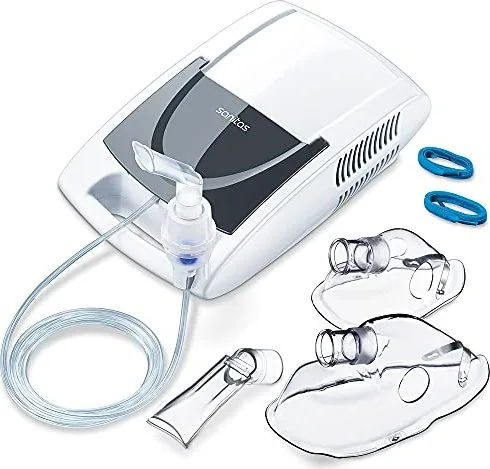
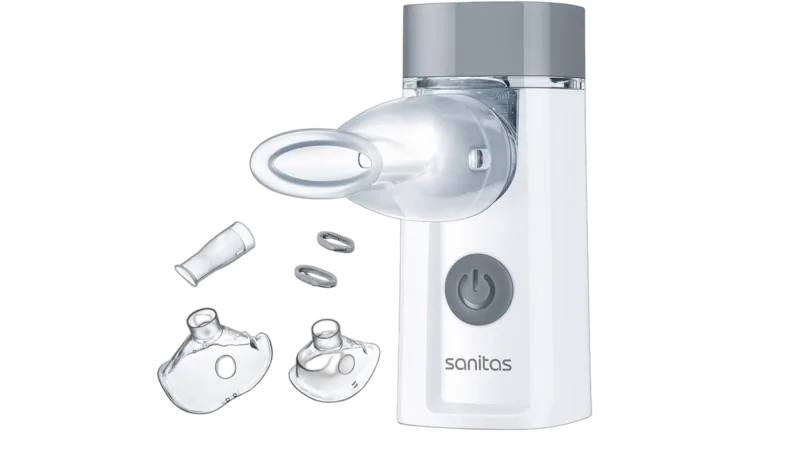
Mouthpiece, adult mask, child mask, air hose, filter
Product Description
Discovering the Sanitas SIH 21 for Home Care
Managing respiratory health effectively often relies on having the right tools within the home environment. The Sanitas SIH 21 stands out as a reliable compressor unit designed specifically for aerosol therapy. This device facilitates the treatment of conditions affecting both the upper and lower respiratory pathways. Users can administer prescribed medications directly to the lungs using a specialized nebulyzer system. It is engineered to transform liquid medicines into a fine mist that penetrates deep into the airways for maximum absorption by the body tissues.
The kit includes several essential attachments to accommodate different age groups and varying medical needs. An adult mask and a child mask are provided alongside a standard mouthpiece for flexibility. Health experts often suggest the mouthpiece offers the highest efficiency during therapy sessions due to direct airway contact. However, masks provide necessary versatility for younger patients who may struggle with specific breathing techniques required for mouthpieces. When setting up the machine, it is vital to follow the guidance found in the Sanitas SIH 21 Manual for precise assembly steps. This ensures complete safety and proper function during every single treatment session. Proper assembly leads to optimal nebulization results for the patient every time.
Safety protocols dictate specific operating procedures to ensure long-term reliability and user protection. The unit is not designed for continuous long-term usage without significant interruption. You must adhere to a thirty-minute on thirty-minute rest cycle to prevent overheating and potential damage to the internal motor. Electrical safety is equally important for all users handling this equipment. Always disconnect the power cord before performing any maintenance or cleaning tasks to avoid serious electrical shock hazards. Store the device in a dry location away from direct sunlight or excessive moisture sources. This protects the sensitive internal electronics from environmental damage or humidity.
Hygiene plays a critical role in therapy effectiveness and preventing dangerous cross-contamination between uses. All removable parts should be washed after each treatment session immediately to remove residues. A comprehensive disinfection routine is recommended at least once daily to kill harmful bacteria and viruses. Use distilled water or saline solutions within the medicine container strictly. Never introduce thick oils or non-prescribed liquids into the system as they cause blockages. Replacing the air filter periodically is also mandatory for maintaining high performance and efficiency.
This inhalator provides a practical and effective solution for managing chronic conditions or acute respiratory issues at home. With its compact dimensions and straightforward controls, it fits easily into most domestic spaces without taking up unnecessary room. Adhering to manufacturer guidelines ensures longevity and therapeutic success over many years of regular use. The system allows for precise dose control through the specified medication flow rate capabilities.
Notes
- Do not use near flammable gases ever regardless of conditions.
- Ensure ventilation slots remain clear of dust always to prevent overheating.
- Check for visible damage before plugging in power to the outlet.
Search for 67,706 Manuals online


Type-in Brand or Model