
Rothenberger Rotest TP25 Manual
PDF manual · 13 Pages
English



Quick check
Incorrect answer, please try again.
Chat with your Rothenberger Rotest TP25 manual using AI
Get instant AI answers from your Rothenberger Rotest TP25 manual
Ask anything about the Rothenberger Rotest TP25. Answers come from this manual, with the pages they are based on.
Rotest TP25 Maintenance Schedule
Keep the tank and pump system clean. Clean the suction pipe filter with water if clogged.
Grease the piston periodically with water-repellent grease. Be careful not to damage the piston.
Ask a Question
Do you recommend Rotest TP25?
Yes NoFrequently Asked Questions
It is used for pressure testing and leak detection in pipe systems and containers. The pump helps confirm whether an installation stays sealed under pressure using water or oil as the test medium.
Is this answer helpful?
The TP25 can reach a maximum test pressure of 25 bar. That makes it suitable for many common plumbing and installation checks where accurate but controlled pressure testing is needed.
Is this answer helpful?
Only water or oil should be used. The manual warns against acids and other corrosive liquids because they can damage seals and shorten the service life of the pump.
Is this answer helpful?
The dual-valve setup lets the user fill the system, remove air, adjust pressure, and release it safely. This makes the testing process more controlled and helps reduce the risk of leaks.
Is this answer helpful?
Keep the tank and pump clean, rinse the filter if it clogs, and lubricate the piston periodically with water-repellent grease. Use only original Rothenberger spare parts for service work.
Is this answer helpful?
After the target pressure is reached, the system should stabilize because temperature and pressure can equalize. If needed, the pump should be used again to restore the correct test pressure.
Is this answer helpful?
Advantages and Disadvantages
Advantages

- Up to 25 bar test pressure for a broad range of leak-testing jobs.
- Dual-valve design helps with filling, venting, and fine pressure control.
- Galvanized steel tank with epoxy coating improves corrosion resistance.
- Brass piston and solid construction support frequent professional use.
- Water or oil testing keeps operation practical and seal-friendly.
Disadvantages

- Manual pumping takes more effort than powered testing equipment.
- Only water or oil are allowed; acids and corrosive fluids are forbidden.
- Performance depends on regular cleaning, lubrication, and inspection.
Product Specification
Suitable for
Water pipes
Product Description
Rothenberger Rotest TP25 Leak Tester Manual
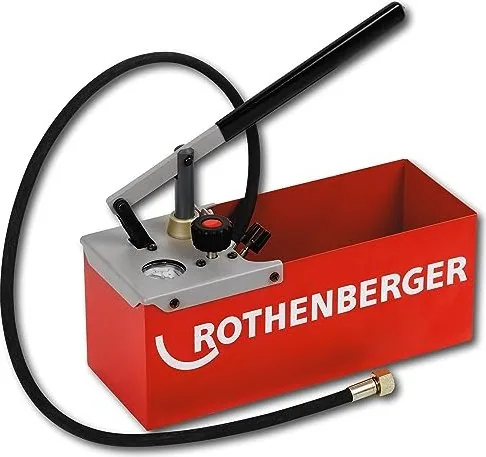
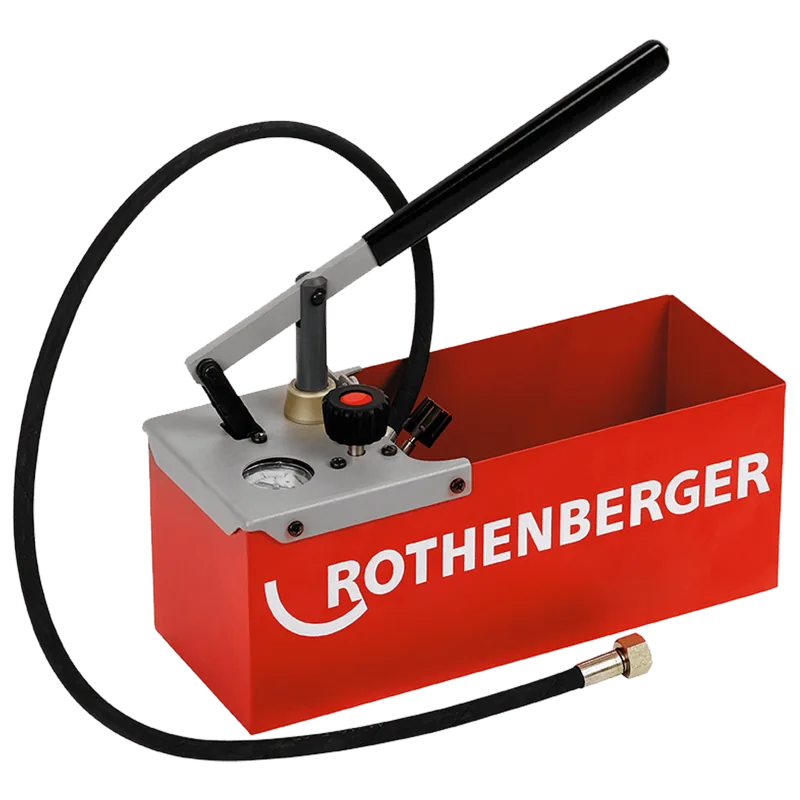
The Rothenberger Rotest TP25 Leak Tester is a precision hand pump designed for pressure testing and leak detection in pipework and tanks. Built for professional use, it helps verify whether a system remains sealed under controlled pressure, making it a reliable companion for installers, maintenance teams, and inspectors who need accurate results without complicated setup.
Practical performance for everyday testing
One of the strongest points of the TP25 is its simple operating logic. It uses a dual-valve system that makes filling, venting, and pressure adjustment straightforward. The pump is intended for water or oil only, which protects the internal seals and keeps the test process clean and dependable. With a maximum pressure of 25 bar, it covers a wide range of common installation checks.
Built for durability and accuracy
Rothenberger has focused on durability in the TP25 design. The galvanized steel tank with epoxy coating helps resist corrosion, while the brass piston improves wear resistance during repeated use. A fine-scaled pressure gauge supports more precise readings, and the inclusion of calibration certificate availability is a useful advantage for users who need documented confidence in their measurements.
Easy handling with clear testing steps
The TP25 is manually operated, so it gives the user direct control over pressure buildup. The pump should be connected with the shut-off valve open and the purge valve closed, then used to remove air from the system before testing begins. After reaching the required pressure, the valves allow fine adjustment and safe release at the end of the test. This workflow is practical and easy to follow in the field.
For best results, the pump should be kept clean, the suction filter checked regularly, and the piston lubricated with water-repellent grease. The manual also stresses the use of original replacement parts, which supports long-term reliability and consistent performance.
Notes
- Use only water or oil as the test medium.
- Do not use acids or corrosive liquids.
- Always wait for pressure stabilization before judging results.
- Inspect hoses and fittings before every test.
In short, the Rothenberger Rotest TP25 Leak Tester combines simplicity, accuracy, and rugged construction in one practical tool. It is especially appealing for users who need trustworthy pressure testing with minimal complexity and strong control over the entire process.
Search for 67,706 Manuals online


Type-in Brand or Model
Sophie Weber
10 months ago
Is the Rothenberger test pump easy to operate and reliable for regular use, and how fast is delivery?
Manual.ly
10 months ago
Yes. Customers report the pump is easy to handle with straightforward operation, and it feels solid for regular professional use. Several reviews highlight the high quality and durable build, including stable packaging and reliable valve setup. Regarding delivery, at least one reviewer received the unit as quickly as about one day after ordering, and others also mentioned fast shipping. If you order today, delivery time can vary by location and stock, but the feedback indicates generally quick fulfillment.