
Ritchey WCS Carbon Trail Zero Manual
PDF manual · 8 Pages
English



Quick check
Incorrect answer, please try again.
Chat with your Ritchey WCS Carbon Trail Zero manual using AI
Get instant AI answers from your Ritchey WCS Carbon Trail Zero manual
Ask anything about the Ritchey WCS Carbon Trail Zero. Answers come from this manual, with the pages they are based on.
WCS Carbon Trail Zero Maintenance Schedule
Apply specialized creams or conditioning liquids to maintain leather surfaces. Buff off excess to prevent slippage.
Apply silicone-based liquid or spray to the surface. Rub it in and buff off excess to prevent the saddle from becoming slippery.
Ritchey recommends changing stems and handlebars made of carbon at intervals of three years depending on usage, even if undamaged.
Check all bolts after the first 200-400 kilometers (120-240 miles) and adjust as needed within prescribed torque limits.
Check all bolts every 2,000 kilometers (1,200 miles) and adjust as needed, keeping within the prescribed torque limits.
Free maintenance reminders
Timed to your purchase date. Always free, unsubscribe anytime.
Ask a Question
Do you recommend WCS Carbon Trail Zero?
Yes NoFrequently Asked Questions
No, never apply grease or oil to the seat tube where the carbon post inserts. Grease reduces friction and prevents a secure hold, potentially causing the post to slip or fail. Use Ritchey Liquid Torque instead.
Is this answer helpful?
Stop riding immediately. A cracking or creaking noise indicates potential structural damage. Do not use the bike until a qualified mechanic inspects the post. Carbon parts often require replacement after such incidents.
Is this answer helpful?
This product is designed for road, triathlon, cyclocross, and normal mountain biking conditions. It is not built for freeride, dual slalom, or downhill racing involving large jumps and impacts.
Is this answer helpful?
Check all bolts after the first 200-400 kilometers (120-240 miles) and adjust as needed within specified torque limits. Thereafter, inspect every 2,000 kilometers (1,200 miles).
Is this answer helpful?
No, never paint carbon components. The heat required to cure paint will separate the carbon fibers and destroy the structural integrity of the part.
Is this answer helpful?
Carbon components must never be subjected to excessive heat. Leaving them in a hot car or direct sunlight for prolonged periods can damage the resin matrix and compromise safety.
Is this answer helpful?
Advantages and Disadvantages
Advantages

- Extremely lightweight carbon construction enhances ride efficiency
- Superior vibration damping improves comfort on rough terrain
- Zero offset design reduces weight and improves aerodynamics
- High-strength materials offer excellent durability for trail use
- Compatible with Ritchey Link saddle systems for versatile setup
Disadvantages

- Requires strict adherence to no-grease installation rules
- Cannot be repaired if damaged and must be replaced entirely
- Sensitive to impact damage that may not be visually obvious
- Higher cost compared to aluminum alternatives
- Needs regular inspection for hidden internal stress fractures
Product Specification
Type
Seatpost
Colors
black
Material
Carbon
Length
15.75 in
Setback
0 in
Diameter
1.07 in
Weight
7.05 oz
Product Description
Experience the Ultimate in Carbon Trail Performance
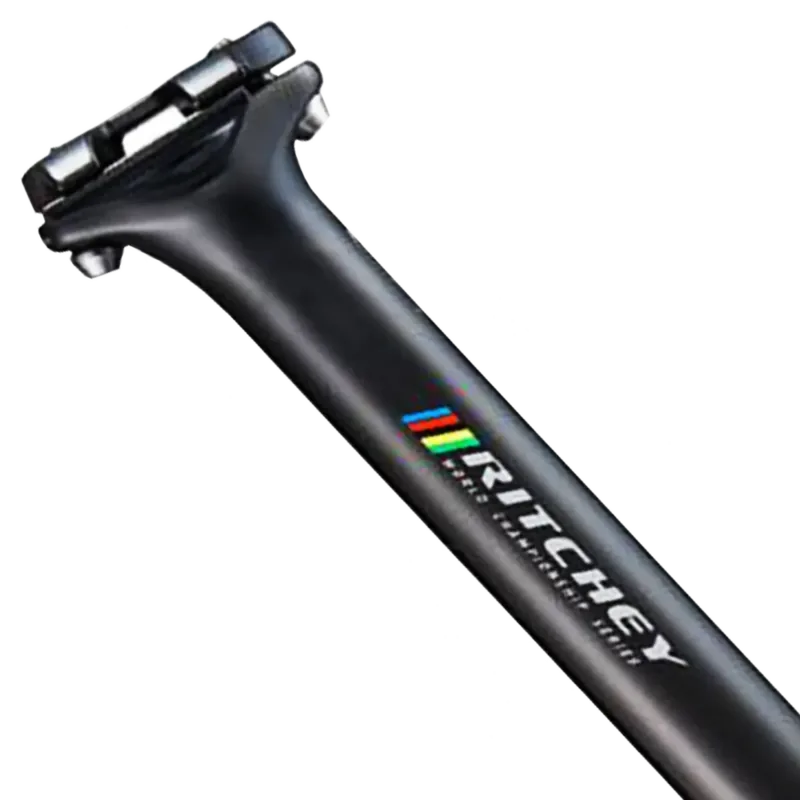
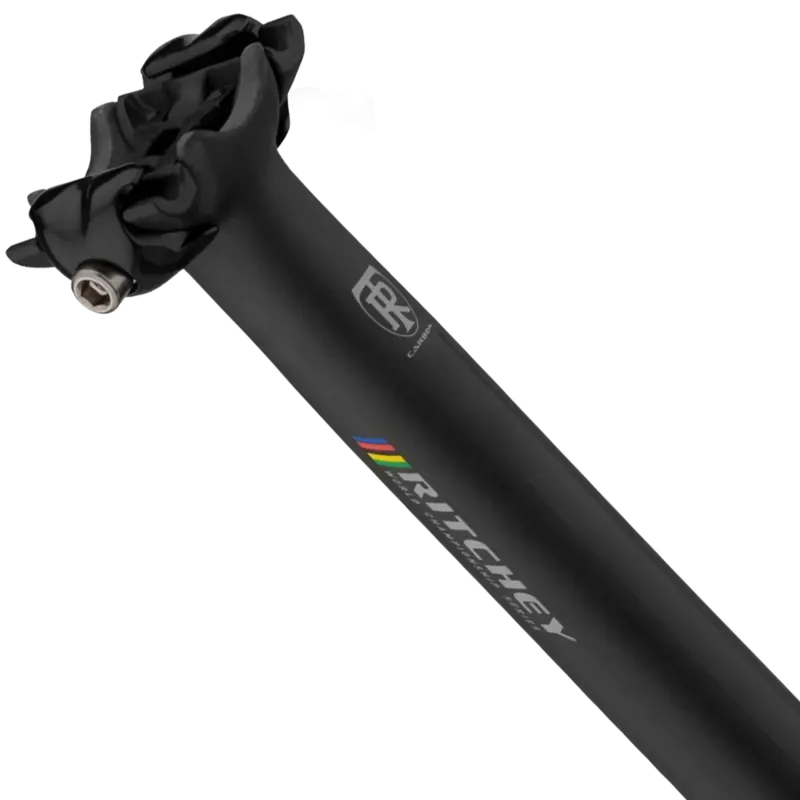
The Ritchey WCS Carbon Trail Zero Seat Post represents the pinnacle of lightweight engineering and durability for serious cyclists. Designed specifically for trail riding, this component blends high-modulus carbon fiber with a sleek, zero-offset design that minimizes weight without sacrificing strength. Whether you are tackling technical descents or climbing steep switchbacks, the Ritchey WCS Carbon Trail Zero provides a stable platform that absorbs vibrations while maintaining precise control.
Why Choose the Ritchey WCS Carbon Trail Zero?
Constructed from premium carbon materials, this seat post offers an exceptional strength-to-weight ratio. The proprietary carbon layup ensures resistance to fatigue and impact, making it ideal for aggressive riding conditions. However, carbon requires specific care. Unlike metal, it does not show visible deformation before failure, so adhering strictly to installation guidelines is vital for safety. The post features a smooth finish that resists dirt accumulation, ensuring long-lasting performance in muddy environments.
Installation and Maintenance Essentials
Proper installation is the cornerstone of safety with carbon components. The seat tube must be completely free of grease where the post inserts, as lubricants can compromise the friction needed for a secure hold. We strongly recommend using Ritchey Liquid Torque on all clamping surfaces to achieve optimal grip at lower torque settings, protecting the carbon fibers from crushing. Always use a calibrated torque wrench to adhere to manufacturer specifications, typically found on the clamp assembly.
Regular maintenance checks are crucial. Inspect the post after every major impact or crash, looking for cracks, discoloration, or unusual noises. If any damage is suspected, replace the part immediately; carbon components cannot be repaired. Cleaning should be done with mild soap and water, avoiding harsh solvents that could degrade the resin matrix.
Key Features at a Glance
- Zero Offset Design: Minimizes aerodynamic drag and reduces overall weight.
- Carbon Construction: High-grade fibers provide stiffness and vibration damping.
- Compatibility: Fits standard frame diameters with precise tolerances.
- Durability: Engineered to withstand rigorous trail abuse when maintained correctly.
- Safety First: Requires strict adherence to torque limits and no-grease zones.
Important Notes for Owners
Never exceed the recommended torque limits, as over-tightening can cause catastrophic failure. Avoid painting carbon parts or exposing them to extreme heat, which can weaken the structural integrity. If your bike has suffered a significant crash, have the post inspected by a professional dealer before riding again.
Search for 67,706 Manuals online


Type-in Brand or Model