
Pylontech PowerCube-X1 Manual
PDF manual · 26 Pages
English



Quick check
Incorrect answer, please try again.
Chat with your Pylontech PowerCube-X1 manual using AI
Get instant AI answers from your Pylontech PowerCube-X1 manual
Ask anything about the Pylontech PowerCube-X1. Answers come from this manual, with the pages they are based on.
Ask a Question
Do you recommend PowerCube-X1?
Yes NoFrequently Asked Questions
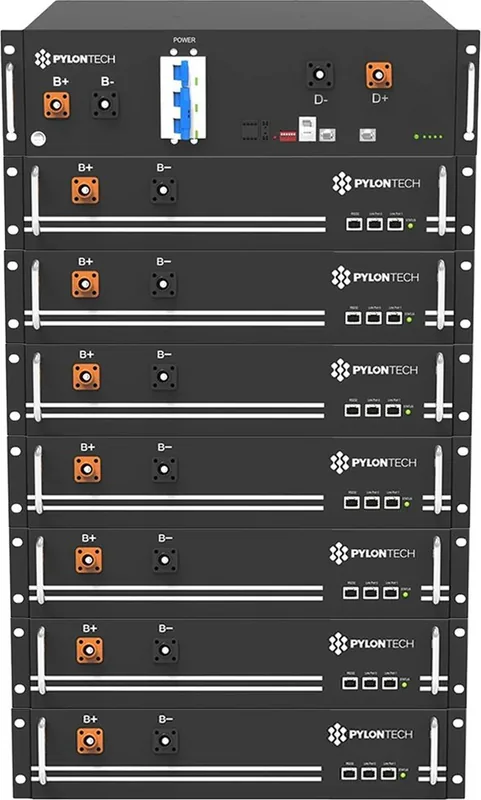
The standard Powercube X1 system is specified as 16.8 kWh at 336 Vdc (50 Ah). It’s assembled from seven 48 V battery modules (H48050) to reach the system voltage.
Is this answer helpful?
It uses LiFePO4 (lithium iron phosphate) chemistry, which offers high thermal and chemical stability, longer cycle life, low self-discharge, good low-rate performance, and improved safety compared with some other lithium chemistries.
Is this answer helpful?
The system supports RS485 and CAN for inverter and multi-module communication, plus RS232 for debugging/service. RJ45 ports and address switches simplify networked module setups.
Is this answer helpful?
The multi-level Battery Management System monitors cell voltages, currents and temperatures, and provides protections including overcharge, overdischarge, overcurrent, high/low temperature protection and cell balancing to extend life and maintain safety.
Is this answer helpful?
Yes. Install indoors on a flat, non-combustible surface with good ventilation. Operating temperature is 0°C–50°C; storage is -20°C–60°C. Proper earthing (<1 Ω recommended), correct polarity wiring, insulated tools and PPE are required during installation.
Is this answer helpful?
Avoid contact with leaked materials, evacuate or ventilate the area if necessary, seek medical attention for exposure, and contact Pylontech or an authorized service provider. Damaged modules should be returned in original packaging per the manufacturer’s instructions.
Is this answer helpful?
No. The Powercube X1 does not include an internal soft-start; the connected inverter must provide soft-start functionality to prevent equipment stress or failure.
Is this answer helpful?
Advantages and Disadvantages
Advantages

- High safety LiFePO4 chemistry with low self-discharge and long cycle life (≈3500 cycles).
- Modular 19-inch embedded design allows flexible series/parallel expansion of capacity.
- Multi-level BMS with protections for overcharge, overdischarge, overcurrent and temperature.
- Efficient system (~96%) with recommended 0°C–50°C operating range and compact footprint.
- Multiple communication interfaces (RS485, CAN, RS232) for inverter and monitoring integration.
Disadvantages

- IP20 rating restricts use to indoor, well-protected installations (not weatherproof).
- No internal soft-start — requires inverter with soft-start to avoid device failure.
- Relatively heavy (≈250 kg) and requires careful rack/structural planning for installation.
- Service and module replacement must follow strict procedures; unauthorized disassembly prohibited.
- Emergency handling needed for leaks or damage; professional support required for faults.
Product Specification
Note
Prices include partial 0% VAT tax rates for AT and DE
Battery type
LiFePO4
Discharge current
50A
Operating temperature
+50°F to +104°F
Display
no
Features
Battery management system
Interfaces
RJ-45, Modbus RTU
Mounting type
Battery cabinet
Protection class
IP20
Dimensions
23.62x83.86x19.88in (WxHxD)
Product Description
Pylontech Powercube X1 — Compact High-Voltage LFP Energy Storage
The Pylontech Powercube X1 is a high-voltage lithium-iron-phosphate (LiFePO4) battery storage system designed for reliable, long-life energy storage in compact installations. With a nominal system voltage of 336 V and 16.8 kWh capacity (336V/50Ah), the Powercube X1 combines modular battery blocks, layered battery management, and flexible communication interfaces to serve residential, commercial or light industrial backup and peak-shaving needs.
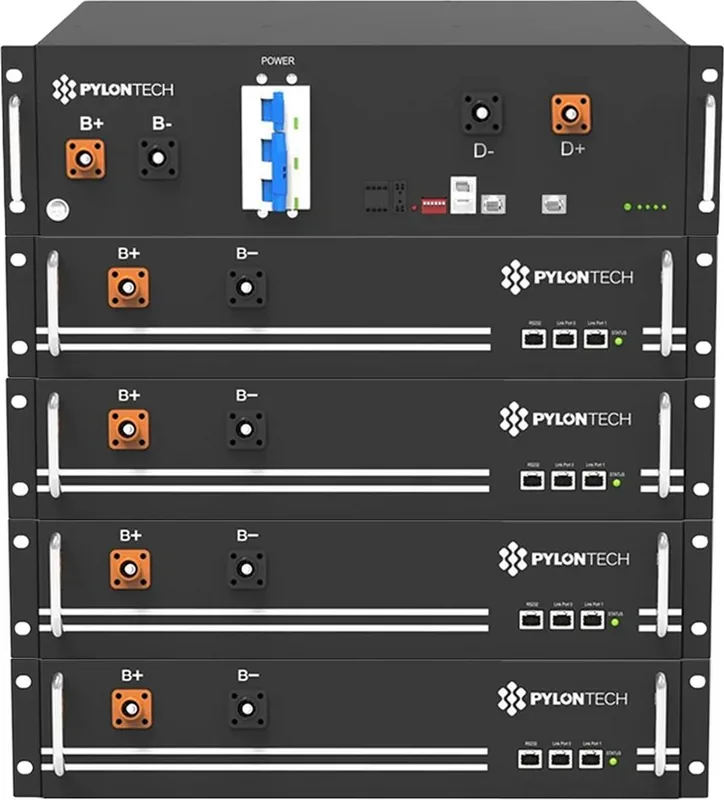
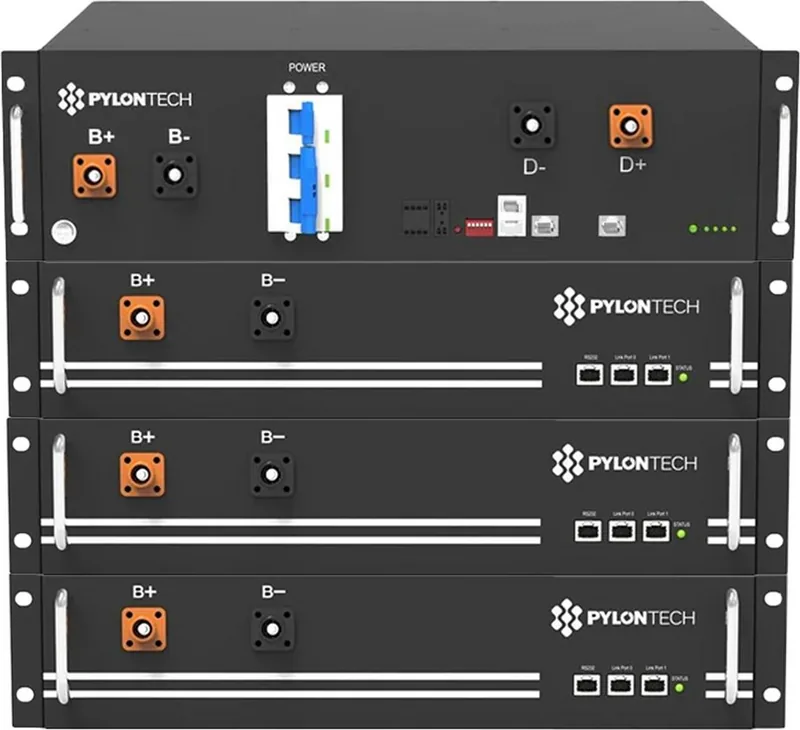
The system is built from multiple 48 V modules (H48050) arranged to reach the system voltage; each module uses LiFePO4 cells for thermal and chemical stability, low self-discharge and extended cycle life. The Powercube X1 supports parallel expansion for increased capacity and higher power demands. It features a self-cooling design, compact 19-inch embedded module form factor, and an overall IP20 protection rating suitable for indoor rack installations.
Internally the Powercube X1 implements a multi-level BMS architecture (two-level BMS with optional MBMS control) that continuously monitors cell voltages, currents and temperatures, balances charge across cells and protects against overcharge, overdischarge, overcurrent and temperature extremes. The controller (SC0500-100) provides RS485/CAN and RS232 links for integration with inverters and external supervisory systems; address switches and RJ45 ports simplify multi-module communications. Status LEDs and clear alarm/protection indicators help technicians identify states such as standby, charging, discharging, alarm and protection.
Installation emphasizes safety and correct wiring: the system must be earthed, polarity must be respected, modules should be handled only with insulated tools and appropriate PPE, and frequency inverters used with the Powercube X1 should provide soft-start functionality. The recommended operating temperature range is 0°C–50°C, and storage is supported from -20°C to 60°C. Typical lifecycle data includes around 3,500 cycles and a design life near 10 years, with system efficiency around 96% and recommended depth of discharge up to 80%.
Maintenance and emergency guidance stress that only authorized personnel should open or repair modules, and that in case of leakage, immersion, or damage, specialized handling is required: avoid contact with leaked electrolyte, never use water to extinguish battery fires (use powder extinguishers), and contact Pylontech support for damaged units.
Notes
- Soft-start capability must be provided by the inverter; the Powercube X1 lacks an internal soft-start circuit.
- Ensure all modules in a system share compatible voltages when replacing a module to avoid long rebalancing times.
- Register the product for warranty and support through the manufacturer.
Search for 67,706 Manuals online


Type-in Brand or Model