
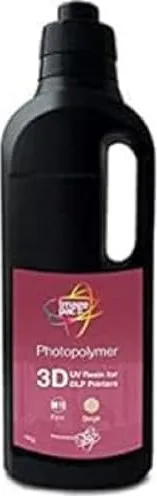
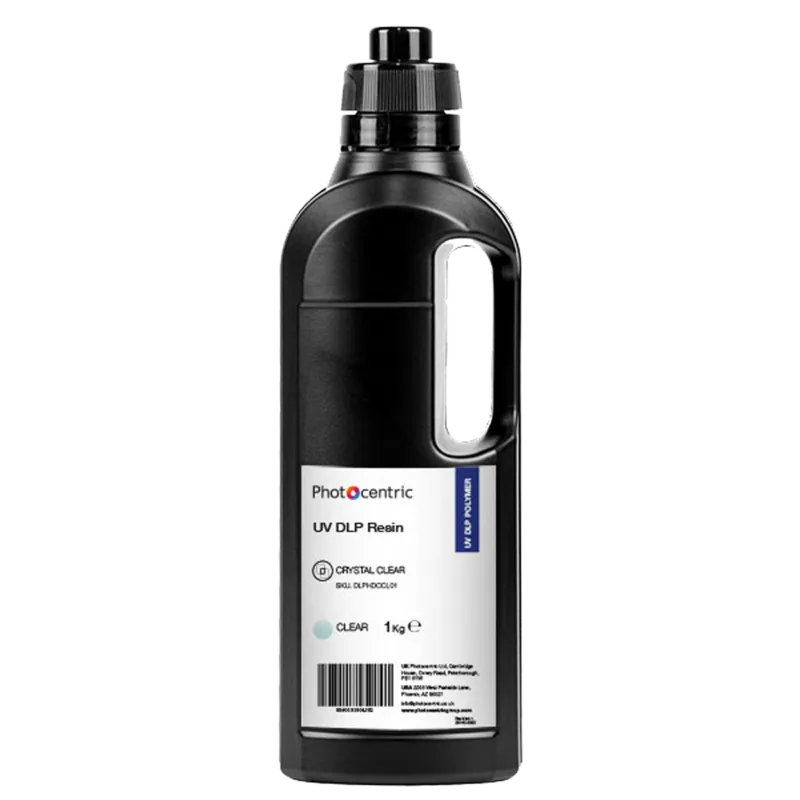
PhotoCentriC UV DLP Firm Manual
PDF manual · 7 Pages
English


Quick check
Incorrect answer, please try again.
Chat with your PhotoCentriC UV DLP Firm manual using AI
Get instant AI answers from your PhotoCentriC UV DLP Firm manual
Ask anything about the PhotoCentriC UV DLP Firm. Answers come from this manual, with the pages they are based on.
Ask a Question
Do you recommend UV DLP Firm?
Yes NoFrequently Asked Questions
This clear, firm resin is formulated for DLP (Digital Light Processing) 3D printers. It performs best on DLP systems with compatible wavelength UV sources; always verify exposure and layer settings for your specific machine.
Is this answer helpful?
Store in a cool, well-ventilated area with the container tightly closed. Use nitrile gloves, safety glasses, and adequate ventilation when handling. Keep away from heat and strong oxidizers, and have an eyewash station available.
Is this answer helpful?
After printing, rinse parts in isopropyl alcohol to remove uncured resin, gently dry, then perform a short UV post-cure to reach optimal mechanical properties. Follow manufacturer exposure and curing times to avoid over- or under-curing.
Is this answer helpful?
The resin can cause skin and eye irritation and may cause allergic skin reactions. Avoid inhaling vapors or mists. In case of skin contact, wash with soap and water; for eye exposure, irrigate for 15 minutes and seek medical help.
Is this answer helpful?
Contain spills with inert absorbent (e.g., sand), collect into labeled, closable containers, and arrange disposal through a licensed hazardous-waste contractor. Do not discharge into drains or the environment.
Is this answer helpful?
Components may be harmful to aquatic life with long-lasting effects. The formulation is not identified as PBT/vPvB, but releases to waterways should be avoided and waste managed responsibly.
Is this answer helpful?
Advantages and Disadvantages
Advantages

- High dimensional stability and low shrinkage for detailed DLP prints.
- Clear formulation suitable for visual prototypes and fixtures.
- Firm final parts with strong interlayer adhesion after post-cure.
- 1kg supply balances workshop convenience and manageable shelf use.
- Fast cure rates optimized for DLP systems, improving throughput.
Disadvantages

- Contains irritant/sensitizing acrylates and photoinitiators—requires PPE.
- Requires careful waste handling; not to be discharged to drains or waterways.
- Potential allergic reactions for sensitive users; skin contact risk.
- Flammable/exothermic hazards under fire conditions; avoid heat sources.
- Not fully bioaccumulative but may be harmful to aquatic life if released.
Product Specification
Container
Bottle
Type
Photopolymer resin
Suitability
universal Digital Light Processing (DLP)
Viscosity
560 cP (at 77°F)
Elongation at break
10%
Modulus of elasticity
101.53 ksi
Tensile strength
3.77 ksi
Dimensional stability
125.60°F
Density
73.66 lb/ft3
Weight
2.20 lb
Base color
colorless
Shade
transparent
Special features
UV-sensitive, Shore D65 hardness
Product Description
PhotoCentriC UV Firm Resin, Clear, DLP, 1kg Manual
PhotoCentriC UV Firm Resin, Clear, DLP, 1kg Manual presents a professional-grade photopolymer designed for DLP 3D printing where dimensional stability and surface detail matter. This clear, low-viscosity resin cures under ultraviolet light to produce firm, accurate parts suitable for functional prototypes, jigs, and fixtures. Formulated with a blend of acrylate and methacrylate monomers plus photoinitiators, the resin offers a balance of hardness and low shrinkage that helps preserve fine features while resisting deformation during post-cure.
The material is optimized for DLP systems and is provided in a 1kg container—convenient for repeated small-batch runs or regular workshop use. Its clarity makes it useful for visual prototypes and fixtures where translucency is desired, though filled or pigmented variants may be preferred for specific aesthetic needs. Users can expect relatively fast layer curing times and strong interlayer adhesion when printing with recommended exposure settings. Due to its formulation, printed parts respond well to typical post-processing like rinsing with isopropyl alcohol and a short post-cure under UV to reach maximum mechanical properties.
Safety and handling are important with any UV-curable resin. PhotoCentriC UV Firm Resin contains acrylate oligomers, monomers, and photoinitiators that can cause skin and eye irritation and may trigger allergic skin reactions in susceptible individuals. The product is classified under standard hazard categories for irritation and sensitization and includes precautionary guidance: use gloves, eye protection, and adequate ventilation; avoid inhalation of vapors or mists; and rinse thoroughly following any skin or eye contact. In the event of spills, contain and absorb with inert material and dispose of waste via an approved hazardous waste route—do not release into drains or waterways.
Storage recommendations emphasize a cool, well-ventilated area with containers kept tightly closed and away from heat and strong oxidizers. While the resin is stable under normal storage conditions, decomposition and hazardous fumes can occur if exposed to fire. For emergency response, standard first-aid measures apply: flush eyes with water for at least 15 minutes, wash skin with soap and water, and seek medical attention for significant exposures.
Notes:
- Follow manufacturer exposure time and temperature recommendations for best print quality.
- Wear nitrile gloves and eye protection; keep an eyewash station accessible.
- Dispose of resin waste via licensed hazardous-waste handlers; avoid environmental release.
Search for 67,706 Manuals online


Type-in Brand or Model