Manual.ly Logo

Omron CompAIR Pro C900 Manual

0.0 · 0 Ratings

PDF manual · 2 Pages

English

M: OA-GPT-5-NAN
page

/ 2

Loading...
9332a6585691145874b7ea4538347ee56600 page 2
Technical data
Name: COMP AIR Pro
Model: NE-C900 (NE-C900-E)
Type: Compressor Nebulizer
Rating: AC 220-240V, 50Hz
Power Consumption: 220VA
Operating Temperature/
Humidity:
+10°C to +40°C / 30% to 85%RH
Storage and Transport
Temperature/Humidity/
Air Pressure:
-20°C to +60°C / 10% to 95%RH /
700 - 1060hPa
Weight: Approx. 2.2kg (compressor only)
Dimensions: Approx. 175 (W) × 110 (H) ×215 (D) mm
(compressor only)
Contents:
Compressor, Nebulizer Kit, Air Tube (PVC,
200cm), Mouthpiece, Nosepiece, Adult Mask
(PVC), Child Mask (PVC), 5 pcs Spare Air
Filters, Instruction Manual, Warranty Card.
Classification: Class ll equipment, Type B applied part
= Class ll
equipment
= Type B
applied part
Read the instruction
manual carefully
= Power off
= Power on
Technical data for the OMRON NE-C900 Compressor with the Nebulizer Kit:
Particle Size: **MMAD Approx. 3μm
MMAD = Mass Median Aerodynamic Diameter
Medication Tank Capacity: 7ml maximum
Appropriate Medication
Quantities:
2ml minimum - 7ml maximum
Sound: *Approx. 55dB
Nebulization Rate: *Approx. 0.4ml/min (by weight loss)
Airflow/Compressor
Output:
*7L/min @100kPa
Aerosol Output: **0.57ml (2ml, 1%NaF)
Aerosol Output Rate: **0.08ml/min (2ml, 1%NaF)
Result of cascade impactor measurements for particle size**
*
Measured by OMRON HEALTHCARE Co., Ltd.
**
Independently measured by Prof. Dr. Hiroshi Takano, Department of Chemical
Engineering and Materials Science, Faculty of Science and Engineering, Doshisha
University, Kyoto, Japan, according to EN 13544-1:2007+A1:2009.
Notes:
 Subject to technical modification without prior notice.
 This OMRON product is produced under the strict quality system of OMRON
HEALTHCARE Co., Ltd., Japan.
 The device may not work if the temperature and voltage conditions are different to
those defined in the specifications.
 This device fulfils the provisions of the EC directive 93/42/EEC (Medical Device
Directive) and the European Standard EN13544-1:2007+A1:2009, Respiratory
therapy equipment - Part1: Nebulizing systems and their components.
 Performance may vary with drugs such as suspensions or high viscosity. See drug
supplier’s data sheet for further details.
 See website of OMRON HEALTHCARE EUROPE to update technical information.
URL: www.omron-healthcare.com
Removing condensation from the air tube
If there is moisture or liquid remaining in the air tube, be sure to follow the
procedure below to remove any moisture from within the air tube.
1) Make sure that the air tube is connected to the air connector on the
compressor.
2) Remove the air tube from the nebulizer kit.
3) Turn on the compressor and pump air through the air tube to expel the
moisture.
Changing the air filter
If the air filter has been used for more than 60 days, replace it with a new
one.
1. Pull the air filter cover off the compressor.
2. Change the air filter.
Remove the old air filter with a sharp object
and insert the new air filter.
3. Put the air filter cover back in place.
Make sure it is attached properly.
Notes:
 Use only OMRON air filters designed for this device. Do not operate without a filter.
 Do not wash or clean the filter. If the air filter becomes wet, replace it. Damp air filters
can cause blockages.
 There is no front or back orientation for the air filters.
 Check that air filters are clean and free of dust before inserting them.
Cleaning and disinfecting
Cleaning
Clean the parts after each use to remove residual medication. This will avoid
inefficient nebulization or infection.
Q
Washable parts
Nebulizer Kit (Inhalation top, Medication tank), Mask (PVC)/(SEBS),
Mouthpiece, Nosepiece
Wash them in warm water and mild detergent (neutral detergent). Rinse
them thoroughly with clean hot tap water and allow to air dry in a clean
place.
Q
Non-washable parts
Compressor, Air Tube
Firstly, make sure that the power plug is unplugged from the power outlet.
Wipe clean with a soft cloth moistened with water or mild detergent
(neutral detergent).
Air Filter
Do not wash or clean the air filter. If the air filter becomes wet, replace it.
Damp air filters can cause blockages.
Disinfecting
Always disinfect the parts after the last treatment of the day. If the parts are
heavily stained, replace them with new ones.
To select a method for disinfection, refer to the table below.
o
: applicable
X
: not applicable
Disinfecting
method
Parts
Mouthpiece
Nosepiece
Nebulizer Kit
Adult Mask (SEBS)
(optional)
Child Mask (SEBS)
(optional)
Adult Mask (PVC)
Child Mask (PVC)
Infant Mask (PVC)
(optional)
Air Tube
(PVC, 200cm)
Air Filter
Materials
PP
PP
PP
Mask: SEBS
Band: Rubber
(non-latex)
Adapter: PP
Mask: PVC
(Phthalate free)
Band: Rubber
(non-latex)
PVC
(Phthalate free)
Polyester
A
Alcohol
ooo o o
XX
Disinfecting
ethanol
Sodium
hypochlorite
ooo o o
XX
Milton*
(0.1%, 15min.)
Quaternary
ammonium
ooo o o
XX
Osvan*
(0.1%, 10min.)
Chlorhexidine
ooo o o
XX
Hibitane*
(0.5%, 30min.)
Amphoteric
Surfactant
ooo o o
XX
Tego 51*
(0.2%, 15min.)
B
Boiling
ooo o
XXX
*
an example of commercially available disinfectant. (The concentration and residence
time specified in the table are under the conditions where the service life of the parts
is tested with each disinfectant used as described in its instruction manual. Please
note that the testing was not performed for the purpose of ensuring the effectiveness
of the disinfectants. There is no intention of suggesting that such disinfectants be
used. Conditions of use and ingredients of disinfectant vary for manufacturers.
Please read the instruction manuals carefully before use and apply disinfectant to
each part in an appropriate way. Please notice that service life of the parts may be
shorter depending on conditions, environments and frequency of use.)
A. Use a commercially available disinfectant. Follow the instructions
provided by the disinfectant manufacturer.
Note: Never clean with benzene, thinner or a flammable chemical.
B. Parts may be boiled between 15 to 20 minutes.
After boiling, carefully remove the parts, shake
off excess water and allow to air dry in a clean
environment.
How to use
Warning:
Clean and disinfect the nebulizer kit, mask, mouthpiece or nosepiece before using them
when as follows:
- the first time after purchase.
- if the device has not been used for a long period of time
- if more than one person uses the same device
For the instructions, refer to “Cleaning and disinfecting” section.
1. Make sure that the power switch is in the off (
) position.
2. Plug the power plug into a power outlet.
3. Remove the inhalation top from the medication
tank.
4. Add the correct amount of prescribed medication
to the medication tank.
5. Put the inhalation top back inside the medication
tank.
6. Attach the mask, mouthpiece or nosepiece to the nebulizer kit tightly.
7. Attach the air tube.
Twist the air tube plug slightly and push it firmly into the air tube connector.
8. Hold the nebulizer kit as
indicated on the right.
Follow the instructions of
your doctor or respiratory
therapist.
Caution:
Do not tilt the nebulizer kit at an
angle of greater than 45 degrees
in all directions. Medication may
flow into the mouth or it may result
in not nebulizing effectively.
9. Press the power switch to the on (
) position. As the compressor
starts, nebulization begins and aerosol is generated.
Inhale the medication.
10. When treatment is complete, turn the power off and unplug the
compressor from the power outlet.
Troubleshooting
Check the following if your unit should fail during operation.
Problem Cause Remedy
Nothing happens when the
power switch is pressed.
Is the power plug plugged into
a power outlet?
Check that the plug is inserted
in a power outlet. Unplug then
reinsert the plug if necessary.
No nebulization or low
nebulization rate, when the
power is on.
Is there medication in the
medication tank?
Add the correct amount of
medication to the medication tank.
Is there too much/little
medication in the medication
tank?
Is the nebulizer kit assembled
correctly?
Assemble the nebulizer kit
correctly.
Is the nozzle blocked? Make sure that the nozzle is free
of blockages.
Is the nebulizer kit tilted at a
sharp angle?
Make sure that the nebulizer kit is
not tilted at an angle of more than
45 degrees.
Is the air tube connected
correctly?
Make sure that the air tube
is correctly connected to the
compressor and nebulizer kit.
Is the air tube folded or
damaged?
Make sure that the air tube does
not contain kinks.
Is the air tube blocked? Make sure that the air tube is free
of blockages.
Is the air filter dirty? Replace the air filter with a new
one.
The device is abnormally
loud.
Is the air filter cover attached
correctly?
Attach the air filter cover correctly.
The device is very hot. Is the compressor covered?
Do not cover the compressor with
any type of cover during use.
Note:
If the suggested remedy does not solve the problem, do not try to repair the device
- no parts of the unit are user serviceable. Return the unit to an authorized
OMRON retail outlet or distributor.
1
2
1
2
Clicks
Right angle
45°45°
100
90
80
70
60
50
40
30
20
10
0
1 10 1000.1
Cumulative % particle mass of sodium fluoride under size
Cumulative Undersize%

Individual tests
Mean

Chat with your Omron CompAIR Pro C900 manual using AI

Get instant AI answers from your Omron CompAIR Pro C900 manual

Ask anything about the Omron CompAIR Pro C900. Answers come from this manual, with the pages they are based on.

CompAIR Pro C900 Maintenance Schedule

Remind me when maintenance is due
Daily
Disinfect nebulizer accessories

Disinfect the parts after the final treatment of each day. Replace parts with new ones if heavily soiled.

Every 60 days
Replace the air filter

Replace the air filter with a new OMRON filter when it has been used longer than 60 days. Do not wash or clean the filter.

Before each use
Inspect the device and parts

Check for defects before use, especially damage or blockage of the nozzle and air tube, and normal compressor operation.

After each use
Wash nebulizer accessories

Wash the nebulizer set, mask, mouthpiece and nosepiece after use to remove medication residue. Rinse thoroughly and air-dry in a clean area.

Free maintenance reminders

Timed to your purchase date. Always free, unsubscribe anytime.

By submitting you agree to the privacy policy. Unsubscribe with one click in any email.
M: gpt-5.6-terra

Ask a Question

0/1000

Do you recommend CompAIR Pro C900?

Yes No

Video Manual

Omron Compair C900 - Aérosol

Frequently Asked Questions

A

The medication tank accepts a minimum of 2 ml and a maximum of 7 ml. Do not add more than 7 ml to avoid ineffective nebulization or overflow. Always follow your clinician’s prescribed dose and recommendations.

Is this answer helpful?

A

Replace the air filter if it becomes wet or after 60 days of use. Do not wash the filter; using a damp or clogged filter can reduce performance. Use only OMRON-designated air filters for correct fit and operation.

Is this answer helpful?

A

Wash washable parts (nebulizer kit, masks, mouthpiece, nosepiece) after each use in warm water with mild detergent, rinse thoroughly and air dry. Disinfect after the day’s last treatment using recommended methods (e.g., appropriate disinfectants or boiling where specified). Follow disinfectant manufacturer instructions and OMRON guidance.

Is this answer helpful?

A

Check that the medication tank has the correct volume, the nebulizer kit is assembled properly, the nozzle and air tube are not blocked or kinked, and the air filter is clean. Ensure the air tube is securely attached and the nebulizer is not tilted beyond 45°.

Is this answer helpful?

A

Yes—when used under the guidance of a qualified medical professional. The device is designed for homes, clinics, and hospitals, but should not be used on unconscious patients. Follow safety, cleaning, and maintenance instructions to ensure safe operation.

Is this answer helpful?

A

Sound level is approximately 55 dB during operation. Recommended operating temperature is +10°C to +40°C with 30%–85% relative humidity. Avoid using the device in humid, flammable, or noxious environments.

Is this answer helpful?

A

OMRON advises using only original nebulizing parts, air tubes, air filters, and covers. Non-approved parts may impair performance, cause blockages, or void warranty and safety compliance.

Is this answer helpful?

M: OA-GPT-5-NAN

Advantages and Disadvantages

Advantages

  • Produces fine aerosol (MMAD ≈ 3 µm) suitable for lower airway delivery.
  • Comprehensive kit includes masks, mouthpiece, nosepiece, and spare filters.
  • Conforms to EN13544-1 and EMC EN60601-1-2:2007 standards for safety and compatibility.
  • Durable compressor life (approx. 5 years) with replaceable consumables for hygiene.
  • Straightforward operation and clear troubleshooting for common issues.
VS

Disadvantages

  • Requires mains power (220–240 V), limiting portability and outdoor use.
  • Consumable parts (nebulizer kit, masks, tube) require periodic replacement.
  • Air filters must not be washed and need replacement every 60 days.
  • Noise (~55 dB) and vibration during operation may be bothersome to some users.
  • Not suitable for unconscious patients or those not breathing spontaneously.
M: OA-GPT-5-NAN

Product Specification

Type

Compressor

Operation Mode

Mains operation

Nebulization Rate

0.40 mL/min

Special features

suitable for children, disinfectable, medicine container

Noise level

55 dB(A)

Scope of delivery

Mouthpiece, nose piece, adult mask, child mask, filter set, compressed air hose

M: OA-GPT-54-NAN

Product Description

Omron CompAIR Pro C900 — Reliable Compressor Nebulizer

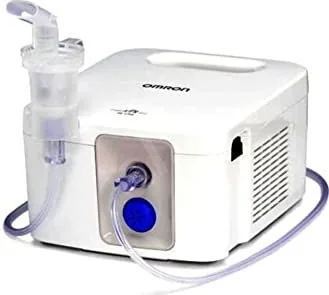
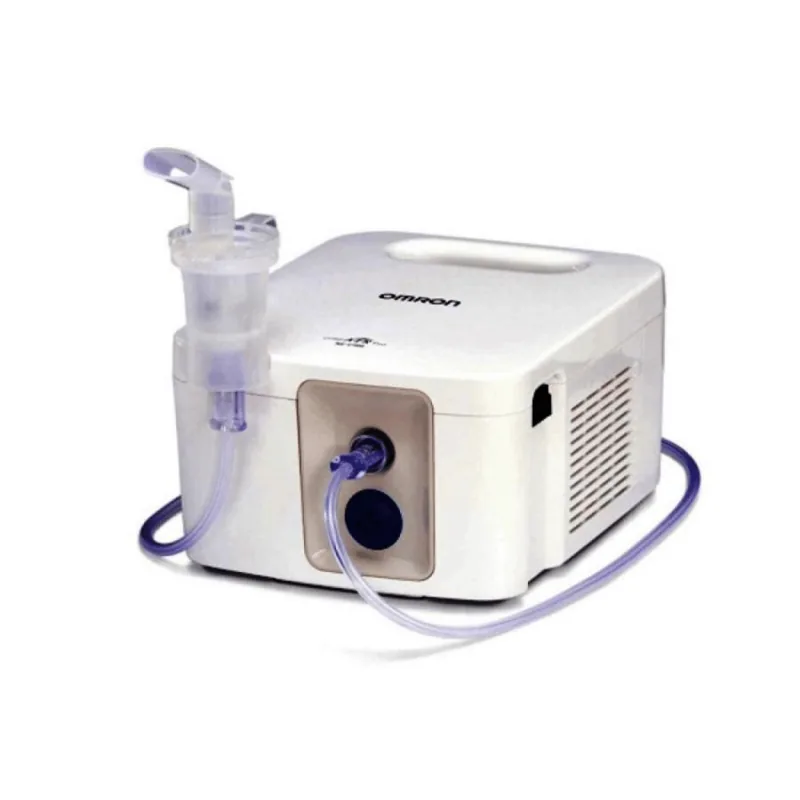
The Omron CompAIR Pro C900 is a compact, robust compressor nebulizer designed to deliver aerosolized medication for respiratory conditions such as asthma, chronic bronchitis, and allergies. Built with clinical input and compliant with EN13544-1 standards, the NE-C900 focuses on dependable performance, ease of use, and patient safety for both clinical and home settings. It produces a fine aerosol (MMAD ≈ 3 µm) suitable for lower airway delivery, with a nebulization rate around 0.4 ml/min and a medication capacity up to 7 ml.

Product features and operation

The unit includes a compressor main unit, nebulizer kit, mouthpiece, nosepiece, adult and child masks, a 200 cm air tube, and spare air filters. The compressor generates compressed air that mixes with medication in the nebulizer kit; interaction with a baffle produces aerosolized droplets optimized for inhalation therapy. The device runs on 220–240 V, is lightweight (~2.2 kg), and operates within +10°C to +40°C.

Operation is straightforward: add prescribed medication (2–7 ml) to the medication tank, connect the air tube and chosen interface (mask/mouthpiece), switch on the compressor, and inhale the aerosol. Maintenance steps include removing condensation from the air tube, replacing the air filter every 60 days, and following recommended cleaning and disinfection procedures for washable parts. Non-washable parts like the compressor and air tube are wiped clean; the filter must not be washed.

Durability, safety and compliance

Durability varies by component: the compressor is rated for about 5 years, while consumables such as nebulizer kits, masks, and tubes are recommended for replacement after roughly 1 year (filters every 60 days). The device conforms to medical device directives and EMC standard EN60601-1-2:2007, and includes guidance to avoid electromagnetic interference (keep strong-field devices ~7 m away). Safety instructions emphasize supervision for children, avoiding use on unconscious patients, electrical precautions, and not operating the compressor covered or in hazardous atmospheres.

Practical benefits

The CompAIR Pro C900 is suitable for use in hospitals, clinics, and homes under professional guidance. It balances clinical performance with practical maintenance routines and clear troubleshooting guidance for common issues like low nebulization, blocked nozzles, or disconnections. Spare parts and specific disinfecting recommendations are provided to preserve performance and hygiene.

Notes

  • Use only original OMRON consumables (air filters, tubes, nebulizer parts) to ensure correct operation.
  • Replace air filters if wet or after 60 days of use; do not wash filters.
  • Follow prescribed medication dosages and the clinician’s instructions. Clean and disinfect washable parts daily and after the last use of the day.
M: OA-GPT-5-NAN

© Copyright 2026 Manual.ly