
NEP BDM-600 Manual
PDF manual · 13 Pages
English



Quick check
Incorrect answer, please try again.
Chat with your NEP BDM-600 manual using AI
Get instant AI answers from your NEP BDM-600 manual
Ask anything about the NEP BDM-600. Answers come from this manual, with the pages they are based on.
Ask a Question
Do you recommend BDM-600?
Yes NoFrequently Asked Questions
The BDM 600 is designed for one or two 60- or 72-cell PV modules. It accepts module voltages within the MPPT tracking range of 22–55 Vdc and a maximum recommended input per module as specified on the unit label.
Is this answer helpful?
On a 240V branch circuit the maximum is seven BDM 600 units, and on a 208V branch circuit the maximum is six units. Each branch must be protected by a 20A maximum breaker per NEC guidelines due to #12 AWG cabling.
Is this answer helpful?
The BDM 600 uses power-line communication (PLC) to send performance and status data to the BDG-256 gateway, which connects to the cloud via Wi‑Fi or Ethernet. The BDG-256P3 supports three-phase commercial systems and hardwired installations for stronger PLC signals.
Is this answer helpful?
The inverter includes anti-islanding, over/under voltage protection, over/under frequency protection, overcurrent and overload protection, reverse DC polarity protection, ground-fault detection, and thermal safeguards. It also has integrated surge protection circuits, though external surge arrestors are recommended.
Is this answer helpful?
Follow the troubleshooting steps: verify utility presence, inspect AC harness and branch connections, check PV DC voltage and polarity, confirm PLC signal quality with the BDG-256, and ensure disconnect procedures are followed. If issues persist, contact NEP or an authorized service center.
Is this answer helpful?
No. The BDM 600 contains no user-serviceable parts. Repairs and warranty service must be performed by NEP or authorized service centers. Attempting internal repairs voids warranty and may be hazardous.
Is this answer helpful?
Yes. While the BDM 600 includes integrated surge protection circuitry, NEP strongly recommends installing external surge protection devices because high-energy transients from lightning or grid irregularities can exceed the internal protection and damage equipment.
Is this answer helpful?
Advantages and Disadvantages
Advantages

- Dual-module design supports one or two 60/72-cell modules for flexible layouts.
- High MPPT accuracy (>99.5%) and 95.5% CEC efficiency maximize energy yield.
- Integrated protections (anti-islanding, ground-fault, over/under voltage/frequency).
- Lightweight, NEMA-6 rated enclosure suitable for varied climates and roof mounting.
- PLC monitoring via BDG-256 enables cloud data collection and remote diagnostics.
Disadvantages

- Branch circuit limited to seven units (240V) or six units (208V) per 20A breaker.
- PLC communication may require gateway relocation or filters if interference occurs.
- Integrated surge circuitry may be insufficient alone; external surge arrestors recommended.
- Non-serviceable internal components; repairs must go through NEP or authorized centers.
- Requires certified electrician and possible utility approval prior to interconnection.
Product Specification
Note
Prices partly include 0% VAT tax rates for AT and DE
Type
Solar inverter, Micro inverter, passive
Input voltage
22-60V Direct current (DC)
Max. input current
14A
MPP voltage range
22-55V Direct current (DC)
Max. PV generator power
900Wp
Output power
580W
Efficiency
95.5% max.
Input
MC4
Protection rating
IP66/IP67
Ambient temperature
-40°F to +149°F
Dimensions
10.91x5.20x1.97in (WxHxD)
Weight
6.39lb
Product Description
NEP BDM 600 Manual — Overview
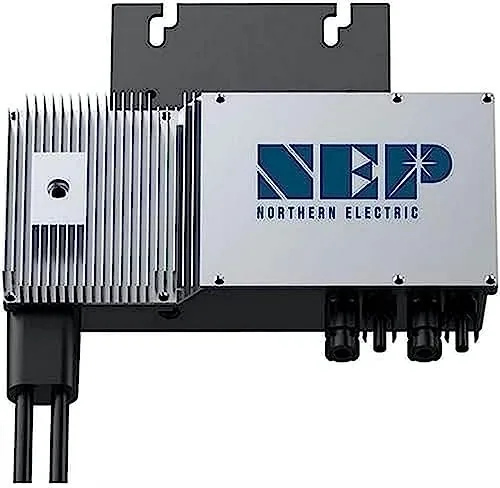
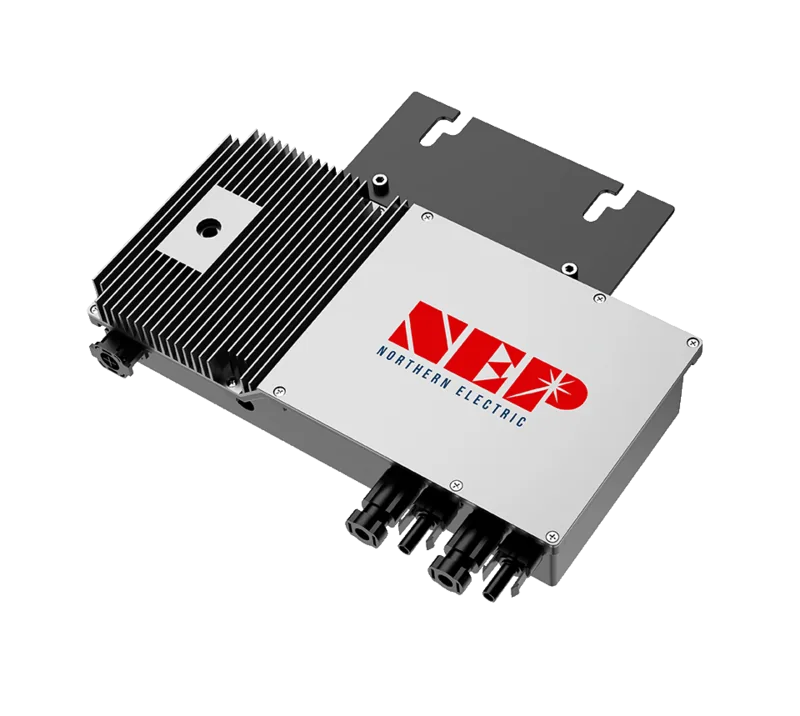
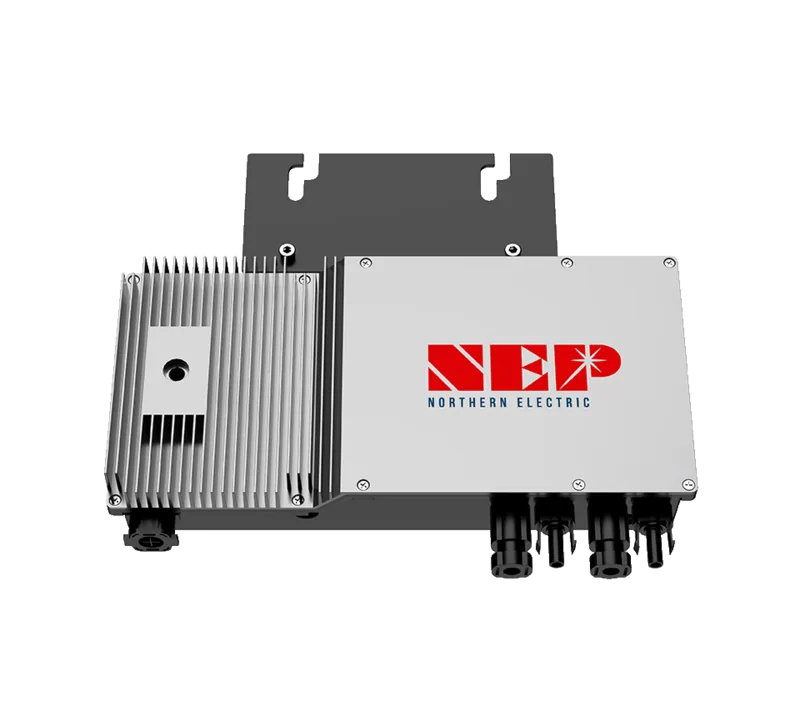
The NEP BDM 600 is a dual-module microinverter engineered to maximize energy harvest from one or two 60- or 72-cell PV modules while simplifying design and installation for grid-tied systems. Built for residential and light commercial applications, the BDM 600 converts DC power from solar modules into AC power synchronized to the utility grid while providing anti-islanding protection and integrated surge protection circuitry. With a compact, weather-resistant NEMA-6 enclosure and a lightweight form factor, it mounts directly to module rails and supports flexible array layouts, including mixed orientations.
Key Features and Operation
The BDM 600 supports up to two modules per unit and uses power-line communication (PLC) to send production and status data to the BDG-256 gateway for remote monitoring and diagnostics. It offers robust protection functions—over/under voltage, over/under frequency, overcurrent, reverse polarity protection, ground-fault detection, and thermal safeguards—plus ETL certification for North American installations. LEDs provide clear status indicators for standby, production, communication and fault conditions.
Installation emphasizes safety and code compliance: use only NEP-approved cabling, follow local electrical codes, and limit branch circuits to a maximum of seven units on 240V (six on 208V) with a 20A breaker. The manual details pre-install checks, wiring harness daisy-chaining, AC junction box installation, grounding options, commissioning steps, and PLC gateway setup to ensure reliable communication and accurate system mapping.
Design and Performance
Designed to simplify microinverter installations, the BDM 600 allows varied azimuths and orientations across arrays. It features MPPT tracking with >99.5% accuracy over a 22–55 Vdc MPPT range, a rated AC output of 500 W (peak 550 W), CEC efficiency of 95.5%, and low nighttime standby losses. The unit tolerates wide operating temperatures and includes labeling with electrical parameters and serial identification for easy inventory and commissioning.
Monitoring and Maintenance
The BDG-256 (or BDG-256P3 for three-phase commercial systems) aggregates PLC data and connects to NEP’s cloud for performance monitoring and troubleshooting. The manual provides LED code tables and stepwise troubleshooting guidance—checking grid presence, AC harness continuity, PV voltages, DC connections, and PLC signal quality—plus safe disconnect and replacement procedures. NEP recommends surge protection devices to reduce risk from lightning and grid transients.
Notes
- Always follow local utility and AHJ approval processes before energizing the system.
- Only qualified electricians should install and commission the product.
- The warranty excludes damage from improper installation, misuse, lightning, or unauthorized repairs.
- Keep serial number stickers for mapping and gateway registration.
Search for 67,706 Manuals online


Type-in Brand or Model