
NEP BDM-2000 Manual
PDF manual · 38 Pages
English



Quick check
Incorrect answer, please try again.
Chat with your NEP BDM-2000 manual using AI
Get instant AI answers from your NEP BDM-2000 manual
Ask anything about the NEP BDM-2000. Answers come from this manual, with the pages they are based on.
Ask a Question
Do you recommend BDM-2000?
Yes NoFrequently Asked Questions
The BDM-2000 delivers a peak output of 2000 VA and a maximum continuous output of 1920 VA, with a nominal output voltage typically configured at 230 V (country‑specific ranges may apply).
Is this answer helpful?
Monitoring is supported via power line communication (PLC) using the BDG‑256 gateway or optional 2.4 GHz Wi‑Fi. Data can be viewed through the NEPViewer app or web interface after registering devices and creating a connection map.
Is this answer helpful?
Always disconnect AC and DC sources, confirm voltages are absent with appropriate meters, wear proper PPE, avoid opening the unit (no user‑serviceable parts), and never disconnect DC connectors under load. Follow the sequence in the manual for safe disconnection.
Is this answer helpful?
The BDM-2000 is rated NEMA‑6 / IP66 / IP67 for outdoor protection, operates from -40°C to 65°C, and tolerates 0–100% relative humidity. It must be installed away from direct sunlight exposure and splash of salt water per guidelines.
Is this answer helpful?
PV modules must be of the same type, aligned and tilted identically; each independent MPPT should have matching strings. Use supplied MC4 connectors with correct polarity, do not parallel modules in a single string, and ensure DC voltage/current do not exceed inverter limits.
Is this answer helpful?
The inverter includes integrated surge protection and ground‑protection circuitry. NEP recommends external surge protection devices for enhanced protection against high‑energy lightning‑induced spikes, as warranty may exclude 'acts of God.'
Is this answer helpful?
Faults are indicated by LED codes and a 16‑bit error code communicated to the BDG‑256 or over Wi‑Fi to NEPViewer. If troubleshooting fails, return the unit to your distributor or contact NEP customer support as specified in warranty and contact sections.
Is this answer helpful?
Advantages and Disadvantages
Advantages

- High peak efficiency (97.3%) and MPPT efficiency >99.5% for optimized energy harvest.
- Four MPPT inputs support flexible PV string configurations and multi‑module optimization.
- Rugged environmental rating (IP66/IP67, NEMA‑6) and wide operating temperature range (-40 to 65°C).
- Multiple monitoring options: PLC via BDG‑256 gateway or optional 2.4 GHz Wi‑Fi with NEPViewer app.
- Built‑in surge and ground protection, plus comprehensive fault detection and LED status indicators.
Disadvantages

- Requires qualified personnel for installation and grid connection; not aimed at DIY installers.
- DC connectors must never be disconnected under load, adding procedural complexity for service.
- Max input voltage limited to 60 V per string, restricting some high‑voltage string designs.
- Warranty exclusions for unauthorized modifications and certain 'acts of God' like lightning.
- Maximum units per 20 A branch limited (e.g., 2 on some branch configurations), affecting scaling.
Product Specification
Note
Prices partly include 0% VAT tax rates for AT and DE
Type
Solar inverter, micro inverter, passive
Input voltage
22-60V Direct current (DC)
Max. input current
18A
MPP voltage range
22-55V Direct current (DC)
Max. PV generator power
3kWp
Output power
1.92kW
Efficiency
97.3% max.
Input
MC4
Interfaces
Wi-Fi (WLAN)
Protection class
IP66/IP67, NEMA 6
Ambient temperature
-40°F to +149°F
Dimensions
10.55x9.84x1.65in (WxHxD)
Weight
6.39lb
Product Description
NEP BDM-2000: Reliable, High‑Efficiency Micro Inverter
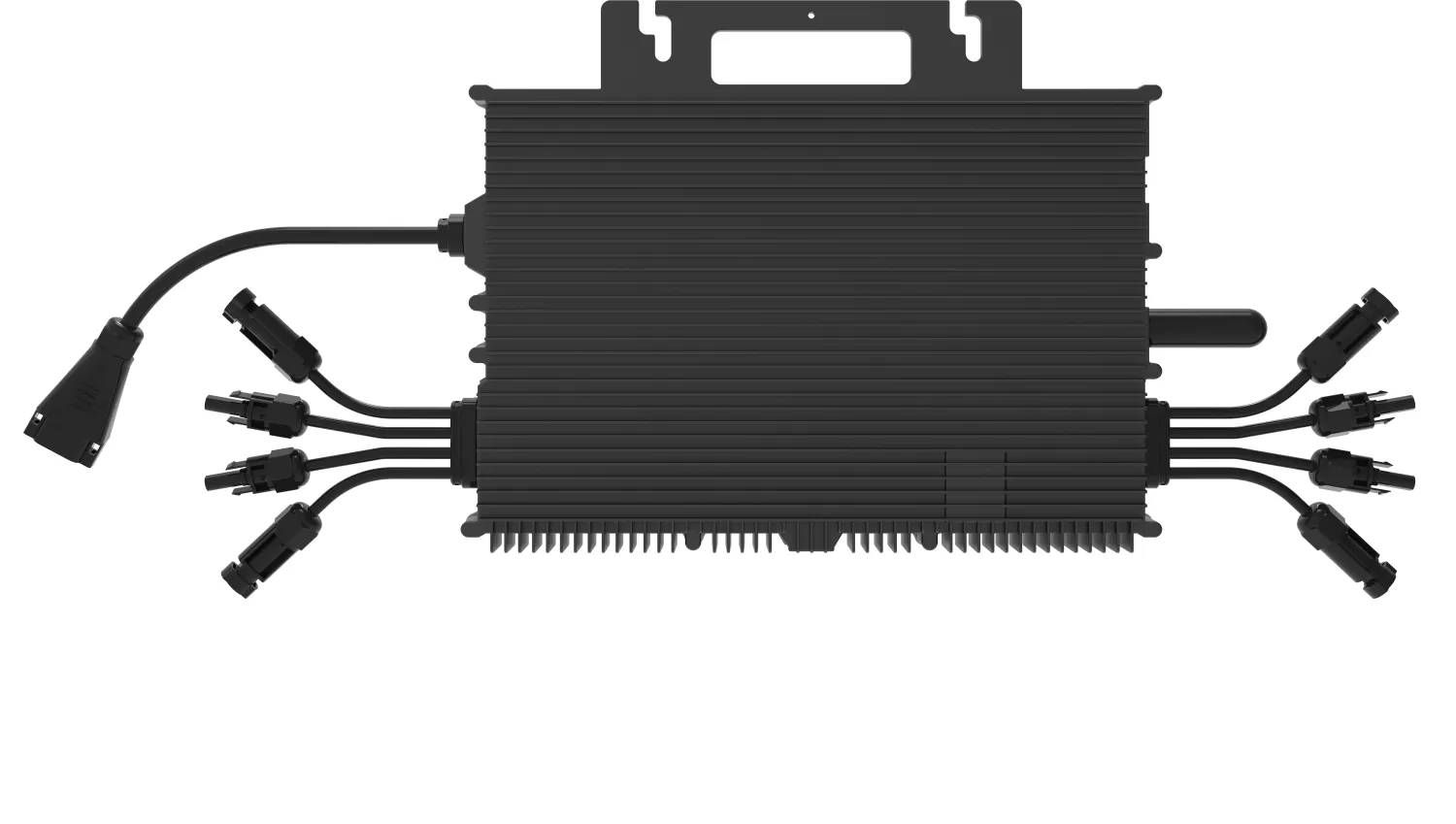
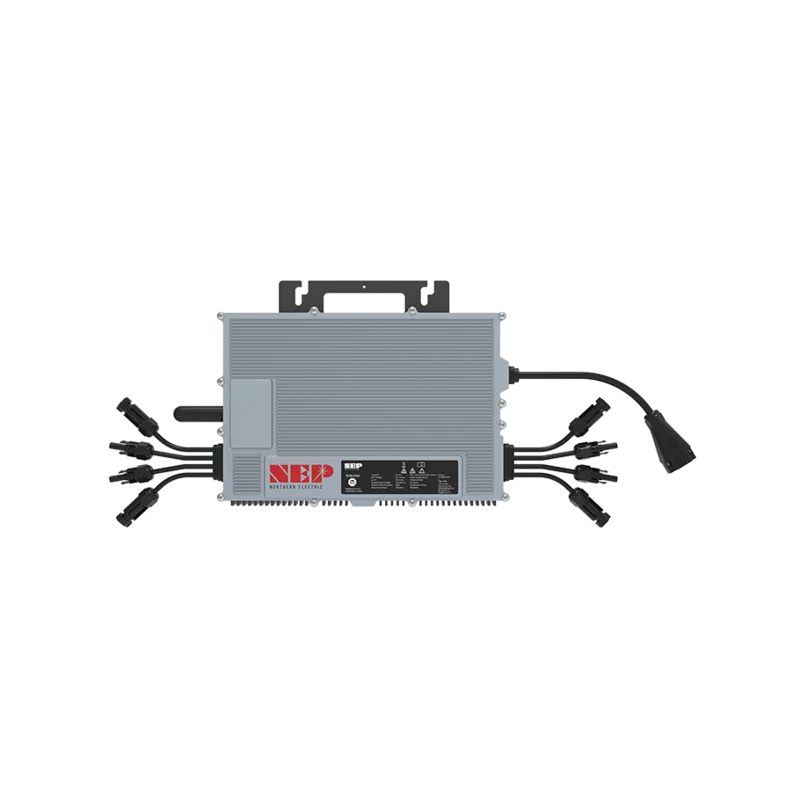
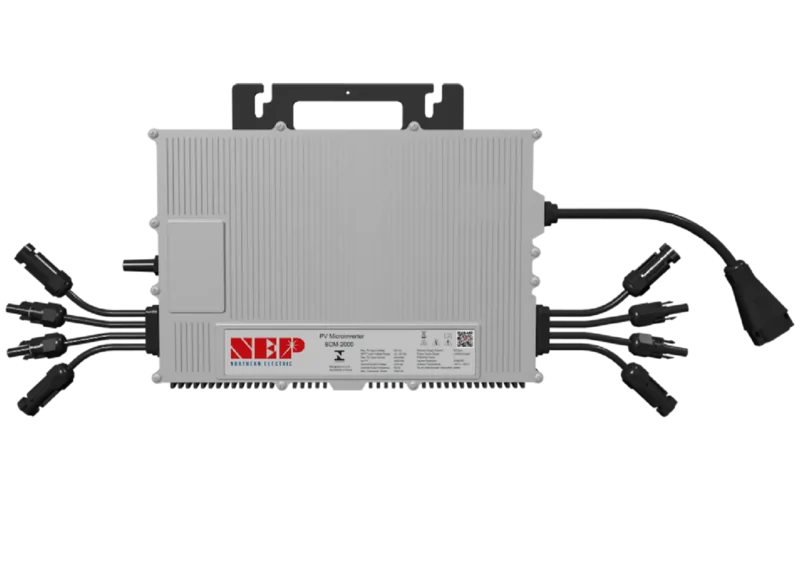
The NEP BDM-2000 is a compact, high‑performance micro inverter designed for PV systems where reliability, safety and efficient panel‑level conversion matter. With a 2 kVA peak output and up to 1.92 kVA continuous power, the BDM-2000 supports four MPPT inputs, enabling optimized energy harvest from multi‑module strings. It targets residential and light commercial installations that require robust environmental protection (IP66/IP67, NEMA‑6) and a broad operating temperature range down to -40°C and up to 65°C.
Built for both wired PLC monitoring and optional Wi‑Fi connectivity, the BDM-2000 integrates easily into monitoring ecosystems using NEP’s BDG‑256 gateway or the NEPViewer app. Installation focuses on safe mounting to PV racking, proper AC trunk cabling, and careful DC connector management (MC4). The unit emphasizes protection: integrated surge and ground‑protection circuits, multiple fault detection flags, and a suite of warnings to avoid electrical shock, overvoltage, and ground‑fault hazards.
Energy conversion is highly efficient: peak efficiency around 97.3% and MPPT efficiency above 99.5%, ensuring minimal losses at the module level. The BDM-2000 accepts up to 60 V DC per string and supports module strings with startup voltage around 24 V. Typical safety and compliance features include FCC Class B compatibility, CE markings, and adherence to WEEE recycling guidance.
Practical commissioning steps include creating a connection map to register serial numbers in the BDG‑256 gateway, configuring Wi‑Fi (2.4 GHz) or PLC for data upload, and following a clear AC/DC connection sequence to prevent live‑work hazards. LEDs provide status feedback (standby, generation, faults, communication status), and a 16‑bit error code system reports specific fault conditions such as DC over/under voltage, AC RMS issues, temperature or PLC faults.
NEP stresses that installation, commissioning and grid connection must be performed by qualified personnel familiar with local electrical codes and PV system best practices. The manual details safe disconnection, grounding options through trunk cable or racking, and troubleshooting steps before returning units for service. When decommissioning, follow WEEE rules for recycling and avoid disposal in household waste.
Notes
- Designed for integration per local grid approval; never connect to utility without authorization.
- Always disconnect AC before handling DC connectors; never unplug DC under load.
- Use proper PPE and follow local codes; the product is not user‑serviceable.
Search for 67,706 Manuals online


Type-in Brand or Model