
Monocure3D Rapid Resin Manual
PDF manual · 9 Pages
English



Quick check
Incorrect answer, please try again.
Chat with your Monocure3D Rapid Resin manual using AI
Get instant AI answers from your Monocure3D Rapid Resin manual
Ask anything about the Monocure3D Rapid Resin. Answers come from this manual, with the pages they are based on.
Ask a Question
Do you recommend Rapid Resin?
Yes NoFrequently Asked Questions
It is compatible with most SLA, DLP and LCD (MSLA) resin 3D printers that accept standard photopolymer resins. Always run small test prints to optimize exposure, lift and peel settings for your specific printer model.
Is this answer helpful?
Store in original, tightly closed containers in a cool, dry, well-ventilated area below 38°C. Maintain some headspace (dissolved oxygen helps the stabiliser). Avoid strong oxidizers, heat, UV light and prolonged storage beyond recommended shelf life.
Is this answer helpful?
Wear nitrile gloves, chemical splash goggles or face shield, and protective clothing. Use local exhaust ventilation or a well-ventilated workspace; respirators (approved cartridges) may be needed in poorly ventilated areas or when aerosol exposure is possible.
Is this answer helpful?
Rinse prints in isopropyl alcohol or a recommended solvent to remove uncured resin, then post-cure under controlled UV for the recommended time. For optical clarity, sand and polish surfaces as needed and avoid overcuring, which can yellow or embrittle parts.
Is this answer helpful?
For skin contact, remove contaminated clothing and wash thoroughly with soap and water. For eye exposure, rinse immediately with running water for several minutes and seek medical attention if irritation persists. If respiratory symptoms occur, move to fresh air and consult a physician.
Is this answer helpful?
Collect and store unused or contaminated resin and wash water as hazardous waste per local regulations. Do not pour into drains or waterways. Consult local waste authorities or the manufacturer for approved disposal or recycling options.
Is this answer helpful?
Advantages and Disadvantages
Advantages

- Fast curing reduces layer times and increases print throughput.
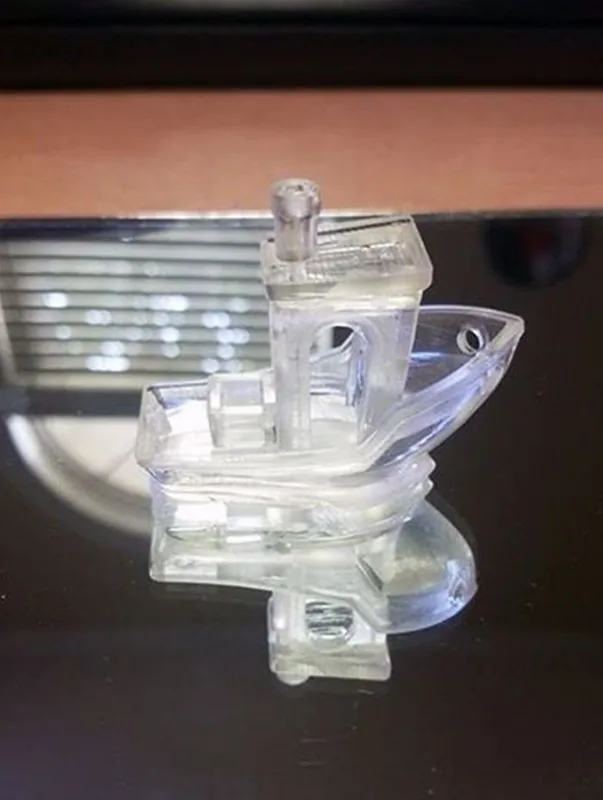
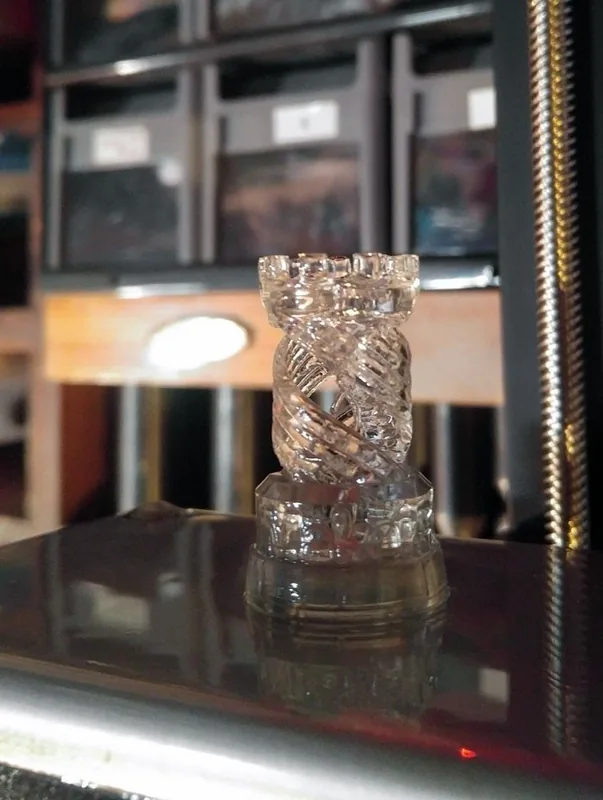
- Clear formulation yields good translucency and fine detail reproduction.
- Moderate viscosity and density make pouring and vat handling easy.
- Relatively high flash point and low volatility compared with some resins.
- Compatible with many SLA/LCD/DLP printers and common post-processing flows.
Disadvantages

- Can cause skin and eye irritation and may sensitize susceptible individuals.
- Harmful to aquatic environments; requires careful disposal and spill control.
- May polymerize violently if contaminated or overheated; storage precautions required.
- Requires PPE and ventilation; not suitable for unprotected or poorly ventilated use.
- Optical clarity may need sanding/polishing and careful post-cure to avoid yellowing.
Product Specification
Container
Bottle
Type
Photopolymer Resin (UVA/UVB: up to 420nm)
Compatibility
universal Stereolithography (SL/SLA), universal Digital Light Processing (DLP)
Viscosity
500 cP (at 77°F)
Shrinkage
0.5%
Density
69.92 lb/ft3
Weight
2.47 lb (1.06 qt)
Base Color
colorless
Color Tone
transparent
Special Features
UV-sensitive, Shore D70 hardness
Product Description
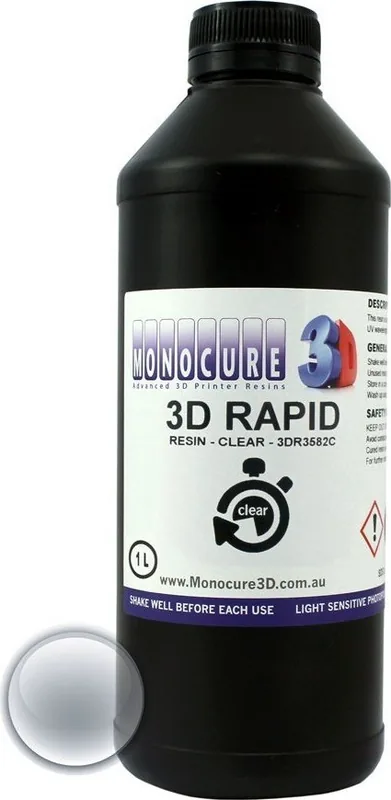
Monocure3D Rapid Resin Clear 1.1kg Manual
Monocure3D Rapid Resin Clear 1.1kg is a fast-curing, photoreactive resin formulated for high-resolution stereolithography and LCD/DLP 3D printers. This clear formulation emphasizes low viscosity and stable handling characteristics to deliver crisp details and smooth surface finish for prototypes, dental models, transparent parts, and visual models. The Rapid grade is optimized to shorten exposure times while preserving dimensional accuracy and translucency.
The resin package typically includes 1.1kg of material, suitable for medium to high-volume printing runs. It contains methacrylated oligomers, methacrylated monomers and photoinitiators—components designed to react under UV light to produce a rigid, clear polymer. Viscosity is moderate (around 500 cSt at 25°C), and density is approximately 1.12 g/mL, making it easy to pour and compatible with many resin vats. The product’s flash point (>120°C) and low volatility reduce some handling risks compared to more volatile photopolymers, but proper ventilation and PPE remain essential.
Users appreciate its rapid cure speed, enabling faster layer times and improved throughput. The material wets build platforms well and supports fine feature reproduction, making it suitable for detailed castable masters, clear prototypes, and visual parts where translucency and surface clarity matter. Post-processing typically includes rinsing with isopropyl alcohol, careful curing under controlled UV, and sanding/polishing for optical clarity.
Safety and handling are important: the resin can cause skin and eye irritation, may sensitize predisposed individuals, and can irritate the respiratory tract if inhaled. It is harmful to aquatic life with long-lasting effects, so spills and disposal must follow local regulations. Store below 38°C in tightly closed containers with adequate ventilation and avoid contamination with strong oxidizers or initiators that could prompt uncontrolled polymerization. Use nitrile gloves, eye protection, and work in a well-ventilated area or under local exhaust.
Practical tips include maintaining original headspace in containers (oxygen helps stabilizers), avoiding repeated overheating (max 60°C for short periods), and consuming heated material without repeated reheats. Dispose of unused or contaminated resin and wash water per local hazardous-waste guidance; do not pour into drains or waterways.
Notes:
- Cure settings vary by printer model; always run test prints to dial exposure and lift settings.
- For best optical clarity, post-cure for recommended times and avoid overcuring which can yellow or embrittle parts.
- Keep material away from children and pets; handle spills immediately with absorbent inert material and dispose according to regulations.
Search for 67,706 Manuals online


Type-in Brand or Model