Manual.ly Logo

Moldex Series 9000 EasyLock Manual

0.0 · 0 Ratings

PDF manual · 44 Pages

English

M: QW-35-FL
page

/ 44

Loading...
4059dcbd114d49994f910f96f037830bf142 page 5
3
GB – Instructions for Series 9000 Masks
Important Information for Users
This manual is only valid in conjunction with the instruction manual for Moldex Series
7000/9000 gas and particulate filters. Failure to comply with these instructions on
how to use the product and failure to wear the respiratory protection in the polluted
area may negatively impact on the health of the user and lead to permanent damage
and life-threatening injuries.
• This breathing apparatus does not supply oxygen (02) • Only use the product in ad
-
equately ventilated areas,(19.5 Vol.-% oxygen) • The mask and filters must be selected
in accordance with the pollutant type and concentration (see Table 2). • In the case
of gases with insufficient warning properties, filters may only be used if special usage
policies are specified for this purpose. • If the conditions are uncertain or changeable,
self-contained breathing apparatus must be worn. • You must exit the working area
and replace the respirator mask immediately if: – the mask is damaged, – you expe
-
rience difficulty in breathing, – you experience dizziness or fatigue. – you can taste
or smell hazardous substances or if you experience irritation • Read the instruction
manual before using the mask. • The product does not contain any metallic parts that
could cause ignition in potentially explosive atmospheres. • If you have any questions
about how to use the product, please contact Moldex-Metric. • You must also observe
the relevant rules and regulations when using respiratory equipment. • Under certain
circumstances, persons with beards, long sideburns or other anomalies in the area
around the sealing lines may be unable to achieve a proper sealing fit. Spectacle
frames that extend under the sealing line will impede a proper sealing fit. • The masks
must not be modified in any way. • Users of the masks and filters must be familiar with
how to handle them correctly. • When not in use, the mask and filter must be stored in
an uncontaminated environment.
Caution: Do not use filter equipment in unventilated containers and confined spaces.
Preparations Before Using the Full-mask
The full-mask must always be checked before use. Do not use a damaged or defective
mask. Seek the immediate assistance of a supervisor.
You must check • The mask and the filters for fractures, deformations, cracks and
contamination. • Whether the head strap is torn, nicked or damaged in any other way
and whether it provides sufficient elasticity. • The inhalation and exhalation valves
as well as the sealing rings on the filter connections for contamination, deformation,
fractures and cracks. Make sure that the valves and sealing rings are fitted correctly. •
The use-by-date of the filter and their correct fitting in accordance with the instruction
manual for gas and particulate filters. Fitting/removing the full-mask (Figures 1, 2, 3
and 4) Open the straps fully at the 4 adjustment points and hold the head strap with
one hand at the bracing with the Moldex lettering. Place the opening of the head strap
at the back of the neck and pull the mask down over your face from above. At this point,
make sure that no hairs are trapped between the sealing lip and your face. Position
the mask on your face and use one hand to press the mask firmly against your mouth
and chin. Now use your other hand to pull the neck strap tight on one side and then
repeat the procedure on the other side. To ensure the best possible seal between mask
and face, you should always tighten the neck straps first. The head strap must lie flat
on your head. To ensure that the mask fits comfortably, adjust the head and neck strap
equally. Before entering your working area, check that the mask creates a seal around
the face. To remove the mask, first loosen the clips on the neck strap by pulling the mask
away from your face. Using suction to check the face seal (Figure 5) Place the palm
of your hand over the opening on the filter cover to seal it and breathe in slowly. If the
facepiece contracts slightly, the mask is correctly seated. If you notice an inflow of air,
adjust the position of the mask on your face or adjust the tension of the straps. Repeat
this check until a seal is achieved. Using excess pressure to check the face seal (Figure
6) For full-masks equipped with an EN 148-1 connection, check the face seal before
fitting the filter to the facepiece. Place the palm of your hand over the exhalation valve
and breathe out slowly. If no air escapes between the facepiece and your face, a prop
-
er sealing fit is achieved. If you notice air escaping, adjust the position of the mask on
your face or adjust the tension of the straps. Repeat this check until a seal is achieved.
Under no circumstances should you enter a hazardous area if you are unable to
achieve a proper sealing fit. Seek the assistance of a supervisor.
Maintaining the Full-mask
The maintenance intervals as set out in the national regulations must be adhered to.
The date of manufacture is shown on the inside of the face seal in the chin area.
Cleaning/Disinfection We recommend cleaning the mask after each use. If not in use,
clean the mask after 6 months at the latest. Remove the filter; clean the facepiece
with warm water (max. 50°C). If necessary, use a neutral cleaning agent and an
alcohol-based disinfectant. To clean the valve membrane, remove it from the holder.
To clean the inner mask, unfasten it from the two stop points. To refit it, use the guide
rails on the lower part of the lens and the two stop points. To dismantle the filter, refer
to the instruction manual for gas and particulate filters. After having cleaned or disin
-
fected the mask, the face seal needs to be checked by means of suitable leak testing
equipment. Before cleaning pull the protective film away from the lens Dry the mask
thoroughly before putting on a new protective film and before storing it. Storage Keep
the 9000 mask sealed in a dry, uncontaminated environment. Protect against sunlight
and sources of heat (see the "Storage" icons). The name of the wearer and a record
of the filter changes can be noted on the packaging. Caution: At low temperatures,
moisture can cause the valves to freeze up. The date of manufacture is engraved on
the inside of the mask. Calendar clocks see page 39. Exhalation Valve (Spare Part
No. 9974 [b]) Fold down the cover of the exhalation valve and check the exhalation
valve and valve seat for contamination, deformation, fractures or cracks. Replace the
valve membrane when necessary, or every 4 years at the latest. Please note date of
replacement. Inhalation Valve (Spare Part No. 9974 [a]) Check the inhalation valve
on the inner mask and on the inside of the filter connection for contamination, defor
-

Chat with your Moldex Series 9000 EasyLock manual using AI

Get instant AI answers from your Moldex Series 9000 EasyLock manual

Ask anything about the Moldex Series 9000 EasyLock. Answers come from this manual, with the pages they are based on.

Series 9000 EasyLock Maintenance Schedule

Remind me when maintenance is due
Every 6 months
Clean unused mask

If not in use, clean the mask at least every 6 months to ensure hygiene and functionality.

Every 4 years
Replace exhalation valve membrane

Replace the exhalation valve membrane when necessary, or at latest every 4 years. Record the replacement date.

After each use
Clean and disinfect the mask

Remove filters and clean facepiece with warm water (max 50°C). Use neutral cleaner/alcohol disinfectant if needed. Check seal after cleaning.

Before each use
Inspect mask and valves

Check mask, filters, head straps, inhalation/exhalation valves, and sealing rings for damage, contamination, or deformation before wearing.

Free maintenance reminders

Timed to your purchase date. Always free, unsubscribe anytime.

By submitting you agree to the privacy policy. Unsubscribe with one click in any email.
M: qwen/qwen3.8-flash

Ask a Question

0/1000

Do you recommend Series 9000 EasyLock?

Yes No

Frequently Asked Questions

A

No, this breathing apparatus does not supply oxygen. It is strictly for use in areas with adequate ventilation containing at least 19.5% oxygen volume.

Is this answer helpful?

A

It is recommended to clean the mask after each use. If not used, it must be cleaned at least every six months to prevent contamination buildup.

Is this answer helpful?

A

Spectacle frames that extend under the sealing line will impede a proper sealing fit. You may use the optional spectacle mount, but ensure the frame does not break the seal.

Is this answer helpful?

A

You must exit the working area immediately and replace the respirator mask. Smelling or tasting hazardous substances indicates a breach in the seal or filter saturation.

Is this answer helpful?

A

Yes, the product does not contain any metallic parts that could cause ignition in potentially explosive atmospheres, making it safe for such environments.

Is this answer helpful?

A

Perform a seal check by placing your hand over the filter opening and inhaling slowly. If the mask contracts slightly, the seal is correct. Alternatively, cover the exhalation valve and exhale gently to check for leaks.

Is this answer helpful?

M: QW-35-FL

Advantages and Disadvantages

Advantages

  • Complies with EN 136:1998 CL2 standard for high-level respiratory protection
  • EasyLock head strap system allows for quick and precise adjustment
  • Compatible with a wide range of P1, P2, P3 particulate and gas class filters
  • No metallic parts reduce ignition risks in potentially explosive atmospheres
  • Clear vision polycarbonate lens with optional spectacle mount integration
VS

Disadvantages

  • Requires strict adherence to maintenance schedules to ensure longevity
  • Beards or facial hair can prevent achieving a proper sealing fit
  • Eyeglass arms extending under the sealing line may compromise the seal
  • Valves may freeze up if exposed to low temperatures with moisture present
  • Filter selection must match specific pollutant types and concentrations accurately
M: QW-35-FL

Product Specification

Features

Valve, face shield, four-point harness, adjustable, replaceable filter

M: QW-35-FL

Product Description

Protect Your Lungs with the Moldex Series 9000 EasyLock Respirator

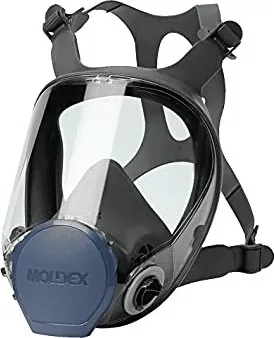
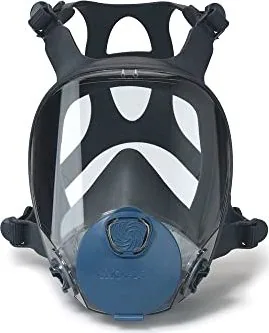
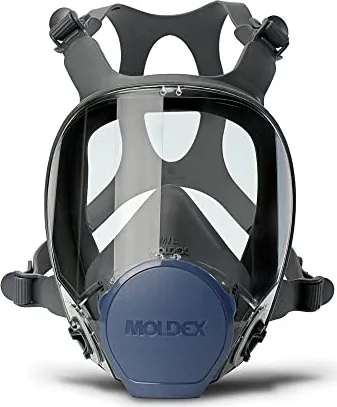
The Moldex Series 9000 EasyLock Respirator Full Face Mask stands as a pinnacle of personal protective equipment designed for demanding industrial environments. This robust full-face mask offers comprehensive protection against a wide array of hazardous substances, including toxic gases, vapors, and particulate matter. Engineered to meet the stringent EN 136:1998 CL2 standard, it ensures that users are shielded from life-threatening contaminants while maintaining comfort during extended wear.

One of the standout features of this respirator is its innovative EasyLock system, which simplifies the process of donning and doffing the mask. The head straps feature four adjustment points, allowing for a customized fit that accommodates various face shapes. Proper fitting is critical; the mask must create an airtight seal around the mouth and chin without trapping hair or interfering with eyewear frames. Users are advised to perform both negative and positive pressure checks before entering any contaminated area to verify the integrity of the seal.

Maintenance and hygiene are paramount when using respiratory protection. The manual recommends cleaning the facepiece after every use with warm water not exceeding 50 degrees Celsius. For deeper sanitation, neutral cleaning agents and alcohol-based disinfectants can be employed. It is crucial to remove the filter, clean the inner mask components, and inspect valves for debris or damage before storage. The mask should always be kept in a dry, uncontaminated environment away from direct sunlight and heat sources to prevent material degradation.

Versatility is another key aspect of the Series 9000. It supports various filters ranging from P1 particulate filters offering 4 times the Workplace Exposure Limit (WEL) to Class 2 gas filters providing up to 20 times the WEL or 5000 ppm. Specific models like the 9004, 9005, and 9006 utilize the EN 148-1 connection for standardized filter attachment. Whether you are working in chemical processing, agriculture, or emergency response, this respirator provides the reliability needed to safeguard your health.

Important Maintenance Notes

Always replace the exhalation valve membrane at least every four years. Ensure the nose cup and head straps are inspected regularly for wear. If the mask shows signs of cracks, deformation, or contamination, discard it immediately. Never modify the mask structure as this voids warranties and compromises safety.

M: QW-35-FL

© Copyright 2026 Manual.ly
