
Mammut Barryvox Manual
PDF manual · 47 Pages
English



Quick check
Incorrect answer, please try again.
Chat with your Mammut Barryvox manual using AI
Get instant AI answers from your Mammut Barryvox manual
Ask anything about the Mammut Barryvox. Answers come from this manual, with the pages they are based on.
Barryvox Maintenance Schedule
Periodically inspect the battery compartment and clean or dry it if necessary to prevent corrosion caused by moisture. Do not touch contacts with hands.
Remove alkaline batteries if storing or not using the device for a long time, such as in summer or during travel, to prevent leakage damage.
Check functionality by sending the device to an official Barryvox Service Center every 3 years or after 3000 operating hours. The test includes electronics and mechanical parts.
Free maintenance reminders
Timed to your purchase date. Always free, unsubscribe anytime.
Ask a Question
Do you recommend Barryvox?
Yes NoFrequently Asked Questions
It is used to locate buried avalanche victims by transmitting and receiving a 457 kHz rescue signal. The device supports companion rescue by guiding users through search phases from first signal to pinpointing.
Is this answer helpful?
The recommended option is the BarryMount worn on the body and covered by one layer of clothing. If carried in a pocket, the pocket must be secured and closed for the duration of the trip.
Is this answer helpful?
It uses three AAA alkaline batteries of the same type. Rechargeable batteries are not recommended, and all batteries should be replaced together for reliable performance.
Is this answer helpful?
Yes. It can detect multiple signals, show a list of buried subjects, and allow users to mark located victims so the search can continue efficiently for others.
Is this answer helpful?
A group check confirms that everyone’s transceiver is transmitting correctly before starting the tour. It helps catch battery issues, mode errors, or faulty devices before an emergency happens.
Is this answer helpful?
The guide recommends a functional check by an official service center about every three years or after long use. Regular maintenance helps ensure the device remains dependable.
Is this answer helpful?
Advantages and Disadvantages
Advantages

- Simple controls and clear mode switching help reduce mistakes during high-stress rescue situations.
- Supports group checks, self-tests, and search phases for a more complete avalanche safety routine.
- Handles multiple burial scenarios with marking and list-based guidance to keep the search organized.
- Made in Switzerland and built with a strong focus on precision, durability, and rescue reliability.
Disadvantages

- Requires regular practice; the device is easy to use, but effective rescue still depends on training.
- Uses alkaline AAA batteries only, so battery management and replacements must be planned carefully.
- Sensitive to interference from phones, radios, metal objects, and other transceivers if too close.
Product Specification
Type
Avalanche transceiver
System
digital 3-antenna system
Transmission frequency
457kHz (international standard frequency)
Range
229.67 ft
Battery life
300h
Sending duration
300h
Receiving duration
300h
Weight
0.46 lb
Features
automatic secondary avalanche mode switch
Product Description
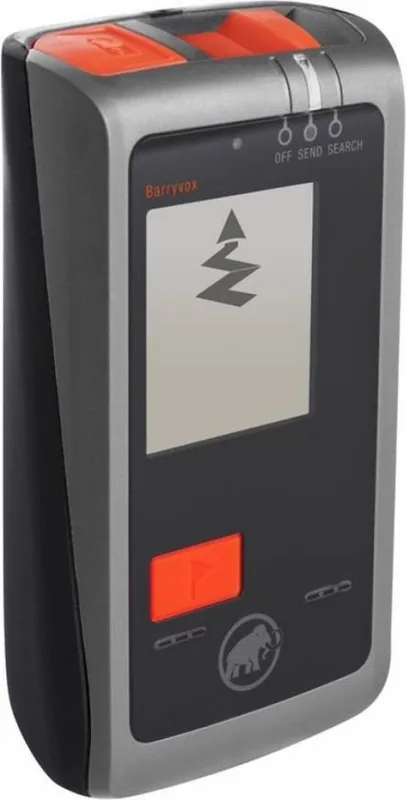
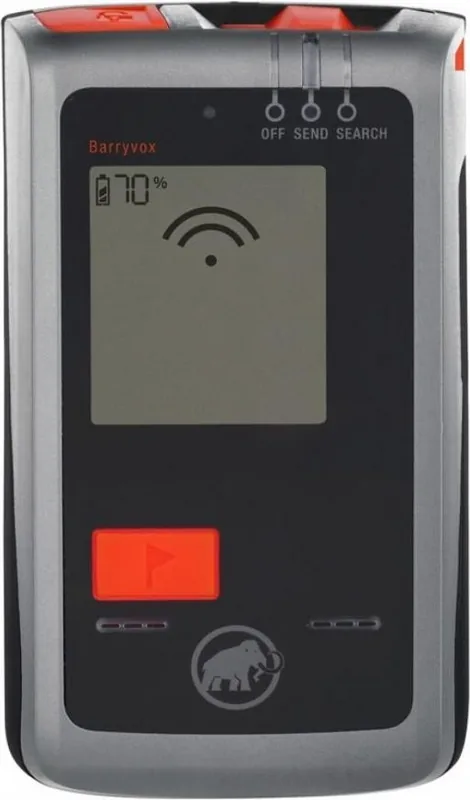
Mammut Barryvox Avalanche Transceiver: Built for Fast, Confident Companion Rescue
The Mammut Barryvox avalanche transceiver is a precision-focused safety tool made for skiers, splitboarders, and mountaineers who travel in avalanche terrain. It is built around a simple idea: when conditions turn critical, the device should help rescuers switch from panic to action as quickly as possible. The Barryvox blends straightforward handling with advanced search support, making it appealing to both newer users and experienced rescue partners.
A standout feature is its clear operating logic. The transceiver uses the familiar SEND and SEARCH modes, plus group check functions that help confirm a party’s devices are working before the outing begins. The interface is intentionally minimal, with one main control and an orange confirmation button, which reduces confusion in stressful moments. That simplicity is one of the reasons the Barryvox is widely trusted in backcountry safety planning.
For everyday use, the device emphasizes preparation and reliability. It runs on three AAA alkaline batteries, performs a self-test at startup, and warns the user when battery levels drop. The guide also highlights proper carrying positions, including the recommended BarryMount holster, so the transceiver stays accessible and correctly oriented. Because avalanche rescue depends on speed, these small details matter more than they may seem at first glance.
In the field, the Barryvox supports the full rescue workflow: signal search, coarse search, fine search, and pinpointing. It also helps in complex situations with multiple burials by identifying and marking detected subjects, then moving on to the next target. That means the device is not only about finding one beacon fast; it is also designed to manage real-world rescue scenes where more than one person may be buried.
The Mammut Barryvox avalanche transceiver Manual also stresses good habits: keep electronics and metal away from the device, perform regular group checks, and send the unit for periodic service. These recommendations reinforce the Barryvox’s role as a dependable winter safety companion rather than a tool that can be set and forgotten.
Notes
- Best results come from practice, not just ownership.
- Always check batteries before heading out.
- Carry it in the recommended position for reliable performance.
- Regular training with search phases improves response time.
Search for 67,706 Manuals online


Type-in Brand or Model