Vestergaard Frandsen Inc. and its affiliated entities
and related companies shall be neither liable for
any damages arising out of or as a result of the use
of LifeStraw Go for any purpose other than for
which it is clearly intended, nor for any malfunction
resulting from the failure of the user of LifeStraw Go
to strictly abide by the usage and safety information
contained in this manual. Stated microbiological,
chemical and longevity performance of LifeStraw
Go is conducted under standard laboratory test
conditions; more information regarding test results
and conditions can be found on www.lifestraw.com.
The effectiveness of LifeStraw Go may be limited by
environmental or hygienic conditions that could
contribute to the recontamination of water aer it
has passed though the product's internal filter.
These conditions include but are not limited to:
1. Handling the mouthpiece with dirty hands.
2. Failure to maintain a clean filter housing, bottle,
lid and mouthpiece.
3. Failure to replace the filters per manufacturer’s
recommendations.
4. Using the bottle or filters if the plastic is cracked.
5. Use in or exposure to extreme heat (higher
temperature than 140°F/60°C) or freezing
temperatures (below 32° F/0°C).
Read these usage and safety instructions carefully
before using your LifeStraw® product. LifeStraw® is
a water filtration tool and should only be used for
filtering water. The quality of the filtered water is
not guaranteed if the product is submitted to
conditions other than those encountered during its
normal use. Your use of LifeStraw® implies that you
accept and agree to these terms, conditions, and
disclaimer.
Drinking untreated water may expose you to
harmful microorganisms and increase your risk of
gastrointestinal illness. Improper usage of
LifeStraw® Go can result in risk of exposure to
harmful microorganisms and risk of gastrointesti-
nal illness. Reduce your risk of becoming sick by
following these safety instructions and by
educating yourself on the specific water sources
you are using.
Never use LifeStraw® Go to filter seawater or
water from mining tailing ponds or from near large
agricultural operations. Rinse the bottle and top
cap with safe water before first use.
Remove the filter before placing bottle in
dishwasher for cleaning – do not wash filter in
dishwasher.
Never allow the Membrane Microfilter to freeze
aer it has been used. If it freezes, it must be
replaced.
If the product is dropped, check to ensure the filter
is still firmly connected to the cap. If the filter
housing is cracked or damaged, replace the filter
before resuming use.
FIRST USEPREMIÈRE UTILISATION
UTILISATION QUOTIDIENNE
DAILY USE
CLEANING & STORAGE
CLEANING & STORAGE
TIPS
CONSEILS
DISCLAIMER
AVIS DE NON-RESPONSABILITÉ
CAUTION
AVERTISSEMENT
1. Wash: Remove the filter and wash the bottle,
lid and mouthpiece with a mild detergent.
2. Rinse: Rinse the filter under tap water for 60
seconds. Push the filter back into the cap.
3. Fill: With water and screw on the cap to
ensure filter is submerged, soak for 10 minutes.
4. Prime: Take a few quick, strong sips to start
the flow of water. Note: first few sips can have a
slow flow rate as air is displaced from the filter.
Flow should improve aer first few drinks.
FRANÇAIS
1. Laver: Enlever le filtre et laver la bouteille, le
bouchon et l'embout buccal avec un détergent doux.
2. Rincer: Rincer le filtre sous le robinet pendant 60
secondes. Remettre le filtre dans le bouchon.
3. Remplir: Avec de l'eau et visser le capuchon afin de
veiller à ce que le filtre soit submergé, tremper
pendant 10 minutes.
4. Amorcer: Prendre quelques gorgées rapides pour
intier le débit d'eau. Remarque: les premières
gorgées ont une vitesse d'écoulement plus lente au
fur et à mesure que l'air est déplacé du filtre. Le débit
devrait s'améliorer après quelques gorgées.
Boire de l'eau non traitée peut vous exposer à des
microorganismes dangereux pour la santé et accroître
votre risque de développer une maladie gastro-intestina-
le. L'utilisation inappropriée du LifeStraw® Go peut
entraîner un risque d'exposition aux microorganismes
dangereux ainsi qu'un risque de maladie gastro-intestina-
le. Vous pouvez réduire votre risque d'être malade en
suivant ces instructions de sécurité et en vous informant
sur les sources d'eau spécifiques que vous utilisez.
N'utilisez jamais le LifeStraw® Go pour filtrer l'eau salée ou
l'eau contaminée par des produits chimiques, incluant
l'eau des bassins de résidus miniers ou celle à proximité
des grandes exploitations agricoles. Rincez la bouteille et
le couvercle du haut avec de l'eau propre avant sa
première utilisation.
Enlevez le filtre avant de placer la bouteille dans le
lave-vaisselle pour le nettoyage - ne pas laver le filtre dans
le lave-vaisselle.
Ne laissez jamais le microfiltre à membrane geler une fois
qu'il a été utilisé. S'il gèle, il doit alors être remplacé.
Si le boîtier du filtre est fissuré ou endommagé en raison
d'une chute grave ou d'un autre choc à l'unité, veuillez
alors remplacer le filtre avant de le réutiliser.
Vestergaard Frandsen Inc. et ses entités affiliées et
sociétés connexes ne seront pas tenues responsables pour
tout dommage découlant ou résultant de l'utilisation du
LifeStraw Go pour tout autre objectif autre que celui pour
lequel il a été conçu, ni pour tout mauvais fonctionnement
découlant de la défaillance de l'utilisateur du LifeStraw Go
de respecter les consignes d'utilisation et de sécurité
stipulées dans ce manuel. La performance stipulée en
matière de longévité, chimique et microbiologique du
LifeStraw Go est réalisée dans des conditions d'essai en
laboratoire contrôlées; vous trouverez de plus amples
informations concernant les résultats de test et les
conditions sur le site www.lifestraw.com.
L'efficacité du LifeStraw Go peut être limitée par les
conditions environnementales et hygiéniques qui
pourraient contribuer à la recontamination de l'eau une
fois qu'elle a traversé le filtre interne du produit.
Ces conditions incluent, mais sans s'y limiter:
1. Manipuler l'embout buccal avec des mains sales.
2. Ne pas conserver le boîtier de filtre, la bouteille, le
couvercle et l'embout buccal propre.
3. Ne pas remplacer les filtres en fonction des
recommandations du fabricant.
4. Utiliser la bouteille ou les filtres si le plastique est
fissuré.
5. L'utiliser ou l'exposer à de la chaleur intense (des
températures supérieures à 140 °F/60 °C) ou des
températures glaciales (sous 32 °/0 °C).
Veuillez lire attentivement ces consignes de sécurité et
d'utilisation avant d'utiliser votre produit LifeStraw®.
LifeStraw® est un outil de filtration de l'eau et devrait
uniquement être utilisé pour filtrer l'eau. La qualité de
l'eau filtrée n'est pas garantie si le produit est soumis à
des conditions autres que celles normalement
rencontrées lors de son utilisation normale. Votre
utilisation lifestraw® implique que vous acceptez et
convenez à ces modalités et conditions, ainsi qu'à l'avis
de non-responsabilité.
1. Remplir. Dévisser le couvercle et remplir la bouteille
avec de l'eau.
2. Assembler. Veiller à ce que le filtre soit bien fixé au
couvercle. Visser le couvercle de la bouteille.
3. Boire. Buvez en toute sécurité une eau propre et
filtrée à travers l'embout buccal.
4. Lavage. Une fois que vous avez fini de boire,
soufflez à travers l'embout afin d'éliminer le
supplément d'eau qui risque de s'accumuler dans le
bouchon.
Souvenez-vous de garder le couvercle et l'embout
buccal loin de l'eau contaminée.
Testez votre équipement avant de partir! Suivez les
instructions de première utilisation afin de veiller à ce
que votre LifeStraw fonctionne comme prévu.
Les avions et l'altitude : Puisque notre bouteille est
étanche, le déplacement aérien, les changements
d'altitude et les températures élevées peuvent
entraîner une hausse de pression dans la bouteille.
Évitez les fuites en tournant très délicatement le
couvercle avec l'embout buccal en position fermée
pour libérer la pression; resserrez le bouchon et buvez
normalement.
Une vitesse d'écoulement lente? Soufflez de l'air à
travers l'embout pour enlever toutes les bulles d'air
dans la membrane. Vérifiez la vanne d'entrée d'air
située dans le bouchon près de l'embout afin de
déceler la présence de poussière ou de débris;
nettoyez si nécessaire.
Remarque: LifeStraw Go ne filtrera plus l'eau lorsque
le produit à atteint la fin de sa durée de vie. Si vous
n'êtes plus en mesure de boire à travers la paille, ceci
signifie que le microfiltre à membrane devrait être
remplacé.
Bottle and lid are dishwasher safe once the filters
are removed. Rinse filters with water only. Do
NOT wash filters with soap. Store with the
mouthpiece in a closed position and the filter
installed in the bottle. For long term storage
instructions, visit www.lifestraw.com/howitworks
La bouteille et le bouchon sont lavables au lave-vais-
selle une fois les filtres enlevés. Rincez uniquement les
filtres avec de l'eau. NE PAS laver les filtres avec du
savon. Stocker l'embout buccal en position fermée et
avec le filtre installé dans la bouteille. Pour obtenir des
instructions de stockage à long terme, veuillez visiter le
site www.lifestraw.com/howitworks
1. Fill: Unscrew the lid and fill the bottle with
water.
2. Assemble: Make sure the filter is secured
properly to the lid. Screw the lid back onto the
bottle.
3. Drink: Enjoy safe water by sipping through the
mouthpiece.
4. Backwash: Aer drinking, blow air through the
mouthpiece to remove extra water and to prevent
water from pooling on the lid.
Remember to keep the lid & mouthpiece away
from contaminated water.
Test your gear before you go! Follow the first use
instructions to make sure your LifeStraw is
operating as you expect it to.
Airplanes & Altitude: Because our bottle is
air-tight, air travel, changes in elevation and high
temperatures may cause pressure to build up in
your bottle. Avoid leaks by slowly twisting the lid
with the mouthpiece in the closed position. To
release the pressure, retighten lid and drink from
the mouthpiece.
Slow flow rate? Blow air through mouthpiece to
remove potential air bubbles in the membrane.
Check the umbrella valve near the mouthpiece
for dust or debris; clean if necessary.
Note: LifeStraw Go will no longer filter water
when the product has reached the end of its
working life. Inability to sip water through the
straw indicates that the membrane microfilter
should be replaced.
Questions? Contact info@lifestraw.com - we're
here to help!
1
2
5
Mouthpiece
Embout buccal
Mundstück
Boquilla
Boccaglio
Mondstuk
Munstycke
Suukappale
Mundstykke
Munnstykke
Lid
Couverclel
Verschluss
Tapa
Coperchio
Dop
Lock
Kansi
Låg
Lokk
Bottle
Activated Carbon Filter
Aktivert karbonfilter
Aktivt kulfilter
Filtre au charbon activé
Aktivkohlefilter
Filtro de carbón activado
Filtro a carbone attivo
Filter voor actieve koolstof
Aktivt kolfilter
Aktiivihiilisuodatin
Membrane Microfilter
Membranmikrofilter
Membran Mikrofilter
Microfiltre à membrane
Mikrofiltrationsmembrane
Microfiltro con membrana
Microfiltro a membrana
Membraanmicrofilter
Membranmikrofilter
Kalvon Mikrosuodatin
Bouteille
Flasche
Botella
Bottiglia
Fles
Flaska
Pullo
Flaske
Flaske
3
4
NL - SV - FI - NO - DA
EN - FR - DE - ES - IT
1
EN
FR
DE
ES
IT
NL
SV
FI
NO
DA
1
1
2
2
3
3
4
4
5
5
/6
%
Quick check
I'm not a robot
Incorrect answer, please try again.
Chat with your LifeStraw Go Stainless Steel manual using AI
Get instant AI answers from your LifeStraw Go Stainless Steel manual
Ask anything about the LifeStraw Go Stainless Steel. Answers come from this manual, with the pages they are based on.
Ask a Question
0/1000
Do you recommend Go Stainless Steel?
YesNo
Frequently Asked
Questions
A
No, the LifeStraw Go is designed only for fresh water. It cannot remove salt or chemical contaminants found in seawater or industrial runoff.
Is this answer helpful?
A
Replace the filter when the water flow becomes too slow to drink through or stops completely. This indicates the membrane has reached the end of its working life.
Is this answer helpful?
A
Yes, the bottle and lid are dishwasher safe, but you must remove the filter cartridge first. Do not put the filter in the dishwasher.
Is this answer helpful?
A
Try blowing air back through the mouthpiece to clear air bubbles. Check the umbrella valve near the mouthpiece for debris and clean it if necessary.
Is this answer helpful?
A
Yes, store the bottle with the filter installed and the mouthpiece closed. Keep the bottle away from direct sunlight and extreme temperatures.
Is this answer helpful?
M: QW-35-FL
Advantagesand
Disadvantages
Advantages
Filters 99.9999% of bacteria and 99.9% of parasites instantly while drinking
Durable stainless steel body protects against drops and maintains temperature
Built-in activated carbon filter improves water taste by removing odors
No batteries or electricity required for operation
Bottle and lid are dishwasher safe when filter is removed
VS
Disadvantages
Filter must be replaced periodically once flow rate decreases
Cannot be used to filter saltwater or chemically polluted water sources
Filter cannot withstand freezing temperatures after use
Initial water flow may be slow until air is purged from the membrane
Requires manual priming with water before first use every time
M: QW-35-FL
Product
Specification
Type
Water bottle
Capacity
24 fl oz
Material
Stainless steel
Closure
Straw
Dimensions
9.45x3.35 in
Weight
16.93 oz
Features
Filter system
M: QW-35-FL
Product
Description
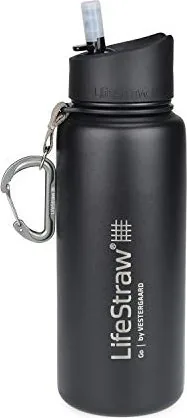
Stay Hydrated Safely with the LifeStraw Go Stainless Steel Water Bottle
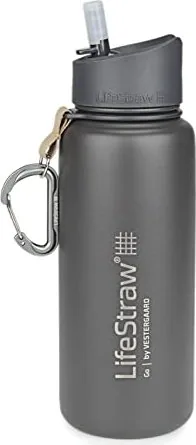
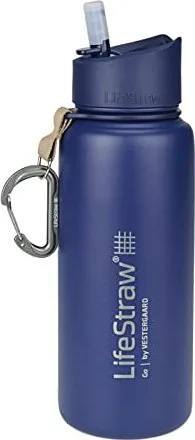
The LifeStraw Go Stainless Steel Water Bottle 710ml is a robust companion for adventurers, hikers, and travelers who demand clean water anywhere. This innovative bottle integrates a high-performance membrane microfilter directly into the cap, allowing you to drink safely from streams, lakes, and rivers without carrying heavy purification tablets or bulky equipment. The stainless steel construction ensures durability while maintaining your drinks at the ideal temperature for hours.
Experience Pure Water on the Go
Unlike standard reusable bottles, this model filters out 99.9999% of waterborne bacteria and 99.9% of protozoan parasites as you sip. The activated carbon filter also improves taste by reducing bad odors and tastes. Whether you are exploring remote trails or navigating urban environments with questionable tap quality, this bottle provides peace of mind. The ergonomic design features a leak-proof lid and a comfortable mouthpiece that makes drinking effortless even while moving.
Maintenance and Care
Proper care extends the life of your filtration system. After each use, simply remove the filter cartridge and wash the bottle and lid with mild detergent. Rinse the filter under running water for 60 seconds before reinserting it. For long-term storage, ensure the mouthpiece is closed and the filter remains inside the bottle to prevent contamination. Never place the filter in a dishwasher or expose it to freezing temperatures after use, as ice can damage the membrane. If the flow rate slows down significantly or stops completely, it is time to replace the filter element.
Important Usage Notes
Always test your gear before heading out. Avoid using the bottle with seawater or chemically contaminated water such as mining tailings. Extreme heat above 60°C or freezing conditions below 0°C can compromise performance. When traveling by air, pressure changes may build up inside; slowly twist the lid with the mouthpiece closed to release pressure before opening fully.