
Leatt AirFlex Manual
PDF manual · 48 Pages
English



Quick check
Incorrect answer, please try again.
Chat with your Leatt AirFlex manual using AI
Get instant AI answers from your Leatt AirFlex manual
Ask anything about the Leatt AirFlex. Answers come from this manual, with the pages they are based on.
AirFlex Maintenance Schedule
Leatt recommends replacing the product every three years under normal use conditions to ensure maximum performance and safety.
Check all components for signs of damage, cracking, deformation, or deteriorated padding. Stop using if any defects are found.
Free maintenance reminders
Timed to your purchase date. Always free, unsubscribe anytime.
Ask a Question
Do you recommend AirFlex?
Yes NoFrequently Asked Questions
It includes impact protection for the chest, back, shoulders, and elbows. Correct placement is important so each protective component covers its intended body area during riding.
Is this answer helpful?
The chest protector meets EN 1621-3:2018 Level 1, the back protector meets EN 1621-2:2014 Level 1, and the shoulder and elbow protectors meet EN 1621-1:2012 Level 1 Type A. It is CE marked under EU PPE Regulation 2016/425.
Is this answer helpful?
It is intended for off-road motorcycling and biking activities, including Moto-X, enduro, downhill mountain biking, BMX, and adventure sports.
Is this answer helpful?
The garment should fit snugly without restricting movement. The back guard should be centered along the spine, the chest guard centered on the sternum, and shoulder and elbow guards correctly aligned. Avoid an oversized fit that may contact the helmet.
Is this answer helpful?
Yes. It is designed for use with a Leatt neck brace and a compatible full-face helmet. When adjusted correctly, normal head and neck movement should remain possible.
Is this answer helpful?
Use only tap water with a damp cloth or a soft brush for perforations. Do not use detergents, cleaners, bleach, solvents, dry cleaning, ironing, tumble drying, or machine washing, as these can reduce protection.
Is this answer helpful?
Inspect it before every use. Replace it after a collision or if it is cracked, worn, deformed, damaged, or has deteriorating internal padding. Under normal use, replacement is recommended every three years.
Is this answer helpful?
Advantages and Disadvantages
Advantages

- CE-certified Level 1 chest, back, shoulder, and elbow impact protection.
- Compression-style construction helps keep shoulder and elbow guards correctly positioned.
- Designed for off-road motorcycling, enduro, downhill MTB, BMX, and adventure activities.
- Compatible with a Leatt neck brace and allows normal head and neck movement when fitted correctly.
- Three size options cover stated rider heights from 160 cm to 196 cm.
Disadvantages

- Level 1 protection cannot prevent all injuries, including severe fractures or spinal trauma.
- Correct sizing and positioning are critical; an oversized fit may interfere with a helmet.
- Requires pre-ride inspection and replacement after crashes, damage, or padding deterioration.
- Cleaning is limited to tap water and gentle wiping or brushing, without detergents or machine washing.
- Leatt recommends replacing the protector every three years under normal use conditions.
Product Specification
Type
Protector
Protection zones
Shoulders, chest, back, elbows
Protector type
Hard
Colors
black
Product Description
Leatt AirFlex Body Protector Black - Read, Download & Print Free
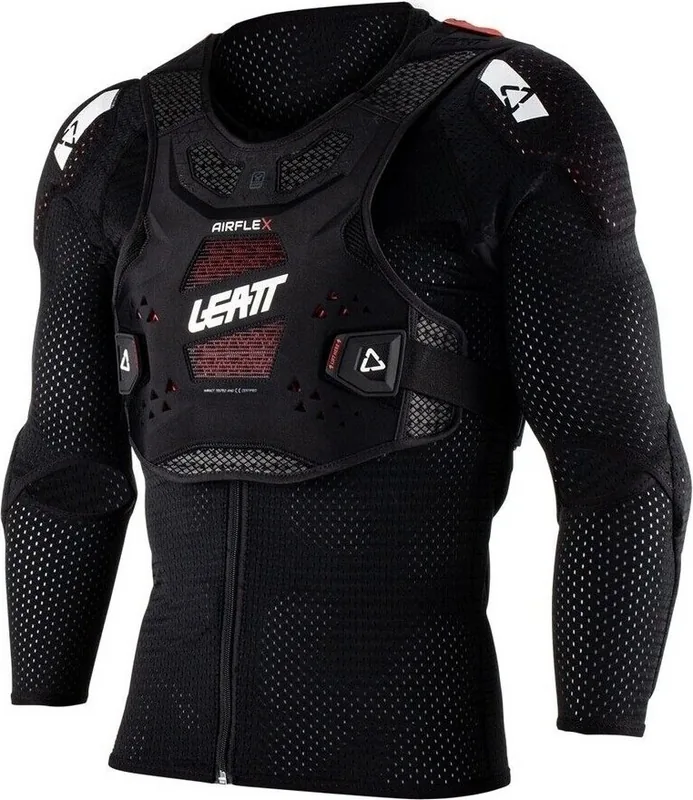
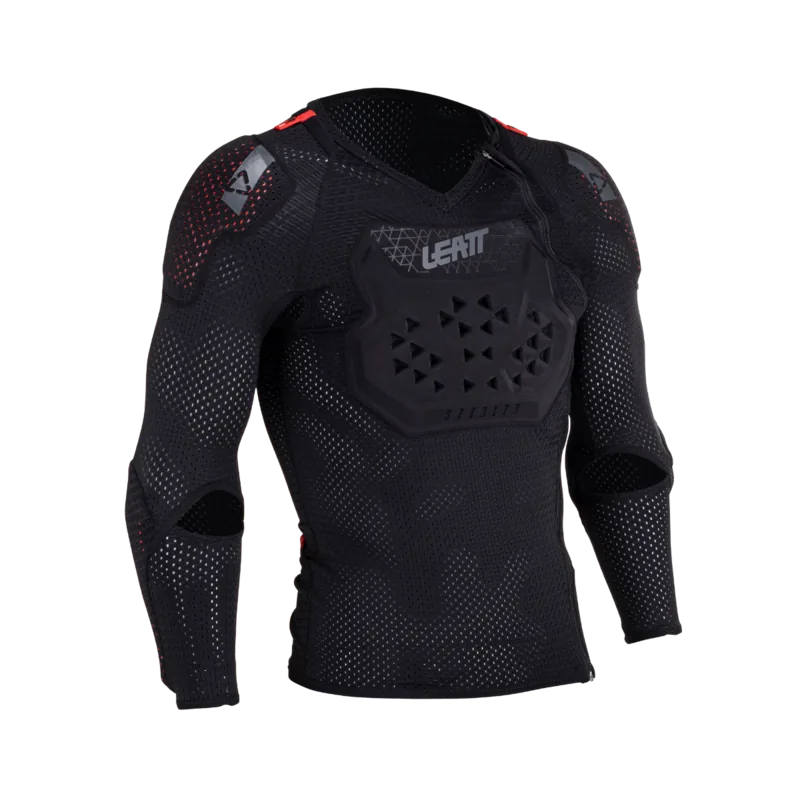
The Leatt AirFlex Body Protector black - Read, Download & Print Free guide highlights a versatile protective layer for riders who want broad upper-body coverage for off-road motorcycling, enduro, downhill MTB, BMX, and adventure riding. Designed as a compression-style garment, it integrates impact protection at the chest, back, shoulders, and elbows while supporting a close, secure fit.
Protection Where It Matters
The AirFlex Body Protector uses CE-certified protection components designed to help reduce the severity of soft-tissue injuries such as bruises, cuts, abrasions, and contusions. Its chest protector meets EN 1621-3:2018 Level 1 requirements, while the back protector meets EN 1621-2:2014 Level 1 requirements. Shoulder and elbow protection meet EN 1621-1:2012 Level 1 Type A requirements.
Testing information states that the back plate recorded a mean transmitted force below 9 kN in a 50-joule impact test. The chest plate recorded below 18 kN, while Type A shoulder and elbow guards recorded below 35 kN. These ratings provide a useful reference for riders seeking certified impact protection across several key zones.
Fit, Movement, and Compatibility
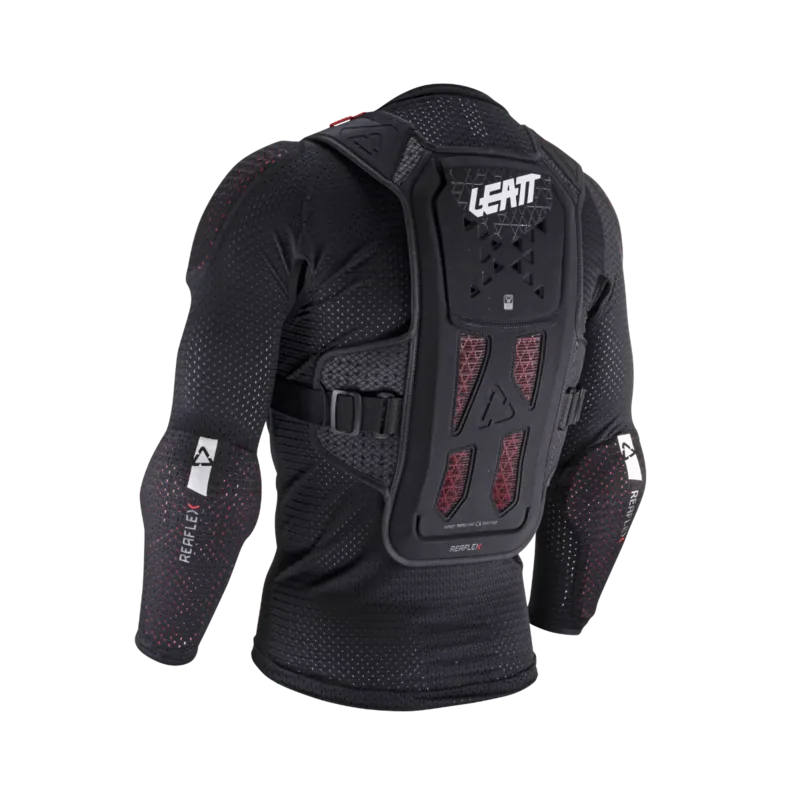
Correct positioning is essential for the intended coverage. The back protector should sit centrally along the spine, covering the shoulder blades and reaching close to the base of the spine without restricting comfort. Chest protection should align with the center of the sternum, while shoulder and elbow guards should remain centered during movement.
The zipped compression base layer is intended to hold the shoulder and elbow guards in place. Adjustable chest and waist straps help secure the chest protector. When paired with a compatible helmet and Leatt neck brace, the setup should permit normal head and neck movement, including looking up, down, and over either shoulder.
Available sizes are S/M, L/XL, and XXL. The stated height range runs from 160 cm to 196 cm, with torso measurements from 46 cm to 59 cm. Selecting the right size is important: an oversized protector may interfere with a helmet and create an unsafe riding condition.
Care and Replacement
Keep the protector in a dry, ventilated place away from direct sunlight, extreme temperatures, and heavy objects. Clean soiled components with a damp cloth or soft brush using tap water only. Do not use detergents, bleach, dry cleaning, ironing, tumble drying, or chemicals that could damage materials and reduce protective performance.
Note: Inspect the protector before every ride. Stop using it after a crash or if any component is worn, cracked, deformed, or has deteriorated padding. Leatt recommends replacement every three years under normal use conditions. No protective equipment can prevent every injury, including serious spinal injuries or trauma from extreme impacts.
Search for 67,732 Manuals online


Type-in Brand or Model