
KED Wayron Manual
PDF manual · 16 Pages
English



Quick check
Incorrect answer, please try again.
Chat with your KED Wayron manual using AI
Get instant AI answers from your KED Wayron manual
Ask anything about the KED Wayron. Answers come from this manual, with the pages they are based on.
Wayron Maintenance Schedule
Replace the helmet after a maximum of 5 years from the date of manufacture or immediately after an accident.
Inspect the helmet regularly for any visible damage. Minor scratches do not reduce protection.
Free maintenance reminders
Timed to your purchase date. Always free, unsubscribe anytime.
Ask a Question
Do you recommend Wayron?
Yes NoFrequently Asked Questions
The helmet is designed to meet EN 1078 and carries CE marking under PPE directive 89/686/EEC. Within this standard, it is tested for aspects such as shock absorption, sliding resistance, chin strap strength, and coverage zones.
Is this answer helpful?
Measure your head circumference at the widest point and then select the matching size. The size information is shown on a label inside the helmet. A correct size should feel safe and comfortable, and the helmet should not move or shift when you check the fit.
Is this answer helpful?
QuickSafe uses an adjustment wheel to fine-tune the head ring size. Turn the wheel toward "-" to tighten the ring and toward "+" to loosen it. Adjust until the helmet feels secure and comfortable on your head.
Is this answer helpful?
The guidance recommends a snug chin strap that does not restrict breathing or swallowing. If equipped, use the Quickstopp system to lock the strap into an optimal position. Ensure the locking/raster system is fully closed and the strap sits correctly beneath the chin.
Is this answer helpful?
The Quicksafe feature includes flashing lights. You can switch the lights on and off using the press control. For battery replacement, open the housing with a thin flat screwdriver, remove the board, replace the batteries, and reassemble.
Is this answer helpful?
Clean padding with a moist cloth, and clean the helmet shell with lukewarm water and mild soapy solution. Do not use solvents. Dry padding and straps at room temperature. Store in a dry place and avoid temperatures above 60 C and strong UV exposure.
Is this answer helpful?
Replace the helmet after any significant fall or stronger impact, even if no damage is visible. Also replace it after a maximum of 5 years from the date of manufacture (see the date stamp on the helmet).
Is this answer helpful?
Advantages and Disadvantages
Advantages

- Meets EN 1078 and includes CE marking under PPE 89/686/EEC.
- QuickSafe fit system lets you fine-tune the head ring for a secure hold.
- Tested guidance for impact safety, strap strength, and coverage zones.
- Quickstopp and locking clip steps help achieve consistent chin strap tension.
- Quicksafe flashing lights with simple on/off control and battery replacement.
Disadvantages

- Cannot guarantee complete prevention of injuries, even when worn correctly.
- Protection depends on correct sizing, positioning, and fully closed strap system.
- Not suitable for other sports such as skiing, motorcycling, or scooter riding.
- Must be replaced after a significant impact and after max 5 years.
- Cleaning and storage limits apply: avoid solvents and temperatures above 60 C.
Product Specification
Colors
white
Intended Use
MTB
Vents
18
Visor
no
Sizes
21.65-23.23 in (M), 22.44-24.02 in (L)
Weight
0.60 lb (M), 0.66 lb (L)
Special Features
Adjustment system, Insect net, Magnetic buckle
Product Description
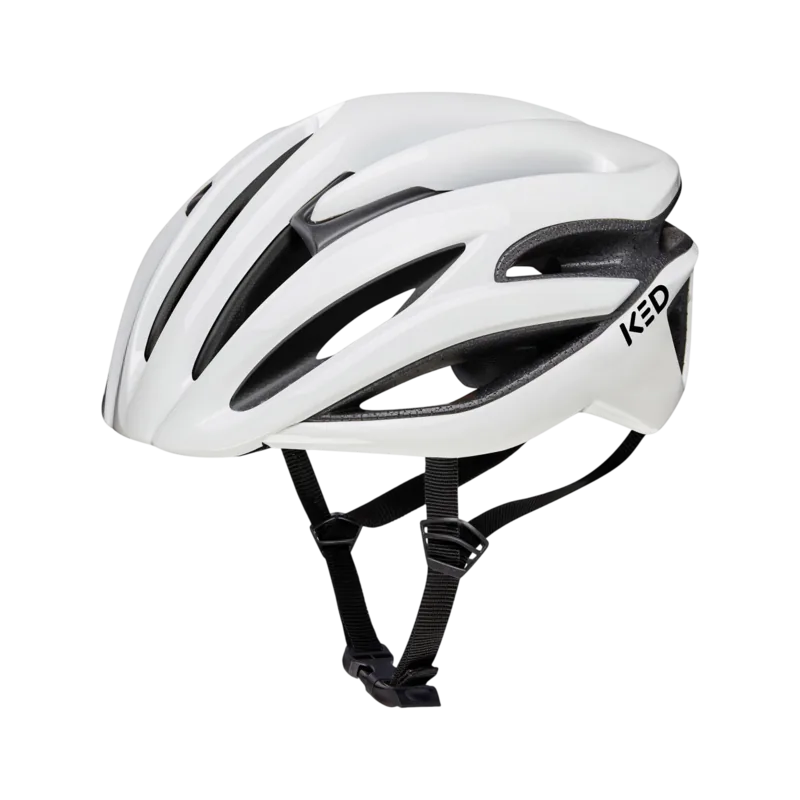
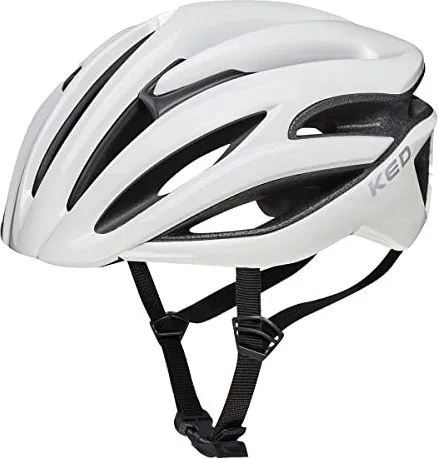
KED Wayron Helmet White Manual: Safe Fit, Ready-to-Ride Features
Choosing the right helmet makes a real difference, and the KED Wayron Helmet White Manual highlights what matters most for everyday safety and comfort. This helmet is designed for cyclists and for roller skating, focusing on protecting your head during everyday rides and common falls. Like all KED cycling helmets, it is built to meet the EN 1078 standard and carries CE marking under PPE directive 89/686/EEC.
The standard testing covers key protection areas such as shock absorption, sliding resistance, chin strap strength, and coverage zones. While no helmet can guarantee the prevention of injuries, a correctly worn helmet can significantly reduce the impact and consequences of an accident. That is why the product guidance emphasizes proper sizing, correct positioning, and secure fastening every time you ride.
How to get the right fit
Start by measuring your head circumference at the widest point, then select the correct size from the label inside the helmet. For KED helmets, fit is the foundation of performance. The QuickSafe adjustment system helps you fine-tune the head ring by turning the wheel: the "-" direction tightens and the "+" direction loosens. Once adjusted, the helmet should feel secure without being uncomfortable.
Next, position the helmet horizontally so your forehead is protected and your vision is not impaired. The guidance also stresses that the helmet should not slide backward.
Secure straps and optional Quicksafe lights
A tight fit can be checked by lightly shaking your head with the chin strap open. The helmet should not shift. For strap setup, the Quickstopp system (where equipped) lets you lock the straps into an optimal position, while the raster locking clip should be centered beneath the chin. The chin strap must be snug, but not restrict breathing or swallowing. Riders should also ensure that the system is fully closed before setting off.
The KED Quicksafe feature includes flashing lights, switchable with a press. Battery replacement is supported by opening the housing with a thin flat screwdriver, swapping the batteries, and resealing.
Care, storage, and replacement
For cleaning, use a moist cloth for comfort padding and lukewarm water with mild soapy solution for the shell. Avoid solvents and do not store the helmet above 60 C. Regularly check for visible defects; minor scratches do not reduce protection, but damaged components should be treated seriously. Repairs should use original parts only.
Important safety reminders: do not paint, apply stickers, or drill into the helmet; after a fall or stronger impact, replace the helmet even if damage is not visible; replace after a maximum of 5 years from the date of manufacture. The helmet can only protect areas it covers.
Key takeaways
- Meets EN 1078 and CE PPE requirements, with tests for impact, retention, strap strength, and coverage zones.
- QuickSafe adjustment helps dial in a secure, comfortable head ring fit.
- Quickstopp/raster strap guidance ensures the chin strap stays properly closed and centered.
- Quicksafe flashing lights add visibility, with supported battery replacement.
- Replace after impacts and within 5 years; avoid modifications and extreme heat/UV storage.
Notes
- This helmet is for cycling and roller skating only, not for other sports.
- Always verify fit and fully lock the chin strap before riding, including when children are present.
Search for 67,732 Manuals online


Type-in Brand or Model