
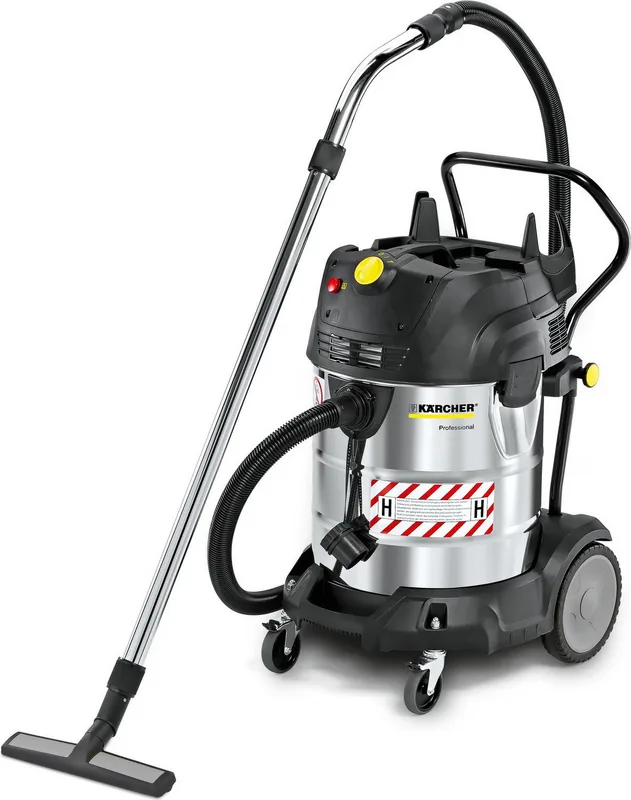
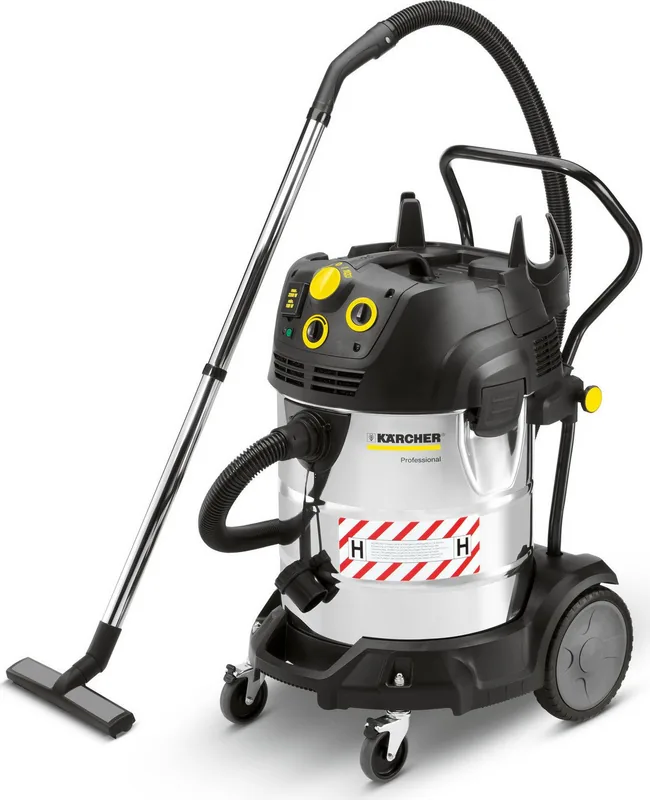
Karcher NT 75/1 Tact Me Te H Manual
PDF manual · 300 Pages
English



Quick check
Incorrect answer, please try again.
Chat with your Karcher NT 75/1 Tact Me Te H manual using AI
Get instant AI answers from your Karcher NT 75/1 Tact Me Te H manual
Ask anything about the Karcher NT 75/1 Tact Me Te H. Answers come from this manual, with the pages they are based on.
NT 75/1 Tact Me Te H Maintenance Schedule
Manufacturer or trained person must check for leaks, filter damage, and control element function at least once a year.
Perform test specified in EN 60 335-2-69 AA.22.201.2 at least once a year; repeat with new filter if negative.
Maintain as needed but at least annually; repair and have checked by an expert qualified per TRGS 519.
Wipe inside of container with damp cloth; clean electrodes with brush after wet vacuuming.
Clean appliance surface and container interior regularly using a damp cloth; do not use silicone-based cleaners.
Free maintenance reminders
Timed to your purchase date. Always free, unsubscribe anytime.
Ask a Question
Do you recommend NT 75/1 Tact Me Te H?
Yes NoDo you recommend NT 75/1 Tact Me Te H?
Yes NoFrequently Asked Questions
It is designed for dry and wet cleaning of floors and walls. For dry use, it is intended for suction of health-harmful dry dusts up to dust class H in Zone 22, using the correct filtration system. It is not suitable for high explosion-risk dusts or for mixtures of combustible dusts with fluids.
Is this answer helpful?
The machine includes a suction power monitor. If the air speed in the suction hose falls below 20 m/s, the control lamp (negative pressure) lights up red. During normal operation it may light temporarily when airflow is reduced by nozzle changes or partial blockage. If it indicates a problem, check airflow paths and clear blockages.
Is this answer helpful?
For wet vacuuming, you must remove the safety filter bag. Rubber lips must be installed so the inlet seals properly. The flat fold filter must remain in place. When the maximum liquid level is reached, the unit switches off automatically. For non-conductive liquids, automatic shutoff may not occur, so you must monitor the fill level continuously.
Is this answer helpful?
No. The instructions require using the complete filtering system. The vacuuming process must not run without the correct filter elements because the suction motor can be damaged, and health risk increases due to fine dust emissions. For dry extraction of hazardous dusts up to dust class H, the safety filter bag usage is legally required.
Is this answer helpful?
The text references a flat fold filter (order no. 6.904-364.0) and a safety filter bag/sack (order no. 6.904-420.0, 5 pieces). Using the specified components helps ensure correct containment and filtration performance for dust class H applications.
Is this answer helpful?
The collected dust and safety filter bags must be disposed of in accordance with statutory provisions. Dust and waste should be transported in dust-tight containers, and re-filling is not permitted. Disposal of the dust collection container should be performed only by trained persons, following local rules, especially where asbestos-related or other hazardous materials may be involved.
Is this answer helpful?
Yes. The equipment is stated as suitable for commercial use in environments such as hotels, schools, hospitals, factories, shops, offices, and rental operations. It is also built for industrial dust handling within the specified safety and filtration conditions.
Is this answer helpful?
Advantages and Disadvantages
Advantages

- Wet and dry cleaning for floors and walls with a 75 l container capacity
- Suitability for health-harmful dry dusts in dust class H for Zone 22
- Suction power monitoring with a red lamp when airflow falls below 20 m/s
- Anti-static concept that helps prevent sparks and current surges with approved accessories
- Automatic shutoff during wet vacuuming when the maximum liquid level is reached
Disadvantages

- Not intended for vacuuming high-explosion-risk dusts or mixtures of combustible dusts with fluids
- Safety filter bag and filter use rules must be followed closely; missing filtration can damage the motor
- No extension cable allowed, which can limit reach on larger job sites
- Disposal and maintenance involving hazardous dust require trained specialists and regulated procedures
- Typical operating weight is 27.8 kg, making handling heavier than smaller vacuums
Product Specification
Type
Floor Vacuum Cleaner
Operating Mode
Mains Operation (1,000W)
Capacity
19.81 gal
Range
Cable Length 32.81 ft
Dimensions
25.20x36.42x21.26in (WxHxD)
Product Description
Karcher NT75/1 Wet/Dry vacuum cleaner (1.667): Built for safe, heavy-duty cleanup
If you need one machine that can handle everyday dirt and demanding industrial messes, the Karcher NT75/1 Wet/Dry vacuum cleaner (1.667) is designed for precisely that. This model, often referenced alongside the Karcher NT75/1 Wet/Dry vacuum cleaner (1.667) Manual, combines wet and dry vacuuming in a rugged industrial format, making it a strong choice for environments like hotels, schools, hospitals, factories, shops, offices, and rental businesses.
The unit is made for floors and walls, with a 75 l container and powerful extraction (1000 W). For dry work, it is intended for combustible, health-harmful dusts in dust class H, suitable for Zone 22 requirements. A flat fold filter and a safety filter bag system help contain hazardous material during extraction, while the anti-static design supports safer operation when using electrically conductive accessories.
During use, you get practical feedback from the machine. A red indicator lamp linked to suction monitoring warns when airflow drops below 20 m/s. This helps you catch performance issues early, for example when nozzles partially clog or airflow is restricted.
Wet vacuuming is handled differently for safety: the safety filter bag must be removed, and rubber lips are installed for proper sealing. The device also includes automatic shutoff when the maximum liquid level is reached. For non-conductive liquids, the unit does not rely on shutoff, so continuous monitoring and timely emptying are required.
What makes it stand out
- Industrial-grade wet/dry capability for demanding sites
- Dust class H suitability for controlled dry extraction
- Safety filter bag design and complete filtration requirements
- Suction power monitoring with a clear warning light
- Automatic shutoff for wet vacuuming at max level
Notes
- Never vacuum without the complete filtration system.
- Avoid extension cables.
- For hazardous dust handling and disposal, follow local regulations and use trained specialists.
- Store indoors in a dry room and secure the unit during transport.
Overall, the Karcher NT75/1 Wet/Dry vacuum cleaner (1.667) is a purpose-built industrial vacuum that emphasizes safe containment, clear operational monitoring, and reliable wet/dry performance.
Search for 67,732 Manuals online


Type-in Brand or Model