Manual.ly Logo

JBL Aquaristic ProAquaTest Lab Manual

0.0 · 0 Ratings

PDF manual · 65 Pages

English

M: QW-35-FL
page

/ 65

Loading...
20bbaef5bdec311f8d8e156c4e1fe9d6e449 page 7
12 13
These phenomena are not limited to the old leaves, but can
also occur on newly formed ones. The magnesium content
of the aquarium water needs to be measured on a daily ba-
sis at rst. So you need to determine the needs of the plants
in order to decide the dosage of the fertiliser. Afterwards,
routine measurements can be carried out at longer intervals.
For good plant growth the value should be between 5 and
10 mg/l.
Procedure:
1. Rinse both test vials and the syringe several times with
the water to be tested.
2. Fill both test vials with 10 ml sample water each with the
syringe provided.
3. Add 7 drops of reagent 1 to one of the two test vials and
mix by swirling. Then add 3 drops of reagent 2 and mix
again. Finally add 2 drops of reagent 3 and mix. Wait 1
minute until the full colouring develops.
4. Place both test vials in the grey comparator block: Place
the vial with added reagent at the smooth end and the
glass with untreated sample water (blank sample) at the
notched end of the comparator block.
5. Place the comparator block with the two test vials on the
colour chart in such a way that the notch points to the
values and move it on the colour chart until the colour of
the sample mixed with reagents corresponds as closely
as possible to the colour under the blank sample.
6. Read the magnesium content in the notch of the com-
parator.
Please note: The colour of the solution remains stable for
max. 15 minutes. Later reading may lead to deviating val-
ues!
Correcting deviating values:
Too low: Use magnesium-containing fertilisers from the JBL
ProScape range.
Too high: Carry out the corresponding partial water change.
JBL PRO AQUATEST pH 3–10
Features:
JBL PRO AQUATEST pH 3–10 is an easy-to-use colorimet-
ric test for general guidance and monitoring of the pH value
covering a wide pH range for fresh and marine water aquari-
ums and garden ponds.
Why test?
Maintaining the suitable pH value as stable as possible is
an important condition for the well-being of all aquatic or-
ganisms. Fluctuations in the pH level, ought to be avoided.
at all costs. Many substances dissolved in water are also
liable to changes caused by the pH level. For example, the
amount of CO2 soluble in water is directly related to the pH
value. The pH level most conducive for keeping the majority
of freshwater sh and plants is in the neutral range around
7. However, there are also freshwater sh which require
slightly acidic or slightly alkaline water. In garden ponds, val-
ues around 7.5–8.5 are advantageous. In marine aquariums
the pH value should be 7.8–8.4. For particularly accurate
measurements of the pH value, there are, in each case ad-
justed to the relevant pH ranges, the JBL PRO AQUATEST
pH 6.0–7.6 for freshwater aquariums (also for monitoring the
CO2 fertilisation) and the JBL PRO AQUATEST pH 7.4–9.0
for marine aquariums and garden ponds.
Procedure:
1. Rinse the measuring tube several times with the water
to be tested.
2. Fill 5 ml sample water into the measuring vessel with the
syringe provided.
3. Add 5 drops of reagent, mix by swirling and allow to stand
for 3 minutes.
4. Compare the resulting colour on a white background with
the colour chart provided and read off the corresponding
pH value.
Correcting deviating values:
Too low: Raise the pH value by adding JBL pH increasers.
When using a CO2 fertiliser system, reduce the CO2 supply.
Too high: Lower the pH value by adding a JBL pH reducer
or optionally in freshwater aquariums by adding CO2 with
the JBL ProFlora CO2 fertiliser system.
JBL PRO AQUATEST pH 6.0–7.6
Features: JBL PRO AQUATEST pH 6.0–7.6 is a nely grad-
uated, colorimetric test for the routine monitoring of the pH
value in slightly acidic to neutral freshwater. A compensa-
tion method developed by JBL allows reliable results to be
obtained even in slightly discoloured water (caused by peat
ltering or disease treatment etc.).
Why test? Maintaining the suitable pH value as stable as
possible is an important condition for the well-being of all
aquatic organisms. Fluctuations in the pH level, in particular,
ought to be avoided.at all costs. Many substances dissolved
in water are also liable to changes caused by the pH level.
For example, the amount of CO
2
soluble in water is directly
related to the pH value. The pH value can therefore serve
as a simple control parameter for the adjustment of CO
2
fer-
tilisers, provided that there are no other acids (e.g. humic
acids) than CO
2
in the water, to inuence the pH value. The
CO
2
concentration, which is optimal for plants and harmless
for sh, is reached at a pH value of 6.8–7.3. The carbonate
hardness should not be below 4 °dH and not signicantly
above 16° dH. In addition, an exact pH measurement may
be required for special applications, such as the breeding
of certain sh species. JBL PRO AQUATEST pH 6.0–7.6 is
ideal here too.
Procedure:
1. Rinse both test vials several times with the water to be
tested.
2. Use the enclosed syringe to ll each of the test vials with
5 ml of sample water.
3. Add 4 drops of reagent 6.0–7.6 to one of the two test vials
and mix by swirling.
4. Place both test vials in the grey comparator block: Place
the vial with added reagent at the smooth end and the
vial with untreated sample water (blank sample) at the
notched end of the comparator block.
5. Place the comparator block with the two test vials on the
colour chart in such a way that the notch points to the
values and move it on the colour chart until the colour of
the sample mixed with reagents corresponds as closely
as possible to the colour under the blank sample.
6. Read the pH value in the notch of the comparator.
Correcting deviating values:
Too low: Raise the pH value by adding JBL pH increasers.
When using a CO
2
fertiliser system, reduce the CO
2
supply.
Too high: Lower the pH value by adding a JBL pH reducer
or optionally in freshwater aquariums by adding CO
2
with the
JBL ProFlora CO
2
fertiliser system.
JBL PRO AQUATEST pH 7.4–9.0
Features: JBL PRO AQUATEST pH 7.4–9.0 is a nely
graduated, colorimetric test for the routine monitoring of the
pH value in marine water and in slightly alkaline freshwater.
A compensation method developed by JBL allows reliable
results to be obtained even in slightly discoloured water
(caused by peat ltering or disease treatment etc.).
Why test? Maintaining the suitable pH value as stable as
possible is an important condition for the well-being of all
aquatic organisms. Fluctuations in the pH level, in particular,
ought to be avoided.at all costs. Many substances dissolved
in water are also liable to changes caused by the pH level.
For marine water organisms, pH values around 8.2 are to be
regarded as optimal. Especially in marine aquariums with
lower animals (invertebrates) the consumption of calcium
bicarbonate can reduce the pH value (and the carbonate
hardness) if a regular supply is not ensured. When keeping
sh from slightly alkaline freshwater waters, such as Lake
Malawi and Lake Tanganyika, values around 8–8.5 are rec-
ommended. And pH values between 7.5 and 8.5 are optimal
for Koi and others. If there is a CO
2
deciency in garden
ponds, but also in freshwater aquariums, algae in particular
can consume the hydrogen carbonate in water due to their
rapid assimilation during photosynthesis (biogenic decalci-
cation) and thus drive the pH value to levels dangerous for
sh (above 10).
Procedure:
1. Rinse both test vials several times with the water to be
tested.
2. Use the enclosed syringe to ll each of the test vials with
5 ml of sample water.
3. Add 4 drops of reagent 7.4–9.0 to one of the two test vials
and mix by swirling.
4. Place both test vials in the grey comparator block: Place
the vial with added reagent at the smooth end and the
vial with untreated sample water (blank sample) at the
notched end of the comparator block.
5. Place the comparator block with the two test vials on the
colour chart in such a way that the notch points to the
values and move it on the colour chart until the colour of
the sample mixed with reagents corresponds as closely
as possible to the colour under the blank sample.
6. Read the pH value in the notch of the comparator.
Correcting deviating values:
Too low: Raise the pH value by adding JBL pH increasers.
When using a CO
2
fertiliser system, reduce the CO
2
supply.
Too high: Lower the pH value by adding a JBL pH reducer
or optionally in freshwater aquariums by adding CO
2
with the
JBL ProFlora CO
2
fertiliser system.
JBL PRO AQUATEST NH
4
Features: JBL PRO AQUATEST NH
4
is an easy-to-use col-
orimetric test for the routine monitoring of the ammonium/
ammonia content in fresh and marine water, and in garden
pond water. A compensation method developed by JBL al-
lows reliable results to be obtained even in slightly discol-
oured water (caused by peat ltering or disease treatment
etc.).
Why test? The degradation of all organic substances (food
and plant residues, sh excretions) in the aquarium and
pond follows the following stages: proteins ammonium
nitrite nitrate. Certain bacteria are responsible for this
process. By measuring the individual intermediate stages
of ammonium, nitrite and nitrate, we can draw conclusions
about how well the system is "functioning". For example,
medications for curing sh diseases can damage the bene-
cial cleansing bacteria, leading to an increase in the ammo-
nium and/or nitrite content. As a rule, ammonium will not be
measurable in a well-maintained aquarium with an efcient
biological lter or in a properly laid out garden pond. Ammo-
nium is a plant nutrient and in low concentrations normally
non-toxic for sh. Depending on the pH value, however, the
ammonium ion (NH
4
+) may convert into ammonia (NH
3
)
which is toxic to sh. This is why any ammonia measure-
ment should always be accompanied by pH measurements
(see table on last page).
Procedure:
1. Rinse both test vials several times with the water to be
tested.
2. Fill both test vials with 5 ml sample water each with the
syringe provided.
3. Add 4 drops of reagent 1 to one of the two test vials and
mix by swirling. Then add 4 drops of reagent 2 and mix
again. Finally add 5 drops of reagent 3 and mix. Wait 15
minute until the full colouring develops.
4. Place both test vials in the grey comparator block: Place
the vial with added reagent at the smooth end and the
vial with untreated sample water (blank sample) at the
notched end of the comparator block.
5. Place the comparator block with the two test vials on the
colour chart so that the notch points to the values, and
move it on the colour chart until the colour of the sample
mixed with reagents corresponds as closely as possible
to the colour under the blank sample.
6. Read the ammonium content in the notch of the compara-
tor.
Correcting deviating values:
Too low: The value should always be as low as possible.
Too high: Use a suitable biological lter and add JBL
cleansing bacteria. Carry out an approx. 50 % water change
in the aquarium as an immediate measure. The pH value of
the freshwater must never be higher than in the aquarium.
Possibly reduce sh stock.
JBL PRO AQUATEST NO
2
Features: JBL PRO AQUATEST NO
2
is an easy-to-use col-
orimetric test for the routine monitoring of the nitrite content
in fresh and marine water aquariums, and in garden ponds.
A compensation method developed by JBL allows reliable
results to be obtained even in slightly discoloured water
(caused by peat ltering or disease treatment etc.).
Why test? The degradation of all organic substances (food
and plant residues, sh excretions) in the aquarium and
pond follows the following stages: proteins ammonium
nitrite nitrate. Certain bacteria are responsible for this
process. By measuring the individual intermediate stages
of ammonium, nitrite and nitrate, we can draw conclusions
about how well the system is "functioning". For example,
medications for curing sh diseases can damage the bene-
cial cleansing bacteria, leading to an increase in the ammo-
nium and/or nitrite content. As a rule, ammonium will not be
measurable in a well-maintained aquarium with an efcient
biological lter or in a properly laid out garden pond. Like
ammonia, nitrite is highly poisonous for sh. Depending on
the sensitivity of the sh species, concentrations between
0.5 and 1 mg/l (ppm) can be lethal. Marine sh and young
sh are more sensitive than adult ones.
Points to consider for garden ponds:
As the seasons change and the temperatures drop, the ac-
tivity of the cleansing bacteria will decline as well. If food
with a too high protein content is fed, a dangerous increase
in nitrite may occur. At low temperatures, it is therefore par-
ticularly important to give food with a high energy content
(fat content) but little protein, such as the winter food from
the JBL ProPond range.
Procedure:
1. Rinse both test vials several times with the water to be
tested.
2. Use the enclosed syringe to ll each of the test vials with
5 ml of sample water.
3. Add 5 drops of reagent 1 to one of the two test vials and
then 5 drops of reagent 2, mix by swirling after each ad-
dition of reagent. Allow to stand for 5 minutes until the full
colouring develops.
en
en
en
en
en

Chat with your JBL Aquaristic ProAquaTest Lab manual using AI

Get instant AI answers from your JBL Aquaristic ProAquaTest Lab manual

Ask anything about the JBL Aquaristic ProAquaTest Lab. Answers come from this manual, with the pages they are based on.

ProAquaTest Lab Maintenance Schedule

Daily
Measure magnesium content in freshwater aquarium

Initially measure daily to determine plant needs and fertilizer dosage. Switch to longer intervals afterwards.

Daily
Measure potassium content in freshwater aquarium

Initially measure daily to determine plant needs and fertilizer dosage. Switch to longer intervals afterwards.

M: qwen/qwen3.8-flash

Ask a Question

0/1000

Do you recommend ProAquaTest Lab?

Yes No

Frequently Asked Questions

A

Ensure accurate results by rinsing all vessels multiple times with sample water before testing. Hold droppers vertically to avoid air bubbles. Follow the specific waiting times for color development. Compare colors against the chart on a white background. Use the provided syringes and comparator blocks for consistent volumes.

Is this answer helpful?

A

Fluctuations in pH can harm aquatic organisms. Sudden changes are particularly stressful. Discolored water can interfere with readings but compensation methods help. Always measure at the same time of day as light affects CO2 levels and pH. Avoid testing immediately after adding chemicals or food.

Is this answer helpful?

A

Check critical parameters like pH and ammonia regularly especially in new setups. Test nutrients like nitrate and phosphate monthly once the system is stable. Check GH and KH weekly to monitor hardness trends. Test oxygen levels if fish show signs of distress or in heavily stocked tanks. Frequency depends on stocking density and tank size.

Is this answer helpful?

A

Yes the manual covers freshwater aquariums marine aquariums and garden ponds. Specific tests exist for Koi ponds with high stock density. General hardness and pH tests apply to most fresh water environments. CO2 tests are specific to planted aquariums with active plant growth cycles.

Is this answer helpful?

A

High ammonia indicates a biological filter problem. Perform a large partial water change immediately. Add beneficial bacteria to restore the nitrogen cycle. Check if medicines recently used harmed beneficial bacteria. Ensure feeding is reduced until levels return to safe limits. Monitor pH as it affects ammonia toxicity levels.

Is this answer helpful?

A

Correct low carbonate hardness by adding JBL water conditioners containing hydrogen carbonates. You can also use mineral salt mixtures designed for aquariums. Avoid softening water if it is already too low. Monitor closely after adjustment to prevent pH swings. Re-test after 24 hours to confirm stability.

Is this answer helpful?

A

Store reagents dry at room temperature in their original packaging. Keep them away from direct sunlight and heat sources. Ensure droppers are dry on the outside before returning to bottles. Do not mix caps between different test kits. Check expiration dates regularly as old reagents may give inaccurate results.

Is this answer helpful?

M: QW-35-FL

Advantages and Disadvantages

Advantages

  • Comprehensive range of tests covering all key parameters for diverse aquatic setups including fresh water marine and garden ponds
  • Sophisticated compensation technology ensures reliable results even in water discolored by peat filtering or treatments
  • Detailed procedures minimize user error and include visual aids like color charts for easy interpretation of measurements
  • Reagents are stable and effective when stored correctly allowing for long term consistent monitoring of water chemistry
  • Specific tools provided simplify the testing process making it accessible for beginners while remaining accurate for experts
VS

Disadvantages

  • Some tests require color readings within 15 minutes to ensure accuracy before the solution color changes
  • Users must ensure test vessels are not mixed between different test kits to avoid cross contamination of samples
  • Precision depends on careful drop counting and holding droppers vertically which requires attention to detail
  • Correction of high toxin levels often requires immediate large volume water changes which can be disruptive
  • Reagents may degrade over time if not stored in original packaging away from heat and moisture sources
M: QW-35-FL

Product Specification

Range

Water Values

Type

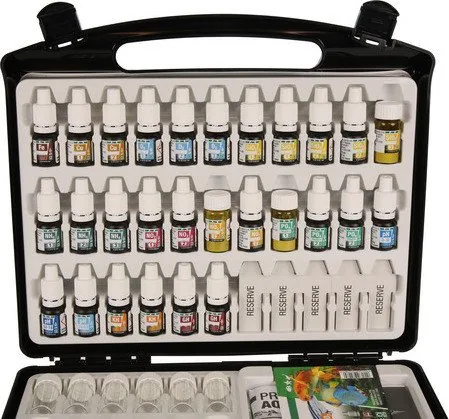
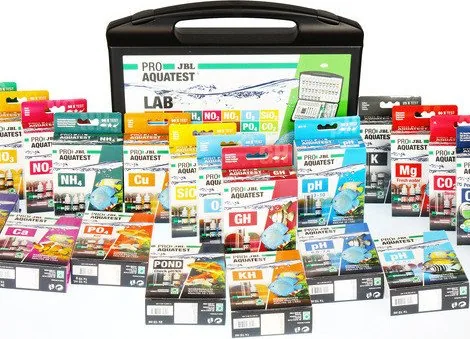
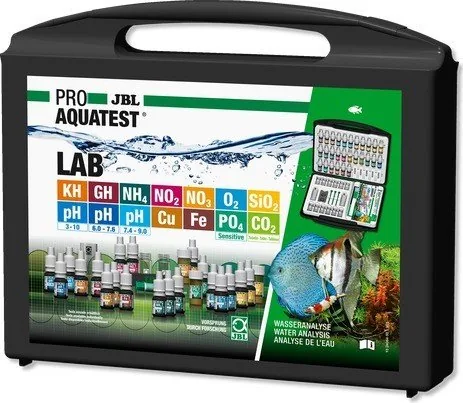
Water Test (pH (3 Ranges), Carbonate Hardness, Total Hardness, Phosphate, Nitrite, Nitrate, Iron, Copper, Silicate, Oxygen, Ammonium, Ammonia, CO2 Indirect), Test Kit

Dimensions

15.04x3.35x12.52in (WxHxD)

Weight

2.80 lbs

M: QW-35-FL

Product Description

Mastering Aquarium Water Chemistry

Maintaining a healthy aquatic environment requires precise monitoring of water chemistry to ensure the well-being of all organisms living within. The JBL Pro AquaTest Lab Test Case Manual provides essential guidance for hobbyists who demand excellence in their aquatic setups to maintain top condition. This comprehensive collection ensures your fish and plants thrive in optimal conditions by providing detailed instructions for various analysis methods used today.

Essential Testing Methods for Clarity

Water quality determines the success of any aquarium setup regardless of the specific species you keep. Whether you keep freshwater marine life or garden pond Koi different parameters need specific attention for stability. The manual details sophisticated titration and colorimetric methods designed for accuracy and ease of use for everyone. Titration tests like KH and GH use precise drop counts to determine hardness levels effectively over time. Colorimetric tests such as pH and essential nutrients rely on color charts for clear and readable results for quick checks. Each test includes step-by-step procedures to minimize user error during the process of testing water samples. The system effectively compensates for water discoloration caused by peat filtering or treatment ensuring reliability even in challenging conditions.

Vital Parameters Covered for Health

Understanding your water profile is crucial for preventing dangerous fluctuations that harm sensitive creatures. Hardness tests like Pro AQUATEST GH and KH prevent dangerous pH swings that harm sensitive creatures significantly. pH levels between specific ranges suit different species from acidic freshwater to alkaline marine tanks perfectly. Nutrient testing monitors complex nitrogen cycles like Ammonium Nitrite and Nitrate to track system function accurately. Phosphate and Silicate levels help prevent stubborn algae blooms which can choke your tank and kill fish. Trace elements like Iron and Copper are vital for growth but must be controlled strictly to avoid toxicity risks. Oxygen levels ensure life support for fish and bacteria while CO2 fertilization aids lush plant growth in planted tanks.

Maintenance and Corrections for Stability

Keeping parameters stable avoids stress and disease outbreaks in your ecosystem over the long term. If values deviate from recommended ranges the guide offers specific correction steps for adjustment to fix issues. Too low hardness requires adding mineral salts while excess suggests using reverse osmosis filtration to reduce it. Nutrient deficiencies need specific fertilizers from the ProScape range available for purchase online easily. High toxin levels require immediate water changes or introduction of biological filters to restore balance quickly. Storage instructions ensure reagents remain effective for future testing periods before they expire. Droppers must be held vertically to prevent air bubbles during dispensing of reagents. Regular monitoring prevents unexpected surprises in your maintenance routine for your tanks. By following the JBL Pro AquaTest Lab Test Case Manual guidance aquarium owners can achieve water clarity and stability for their pets.

M: QW-35-FL

© Copyright 2026 Manual.ly