
JBL Aquaristic CO2-pH Permanent Test 2 Manual
PDF manual · 48 Pages
English



Quick check
Incorrect answer, please try again.
Chat with your JBL Aquaristic CO2-pH Permanent Test 2 manual using AI
Get instant AI answers from your JBL Aquaristic CO2-pH Permanent Test 2 manual
Ask anything about the JBL Aquaristic CO2-pH Permanent Test 2. Answers come from this manual, with the pages they are based on.
CO2-pH Permanent Test 2 Maintenance Schedule
Refill the device with new indicator liquid every 3-4 weeks during partial water changes. Clean algae from the transparent container; use JBL PowerClean for stubborn deposits.
Check aquarium pH periodically using a standard JBL pH Test Set to account for other substances affecting pH that the permanent test cannot detect.
Ask a Question
Do you recommend CO2-pH Permanent Test 2?
Yes NoFrequently Asked Questions
It uses an indicator liquid separated from tank water by an air pocket. CO2 diffuses through the pocket into the liquid, changing its color to match the surrounding concentration. This allows direct reading on a color scale without mixing chemicals.
Is this answer helpful?
JBL recommends a CO2 content between 15 and 30 mg/l. The ideal range is considered to be between 20 and 25 mg/l, which is safe for fish and promotes plant growth. For aquascaping, values up to 35 mg/l are suggested.
Is this answer helpful?
The indicator solution should be replaced every three to four weeks. This is typically done during regular partial water changes. You should also clean the container to remove algae or calcium deposits to maintain visibility.
Is this answer helpful?
Yes, by using the included pH color scales, the device can monitor pH levels resulting from CO2 and carbonate hardness interaction. Note that this is only accurate if no other pH-affecting substances like high nitrate levels or liquid buffers are added.
Is this answer helpful?
Liquid carbon fertilizers do not produce CO2 gas. Since the test relies on CO2 diffusion to change color, the absence of gas means the indicator remains blue. The test cannot detect CO2 when using these specific carbon sources.
Is this answer helpful?
The indicator solution needs approximately two to three hours to stabilize and display the correct CO2 content. Users should not read the device immediately after placement or after water changes. Patience ensures reliable data.
Is this answer helpful?
Clean the transparent container carefully. Stubborn algae or lime scale can be removed by soaking the cap in JBL PowerClean or JBL Clean A. Ensure no residue remains before refilling with fresh indicator liquid.
Is this answer helpful?
Advantages and Disadvantages
Advantages

- Provides direct CO2 reading in mg/l without KH testing
- Ready-to-use liquid indicator saves time and effort
- Functionality as a dual-purpose CO2 and pH monitor
- Color chart allows easy visual interpretation for all users
- Replacement reagents available for environmental sustainability
Disadvantages

- Requires a waiting period of two to three hours for readings
- Must be kept in a vertical position for accurate diffusion
- Does not work when using liquid carbon fertilizers
- Liquid color may fade over time due to lighting exposure
- Manual pH checks needed if nitrates or buffers are present
Product Specification
Application
CO2 Supply, Plant Fertilization, Water Parameters
Type
CO2 Continuous Test (Plastic), CO2/pH Indicator Solution
Specifications
2x Test Solution, 2x six months validity
Suitability
Freshwater
Consumables
JBL CO2-pH Permanent Reagent
Special Features
Comparison Scale for Adhesion
Product Description
Mastery of Aquarium Chemistry using JBL CO2-pH Permanent Test 2
Maintaining a stable environment in your aquatic world is absolutely crucial for the overall well-being of your fish and aquatic plants. The JBL CO2-pH Permanent Test 2 offers a highly reliable solution for continuous monitoring of water chemistry. This advanced device allows dedicated aquarists to track dissolved carbon dioxide levels directly within the tank without the need for constant handheld testing equipment. It utilizes a sophisticated indicator system that reacts precisely to gas concentration levels present in the water.
One of the primary benefits of this system is its independence from complex carbonate hardness testing in many daily scenarios. Traditional methods often require separate KH measurements to calculate CO2 accurately based on buffers. This permanent test kit uses a special ready-to-use indicator liquid. Consequently, users can read the CO2 content directly in milligrams per liter without extra steps. This simplifies the process significantly for beginner and expert aquarists alike.
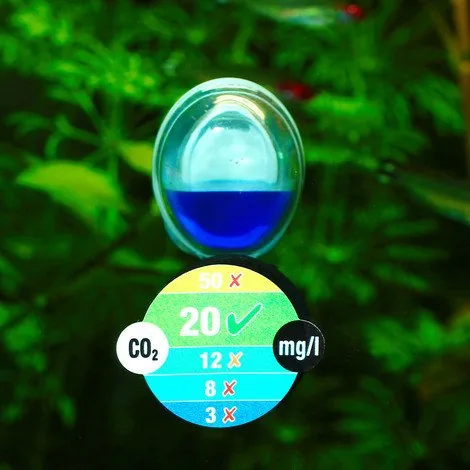
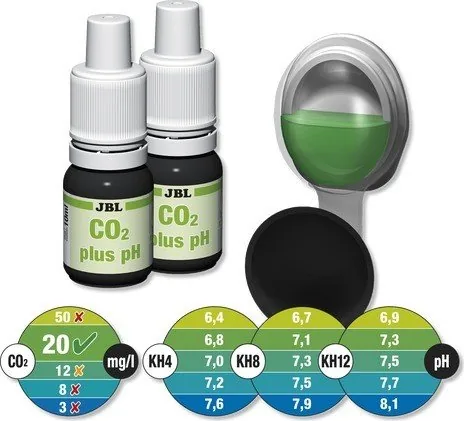
The operation involves placing the device securely in the aquarium with a stable suction cup. An air pocket seals the indicator liquid from the actual tank water. CO2 diffuses through this protective pocket into the liquid chamber. Once equilibrium is reached, the liquid changes color to reflect current levels. A color chart attached to the outside helps you interpret the results visually. Blue indicates low CO2, green signifies the optimal range, and yellow warns of excess levels that could harm fish.
Installation requires attention to specific details. You must ensure the air pocket remains intact to prevent mixing with aquarium water. This ensures accurate readings over time without fading. The device should be positioned away from the diffuser to avoid immediate saturation effects. Water flow should be good at the mounting point for correct diffusion. After about two to three hours, the indicator stabilizes for reading. Regular maintenance is key to sustaining accuracy long-term. You should refill the liquid every three to four weeks. Clean algae growth carefully. Following the JBL CO2-pH Permanent Test 2 Manual ensures proper setup.
For aquascaping enthusiasts, higher CO2 concentrations are often recommended for plant growth. However, safety for fish remains paramount throughout the process. The device also functions effectively as a pH monitor when paired with specific color scales provided. This dual capability makes it a versatile tool for comprehensive water quality management in your home. High nitrates or other pH buffers can affect pH readings so manual checks are wise. This ensures the permanent test remains valid for your ecosystem. Cost effective reagents are available for refills regularly. Notes: Avoid liquid carbon fertilizers. Replace scales if faded.
Pro Tips: Keep the unit vertical for best results during daily readings.
Search for 67,706 Manuals online


Type-in Brand or Model