
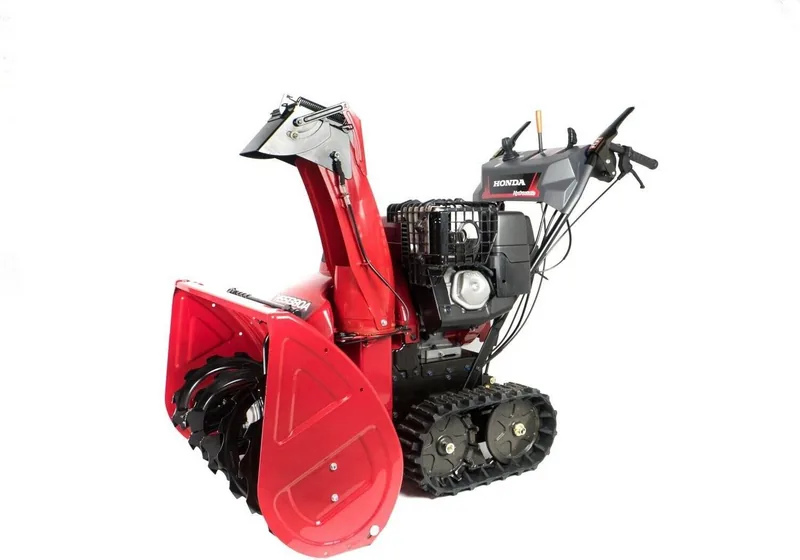
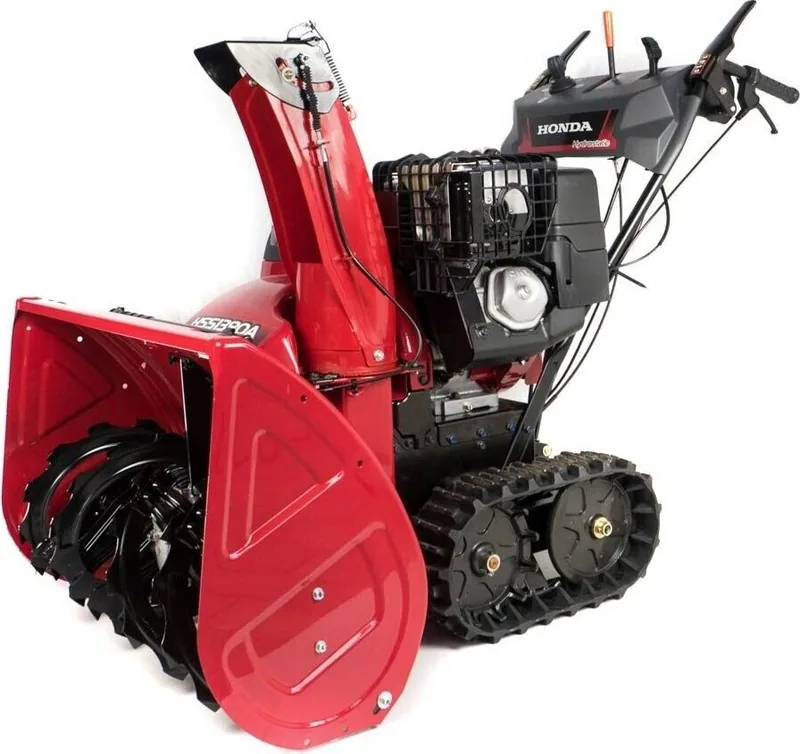
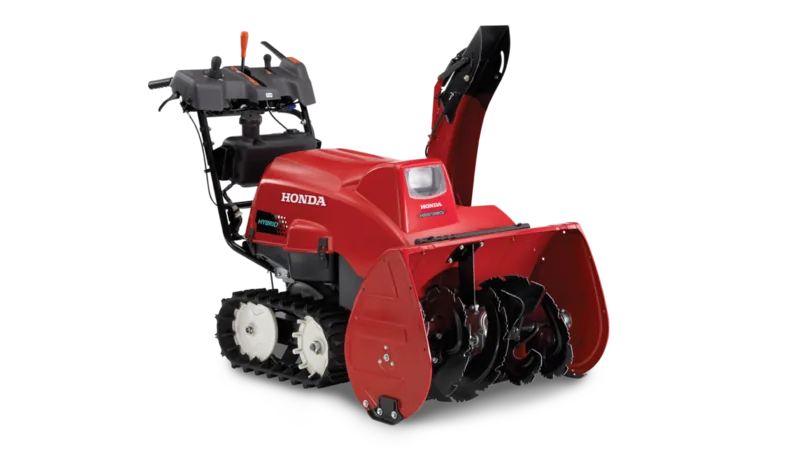
Honda HSS1380A Manual
PDF manual · 330 Pages
English



Quick check
Incorrect answer, please try again.
Chat with your Honda HSS1380A manual using AI
Get instant AI answers from your Honda HSS1380A manual
Ask anything about the Honda HSS1380A. Answers come from this manual, with the pages they are based on.
HSS1380A Maintenance Schedule
If stored, remove battery and recharge every 6 months to maintain capacity.
Change oil annually before operation. Use API SE or later 4-stroke motor oil.
Remove plug, clean electrodes/insulator, check gap. Replace if worn or cracked.
Check deflection midway between wheels with 15kgf force. Adjust tension nuts to 27-33mm.
Inspect fuel gauge and oil dipstick on level ground with engine stopped. Refuel or top up if low.
Check tire pressure with an air pressure gauge before each use. Inflate to recommended pressure.
Check for loose or broken lock bolts and fasteners. Replace broken bolts immediately.
Drain oil while warm and refill with SAE 5W-30. Perform first change after break-in period.
Check or replace transmission fluid levels as per schedule. Refer to dealer for service.
Inspect drive and auger belts for wear/damage. Replace if necessary.
For long-term storage, drain fuel tank and carburetor to prevent gumming.
Apply oil to cylinder via spark plug hole and rotate engine to coat internal parts.
Free maintenance reminders
Timed to your purchase date. Always free, unsubscribe anytime.
Ask a Question
Do you recommend HSS1380A?
Yes NoFrequently Asked Questions
Use unleaded gasoline with a Research Octane Number of 91 or higher. Do not use stale or contaminated gasoline. Avoid mixtures containing more than ten percent ethanol to prevent engine damage not covered under warranty.
Is this answer helpful?
Stop the engine immediately. Wait for all rotating parts to come to a complete stop. Use the snow drop bar or a wooden stick to clear the blockage. Never put your hands into the discharge chute while the engine is running.
Is this answer helpful?
Change the oil after the first twenty hours of use or every month. Thereafter, replace it every twenty hours or annually before the next season begins. Use four-stroke motor oil meeting API SE classification requirements.
Is this answer helpful?
Do not use the snowblower on a slope of more than ten degrees. The risk of overturning increases significantly on wet or uneven surfaces. Stay off slopes too steep for safe operation.
Is this answer helpful?
Drain the fuel tank and carburetor completely. Pour oil into the cylinder to distribute internally. Disconnect the battery negative terminal and store the battery in a cool dry place. Recharge the battery every six months.
Is this answer helpful?
The choke knob enriches the fuel mixture for starting a cold engine when set to closed. After the engine warms up, move it to the open position to provide the correct fuel mixture for normal operation.
Is this answer helpful?
The frame serial number is described on the CE mark label usually found on the machine body. Refer to page ten of the manual for exact visual location details regarding model variants.
Is this answer helpful?
Advantages and Disadvantages
Advantages

- Hydrostatic transmission provides smooth speed control without gears
- Electric starting options available for easier cold weather operation
- CLEARANCE CAPACITY REACHES UP TO SIXTY-FIVE TONS PER HOUR
- Automatic auger-lock indicator alerts users to obstructions or low fuel
- Robust frame serial number label for identification and warranty
Disadvantages

- Heavy equipment weighing up to one hundred forty kilograms total
- Requires frequent engine oil changes every twenty operating hours
- Fuel tank must be drained for long term storage prevention
- Slopes exceeding ten degrees pose overturning risks for operators
- Battery maintenance required to prevent discharge during inactivity
Product Specification
Power
8.7 kW, 11.67 hp, 23.74 cu in, 4-stroke, GX390
Working Width
31.89 in
Working Height
Max. 21.65 in
Throw Distance
55.77 ft
Discharge Chute
Swivelable
Fuel Tank Capacity
1.51 gal
Noise Level
102 dB(A)
Dimensions
43.50x58.46x32.87 in (HxWxD)
Weight
275.58 lb
Product Description
Honda Snowblower Overview
Winter weather presents significant challenges for homeowners seeking efficient snow removal. The Honda HSS1380A Gasoline Snow Tiller serves as a premier solution for tackling deep accumulation safely. Consulting the Honda HSS1380A Gasoline Snow Tiller Manual provides essential guidance for maximizing performance while ensuring operator safety. Neglecting proper protocols can lead to serious injury or equipment malfunction.
Engine Power and Transmission
This unit features a gasoline-powered engine designed for reliable cold-weather ignition. Select models offer electric starting systems that reduce physical effort during morning starts. The hydrostatic transmission system allows for seamless speed adjustments without manual clutch engagement. Operating efficiency depends heavily on proper fuel selection and maintenance intervals. Clearing capacities vary by model configuration and surface conditions encountered during operation.
Critical Safety Protocols
Safety measures are integrated throughout the machine design to protect users. Exhaust gases contain poisonous carbon monoxide which requires ventilation during indoor storage or partial enclosure usage. Operators must avoid slopes exceeding ten degrees to prevent overturning risks. Keeping bystanders and pets away from the discharge chute area minimizes impact hazards from flying debris. Never place body parts into the housing while the motor runs to prevent severe cuts or amputation injuries.
Maintenance Schedules and Care
Regular inspections extend the lifespan of the mechanical components significantly. Engine oil changes are required every twenty hours or monthly regardless of usage intensity. Spark plugs require annual gap verification for consistent ignition performance. Fuel lines must remain clean to prevent carburetor blockages caused by stale gasoline residues. Always drain the fuel system completely before long-term outdoor storage to prevent corrosion damage inside the tank.
Battery and Electrical Systems
Electric start models rely heavily on battery health for successful ignition events. Check electrolyte levels frequently and refill with distilled water only to maintain charge capacity. Charging the battery periodically during inactive seasons preserves its ability to start the engine reliably. Replace batteries older than three years if starting issues persist despite charger functionality. Fuses protect the electrical circuitry from overload damage caused by shorted wires.
Storage and Transportation Guidelines
Transporting this equipment requires ramps with gentle inclines under fifteen degrees for stability. Secure the machine with straps tied to designated tie-down points rather than handlebars or levers. Remove the discharge chute if truck bed height clearance remains insufficient for safe loading procedures. Store units in dry environments free from excessive humidity or dust particles affecting moving parts.
Noise and Environmental Compliance
Operation near residences generates sound pressure levels measured in decibels for compliance. Manufacturers test equipment to ensure vibration levels remain within acceptable hand-arm safety limits. Users should consult noise labels located near the muffler assembly for accurate reading data. Maintaining the exhaust system also reduces unnecessary loudness generated by loose muffler components. Environmental regulations may require specific disposal methods for oil and batteries at end-of-life stages.
Conclusion on Reliability
Adherence to operational manuals ensures safe handling of powerful winter machinery. Troubleshooting common issues like auger locks helps users quickly resolve minor malfunctions without professional intervention. Responsible ownership involves understanding local laws regarding noise levels and exhaust emissions in residential zones. Prioritizing care and safety leads to years of dependable service during harsh winters.
Search for 67,706 Manuals online


Type-in Brand or Model