
Hilleberg Staika Manual
PDF manual · 14 Pages
English



Quick check
Incorrect answer, please try again.
Chat with your Hilleberg Staika manual using AI
Get instant AI answers from your Hilleberg Staika manual
Ask anything about the Hilleberg Staika. Answers come from this manual, with the pages they are based on.
Staika Maintenance Schedule
Hang the tent to dry after every use, preferably with poles in place to keep fabrics apart. Do not store without drying first.
Brush off dirt and shake debris from the inner tent. Brush zippers with a stiff brush, especially after sandy or dusty use.
Check the entire tent for damage and make repairs if necessary before packing.
Clean the pegs and replace any that are damaged or lost.
Inspect the pole set for potential damage after use.
Ask a Question
Do you recommend Staika?
Yes NoFrequently Asked Questions
The Staika uses Kerlon 1800 outer fabric paired with an integrated inner tent, lightweight aluminum poles (three 387 cm x 10 mm plus one spare segment), and durable zippers, pegs and guy lines supplied in the kit.
Is this answer helpful?
No. The Staika is fully freestanding and can be pitched without pegs, but Hilleberg recommends pegging corners and using all guy lines for safety and stability in changing weather.
Is this answer helpful?
Unfold poles carefully and seat each segment one at a time. Never fling sections together; ensure segments are fully seated so gaps don’t cause stress fractures. Handle lightweight aluminum poles gently during assembly and disassembly.
Is this answer helpful?
Yes. The inner tent can be detached and pitched with an optional pole-holder kit. Note the inner tent is water-repellent but not fully waterproof, so use this option only in dry conditions.
Is this answer helpful?
The outer tent is waterproof but not breathable, so condensation can form. Use a footprint to reduce ground moisture and maximize ventilation via the adjustable vents, but expect some condensation in humid conditions.
Is this answer helpful?
Always dry the tent before storage, brush sand and dirt out, clean zippers with a stiff brush, inspect and repair damage, and store in a cool, shaded area when possible to avoid UV degradation.
Is this answer helpful?
Hilleberg’s warranty covers manufacturing and material defects. It does not cover normal wear, UV damage, improper care or misuse. For region-specific terms, contact your dealer or the appropriate Hilleberg office.
Is this answer helpful?
Advantages and Disadvantages
Advantages

- Lightweight yet strong Kerlon 1800 construction for serious backcountry use.
- Freestanding design with 16 peg points and six pre-attached guy lines for flexible anchoring.
- Well-thought ventilation: outer snow-proof vents and adjustable inner mesh panels.
- Includes spare pole segment, repair sleeve, and dedicated stuff sacks for organized packing.
- Can use double pole setup for increased stability in extreme conditions.
Disadvantages

- Outer tent is waterproof but not breathable, increasing condensation risk when used alone.
- Lightweight aluminum poles require careful handling to avoid breakage.
- Prolonged sun exposure can damage fabric; requires additional tarp for UV protection in some trips.
- Inner tent pitched separately needs optional pole-holder kit and is only water-repellent.
- Proper maintenance (drying, cleaning zippers) is essential to preserve warranty and longevity.
Product Specification
Type
Dome tent
Persons
2
External dimensions (LxWxH)
118.11x90.55x43.31in
Internal dimensions (LxWxH)
90.55x55.12x43.31in
Water column
216.54in
Weight
8.16lbs
Product Description
Hilleberg Staika Dome Tent Manual
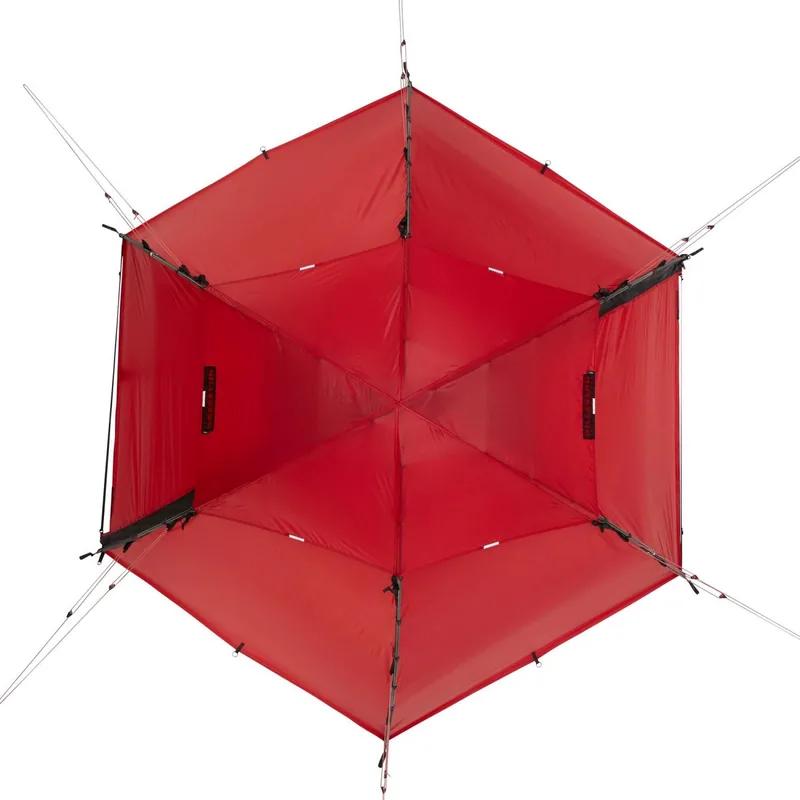
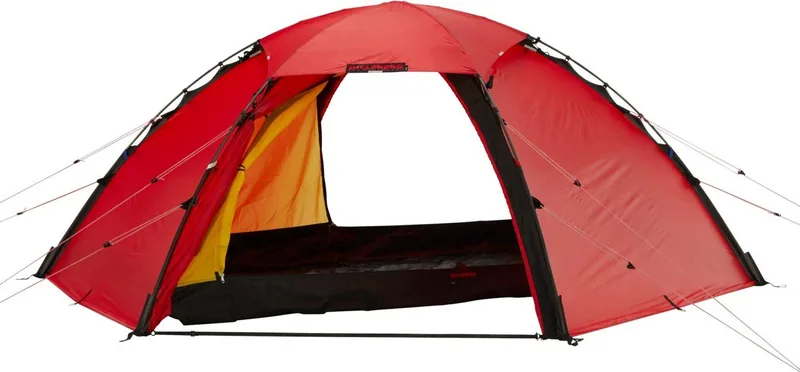
The Hilleberg Staika Dome Tent is a lightweight, highly durable two- or three-pole freestanding tent designed for serious backcountry use. Built with Kerlon 1800 outer fabric and an integrated inner tent, the Staika balances low weight with robust performance in varied conditions. Its design emphasizes simplicity and reliability: three 387 cm x 10 mm poles (with an extra segment), 16 peg points, six pre-attached guy lines with line runners, and thoughtful ventilation and entrance systems. The kit includes stuff sacks for tent, poles and pegs, a spare pole segment, a repair sleeve, and an instruction booklet.
Performance and features
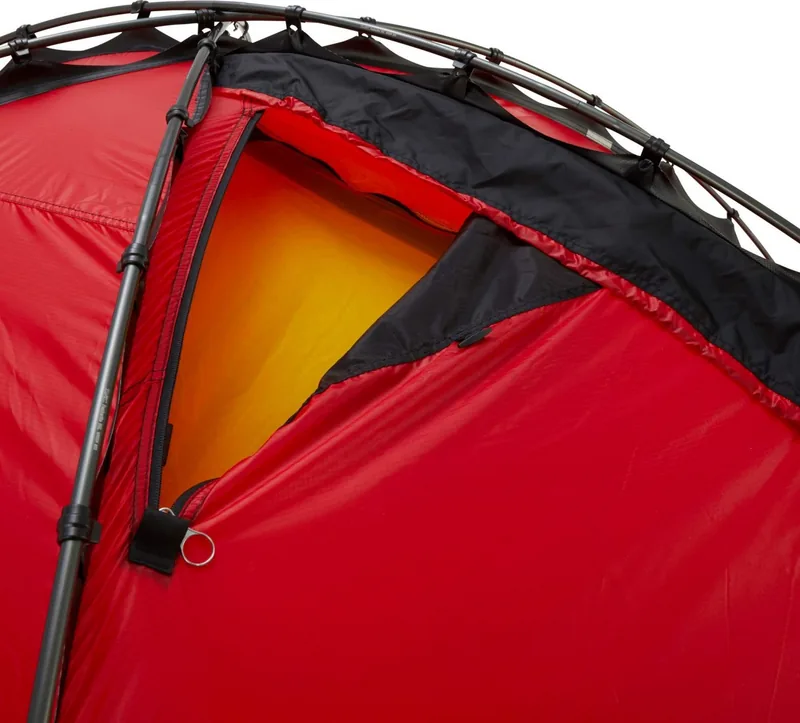
The Staika is designed to be exceptionally strong for its weight when used and cared for properly. The tent’s freestanding architecture allows straightforward pitching without pegs, though Hilleberg recommends pegging corners and using guy lines for stability in changing weather. Pole sleeves are color-coded for easy assembly; clips and hooks attach in a spiral pattern to ensure even wall height. For extreme conditions, the tent accepts a double pole setup to improve rigidity. The outer doors incorporate snow-proof, water-repellent, breathable fabric panels that provide adjustable ventilation; inner doors include mesh and fabric halves that roll away and secure neatly.
Practical usage
Pitching advice focuses on site selection (wind-sheltered, slightly convex, debris-free) and careful handling of lightweight aluminum poles to avoid breakage. Pegs should be driven at about 45° when possible, or at a shallower angle if necessary. When packing down, extend guy lines for the next setup, clean zippers and brush out debris, fold poles into their bag and roll the tent around them. The inner tent can be detached to use the outer tent alone as a group shelter, but the outer tent is not breathable and is prone to condensation without a footprint.
Care and maintenance
Always dry the tent before storage; hang it with poles inserted if possible. Clean dirt with lukewarm water and a sponge, brush zippers after sandy use, and inspect poles and pegs for damage. Avoid prolonged exposure to direct sunlight—use a tarp for UV protection in harsh environments. Warranty covers manufacturing defects but not wear, UV damage, improper care, or misuse.
Notes
- 16 peg points provide flexible anchoring despite freestanding design.
- Vent covers protect vents from bad weather while allowing internal access and adjustment.
- Optional pole-holder kit allows pitching the inner tent separately in dry conditions.
Search for 67,706 Manuals online


Type-in Brand or Model