
Heissner F640S-00 Pro Manual
PDF manual · 72 Pages
English



Quick check
Incorrect answer, please try again.
Chat with your Heissner F640S-00 Pro manual using AI
Get instant AI answers from your Heissner F640S-00 Pro manual
Ask anything about the Heissner F640S-00 Pro. Answers come from this manual, with the pages they are based on.
F640S-00 Pro Maintenance Schedule
Inspect the presence of the filter sponge R before every use. If defective, replace immediately. Dry the sponge before reusing.
Ensure motor head, all components, and filters are correctly assembled before starting the device.
Empty the tank completely and clean accessories before storing the machine to prevent residue buildup.
Examine the power cable and plug for damage. Do not use if damaged; contact service center.
Ask a Question
Do you recommend F640S-00 Pro?
Yes NoDo you recommend F640S-00 Pro?
Yes NoFrequently Asked Questions
It is used to clean pond or artificial lake bottoms by removing sludge, algae, leaves, and other settled debris. It can also work as a wet and dry vacuum in manual mode for liquid-related cleanup.
Is this answer helpful?
The automatic mode runs in timed cycles. It starts with a delay, then alternates between suction and tank emptying. This helps keep the cleaning process steady while supporting safer operation near the pond.
Is this answer helpful?
Yes. In manual mode, it can function as a wet and dry vacuum cleaner. For that use, the tank stopper must be installed and the correct filter and accessories should be fitted.
Is this answer helpful?
Check that the machine is assembled correctly, the proper filter is installed, the filter sponge is in place, and the hose connections are secure. Also make sure the device is on stable, level ground.
Is this answer helpful?
No. The instructions clearly warn against using it in rain. It should also not be operated when people are in the water, and wet motor parts or cables must be addressed immediately.
Is this answer helpful?
The manual describes a 24-month warranty for material or manufacturing defects, starting from delivery or purchase proof. Damage from misuse, poor maintenance, or unauthorized repairs is excluded.
Is this answer helpful?
Advantages and Disadvantages
Advantages

- Automatic pond-cleaning cycles help remove sludge, leaves, and algae with less manual effort.
- Manual wet-and-dry mode adds flexibility for liquid cleanup beyond pond maintenance.
- Float protection and filter use help reduce the risk of overfill and motor issues.
- Designed for private home use with clear setup rules for safer operation.
Disadvantages

- Not designed for continuous draining or heavy industrial cleaning tasks.
- Requires correct filters, hose setup, and regular checks to work properly.
- Cannot be used in rain or when people are in the water, which limits convenience.
- Performance depends on careful maintenance and proper assembly before each use.
Product Specification
Power
1,600W
Flow rate
1,056.69 gal/h
Delivery height
70.87 in
Scope of delivery
4x Pipe, 3x Nozzle, 196.85 in Suction hose, 78.74 in Discharge hose
Product Description
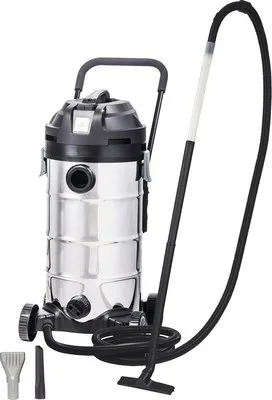
Heissner F640S-00 Pro Teichschlammsauger
If you are looking for the Heissner F640S-00 Pro Teichschlammsauger Manual, the main idea is easy to appreciate: this is a practical pond-cleaning tool designed for private garden use, with enough flexibility to handle both pond sludge and everyday wet cleaning tasks. It is built for owners who want a cleaner water feature without relying on complicated equipment or constant manual scooping.
In pond-cleaning mode, the unit is meant to remove mud, leaves, algae, and other settled debris from the bottom of ponds or artificial lakes. The automatic cycle is especially useful because it alternates between suction and emptying, helping the machine work in a steady rhythm. That makes it easier to clean while keeping the tank from overfilling too quickly. A float mechanism adds another layer of protection by stopping suction when needed.
What makes this model stand out is its dual-purpose design. In manual mode, it can also be used like a wet and dry vacuum cleaner, which gives it extra value beyond pond care. That means it can be helpful in garages, workshops, or other areas where liquids and mixed debris need to be handled. The system relies on the correct filter, tank stopper, hoses, and extension tubes, so setup matters and the instructions should be followed carefully.
The product is clearly aimed at practical, home-based use. It is not intended for industrial jobs, and the safety guidance is strict for good reason. The cleaner should be used on stable, level ground, kept away from the pond edge, and never operated in rain or around people in the water. These limits may sound cautious, but they also show how the design focuses on safe and reliable operation when used properly.
For seasonal pond maintenance, this machine offers a balanced mix of convenience and control. It can reduce the amount of manual labor involved in removing sediment, and its manual liquid-cleaning mode makes it more versatile than a single-use pond vacuum. With regular checks, clean filters, and proper handling, it can be a dependable part of a garden care routine.
Notes
- Keep a safe 2 m distance from the pond edge.
- Check the filter sponge before every use.
- Use automatic mode only for pond cleaning.
- Do not operate the device in rain or with people in the water.
Search for 67,732 Manuals online


Type-in Brand or Model