
H-Tronic PLS 1000 Manual
PDF manual · 169 Pages
English



Quick check
Incorrect answer, please try again.
Chat with your H-Tronic PLS 1000 manual using AI
Get instant AI answers from your H-Tronic PLS 1000 manual
Ask anything about the H-Tronic PLS 1000. Answers come from this manual, with the pages they are based on.
Ask a Question
Do you recommend PLS 1000?
Yes NoFrequently Asked Questions
It measures temperature and relative humidity at two sensor locations. It also calculates absolute humidity, dew point at each location, and relevant temperature or dew point differences.
Is this answer helpful?
Yes. In cellar drying mode, it compares indoor and outdoor dew points and can activate ventilation only when the outdoor air is suitable for reducing indoor moisture without creating a condensation risk.
Is this answer helpful?
Two TH-1 temperature and humidity sensors are included. They are identical and can be assigned as the indoor or outdoor sensor depending on the application.
Is this answer helpful?
Yes. The unit includes four potential-free changeover relays. They can be configured for temperature and humidity switching tasks and used with appropriately wired fans or other compatible loads.
Is this answer helpful?
dT ventilation uses the temperature difference between the two sensors. It can switch ventilation on when outdoor air is cooler than indoor air and the configured indoor temperature threshold is reached.
Is this answer helpful?
Each included sensor has a 10 m lead. The sensor cable can be extended up to 50 m, allowing monitoring points to be placed farther from the controller.
Is this answer helpful?
The controller uses 230 V AC mains power. Electrical installation, wiring, servicing, and repair should be performed by qualified electrical personnel in accordance with applicable local regulations.
Is this answer helpful?
Advantages and Disadvantages
Advantages

- Two included TH-1 sensors measure temperature and relative humidity in separate locations.
- Calculates dew point and absolute humidity for more informed ventilation control.
- Six modes cover measuring, cellar drying, timed ventilation, cooling ventilation, threshold switching, and manual operation.
- Four potential-free relays support fans and other connected loads up to the specified limits.
- Sensor fault monitoring turns relays off if a sensor is disconnected or defective.
Disadvantages

- Mains wiring, installation, and servicing require qualified electrical personnel.
- The IP20 controller enclosure is intended for indoor, dry locations only.
- Outdoor sensor placement requires protection from sun and weather to avoid inaccurate readings.
- Advanced threshold, relay, and mode settings may take time to configure correctly.
- The main controller must operate within an ambient temperature range of 0 C to 50 C.
Product Specification
Type
Control unit hardware
Function
Ventilation control
Topology
Mesh
Dimensions
6.69 x 5.51 x 2.68 in (controller), 2.99 x 1.42 x 0.83 in (sensor housing)
Special features
IP20 (controller), IP64 (sensor)
Product Description
H-Tronic PLS 1000 Humidity Switch, incl. 2 Sensors, Ventilation Control - Read, Download & Print Free
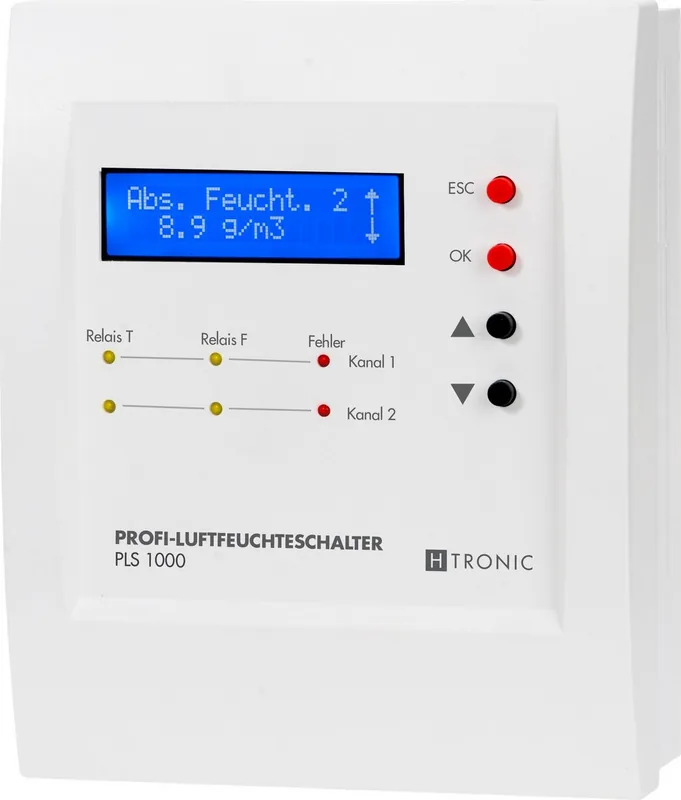
The H-Tronic PLS 1000 Humidity Switch is a versatile climate-control solution for rooms where moisture, temperature, and ventilation need closer attention. Supplied with two TH-1 sensors, it compares conditions in two locations and helps automate fans or other connected equipment. It is especially suited to basements, bathrooms, sanitary rooms, kitchens, wine cellars, storage spaces, and similar areas where damp air can lead to condensation or discomfort.
Intelligent Two-Sensor Monitoring
The controller measures temperature and relative humidity at both sensor positions. It also calculates absolute humidity, dew point, and the difference between the two measured environments. These values provide a more meaningful basis for ventilation decisions than relative humidity alone. In a cellar application, for example, the controller can run a fan only when outside air is suitable for drying the interior without increasing condensation risk.
The included TH-1 sensors have 10 m cables, with extension possible up to 50 m. This provides flexibility when one sensor is installed indoors and the other is positioned outdoors in a sheltered location. Sensor monitoring detects a missing or faulty sensor and switches the relays off as a protective response.
Six Selectable Operating Modes
The H-Tronic PLS 1000 offers six operating modes: measuring, cellar drying, interval ventilation, dT ventilation, TF switching, and manual control. The measuring mode displays current temperature, humidity, dew point, and absolute humidity values from both sensors. Cellar drying uses dew point comparison to ventilate only under favorable conditions.
Interval ventilation combines timed fan cycles with humidity, temperature, and dew point limits. dT ventilation activates airflow when outside air is cooler than indoor air, making it useful for temperature reduction. The TF switch mode supports separate temperature and humidity thresholds for heating, cooling, humidifying, or dehumidifying applications. Manual control is available when direct switching is preferred.
Relay Control and Installation
Four integrated potential-free changeover relays enable direct control of ventilation equipment and additional loads. Each relay supports up to 230 V AC and 12 A, while total switching capacity is approximately 2700 VA. The controller operates from a 230 V AC, 50 Hz supply and consumes around 1 W while relays are idle.
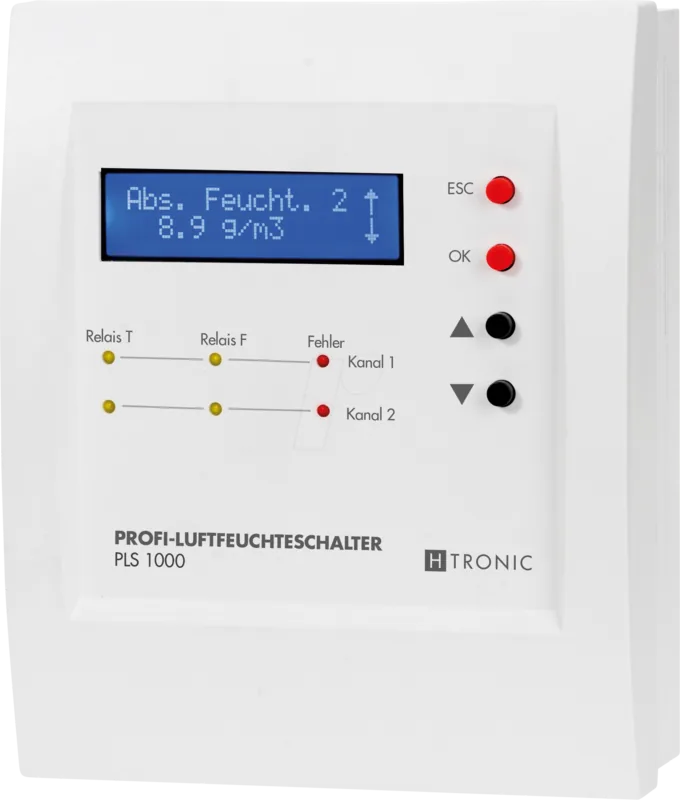
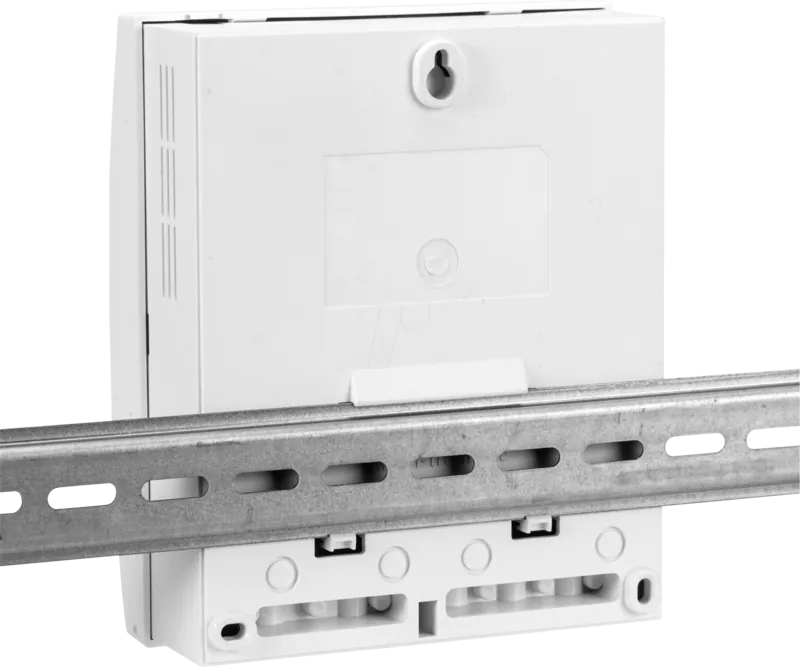
A clear display, status LEDs, and push-button navigation make settings and live values accessible. The enclosure can be wall-mounted or fitted to a 35 mm DIN rail. Because the unit is connected to mains voltage, installation, wiring, servicing, and repairs should be completed by qualified electrical personnel.
Notes
- Install the main unit indoors in a clean, dry location.
- Protect outdoor sensors from direct sun and weather exposure.
- Use suitable fusing for each connected load.
- Confirm ventilation safety where fireplaces or other combustion appliances are present.
Search for 67,706 Manuals online


Type-in Brand or Model
Lena Hartwig
6 months ago
How does the PLS 1000 prevent a cellar from becoming more humid, and can it control ventilation based on dew point?
Manual.ly
6 months ago
The PLS 1000 can control a connected fan using absolute humidity or dew point values. This helps ensure ventilation runs only when the outside air can actually reduce indoor moisture, rather than bringing additional humidity into the room. Select the appropriate operating mode for dehumidification, set the desired thresholds, and connect the fan according to the manual. This makes it suitable for moisture-sensitive cellars and rooms where stable humidity is important.