
Gunzburger Steigtechnik Leaning Ladder Manual
PDF manual · 38 Pages
English


Quick check
Incorrect answer, please try again.
Chat with your Gunzburger Steigtechnik Leaning Ladder manual using AI
Get instant AI answers from your Gunzburger Steigtechnik Leaning Ladder manual
Ask anything about the Gunzburger Steigtechnik Leaning Ladder. Answers come from this manual, with the pages they are based on.
Leaning Ladder Maintenance Schedule
Depending on usage frequency and environmental influences, ladders must be serviced regularly.
Treat heavy soiling with warm water and commercially available cleaning agents, then dry with a clean cloth. Do not use solvent-based cleaners.
Treat moving parts such as hinges, lift locks, and spring bolts with spray grease like HHS 2000. Do not use oil.
If rungs or steps become covered in grease or oil, clean the affected areas immediately with spirit.
Ask a Question
Do you recommend Leaning Ladder?
Yes NoFrequently Asked Questions
All listed ladder models in the manual have a maximum load capacity of 150 kg. This includes tools and the user combined; never exceed this rating to avoid structural failure or accidents.
Is this answer helpful?
Yes. The ladder series is classified for professional use and tested to DIN EN 131 standards by independent institutes, with certification marks indicated in the documentation.
Is this answer helpful?
Clean with warm water and mild detergents; avoid solvent cleaners. Lubricate hinges, locks and spring bolts with approved spray greases (e.g., HHS 2000). Do not use oil on rungs or steps and remove any grease immediately to prevent slipping.
Is this answer helpful?
Standard aluminum ladders are conductive and should not be used where live electrical risks exist. For unavoidable live work, use non-conductive ladders specifically designed and certified for electrical safety.
Is this answer helpful?
Periodic inspections by a competent person are required under workplace safety regulations (e.g., BetrSichV). The manual provides checklists for visual checks, functionality, wear, corrosion and documentation of inspection results and repairs.
Is this answer helpful?
Store ladders dry, protected from direct sunlight and weather, on a flat surface or suitable holder. Keep away from vehicle or heavy-object damage and out of easy reach of unauthorized persons, especially children.
Is this answer helpful?
Dispose of the ladder and packaging following local regulations. Aluminum should be recycled where possible due to its value. Check municipal guidance for recycling and disposal procedures.
Is this answer helpful?
Advantages and Disadvantages
Advantages

- Professional-grade construction certified to DIN EN 131 with 150 kg max load.
- Durable, corrosion-resistant aluminum with stabilizer bar and non-slip rungs.
- Comprehensive manual with maintenance, inspection checklists and technical tables.
- Relatively lightweight for a 12-step model, easy to transport and set up.
- Clear safety guidance reduces misuse risk and supports regulatory compliance.
Disadvantages

- Aluminum ladders conduct electricity—avoid near live circuits unless non-conductive option used.
- Requires regular inspections and qualified maintenance for professional use.
- Upper rungs not suitable as standing platform; limited top-access without extension.
- Manual emphasizes original parts only—replacement costs may be higher.
- Not suitable for extreme weather or very uneven ground without extra measures.
Product Specification
Type
Extension ladder
Material
Aluminum
Steps
12
Working height
max. 181.10 in
Platform height
none
Load capacity
max. 330.69 lb
Special features
Anti-slip feet
Weight
15.43 lb
Product Description
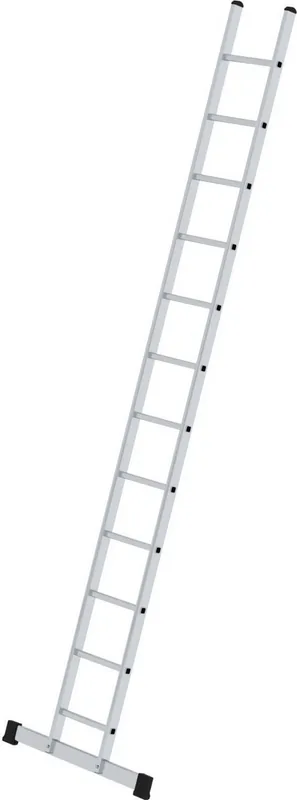
Gunzburger Steigtechnik Alu Extension Ladder 12 Steps Manual
The Gunzburger Steigtechnik Alu Extension Ladder 12 Steps Manual presents a clear, professional overview of a robust aluminum extension ladder designed for demanding, professional use. Engineered to DIN EN 131 standards and certified for safety, this 12-step extension ladder combines durable aluminum construction with user-focused features such as stabilizer bars, non-slip rungs, and corrosion-resistant fittings. The manual emphasizes correct storage, maintenance, inspection and safe handling to ensure long service life and reliable performance on jobsites.
This ladder is intended for professional applications with a maximum load capacity of 150 kg. The 12-step configuration delivers a practical working height while keeping the ladder’s weight manageable for transport and setup. The product line is available in numerous article variants and sizes; the manual shows detailed technical data—work heights, ladder lengths, rung counts and approximate weights—helping buyers and users match the ladder model to their needs.
Safety and proper use are central themes. The manual guides users on appropriate positioning (angle and support), avoiding lateral loads, securing the ladder when extended beyond the support point, and not using the uppermost rungs as standing platforms. It also covers prohibitions such as using the ladder as a bridge, modifying its construction, or using it in adverse weather or near live electrical hazards unless a non-conductive ladder is used.
Maintenance and repair instructions stress that only qualified personnel should perform servicing and that original spare parts must be used. Regular inspections, cleaning with non-solvent cleaners, lubrication of moving parts with approved spray greases (not oil), and documented periodic checks by a competent person are recommended. The manual also includes check/inspection sheets and lists of inspection criteria to support compliance with workplace safety regulations and the German Ordinance on Industrial Safety and Health (BetrSichV).
Storage and disposal guidance advises keeping ladders dry, protected from UV and weather, and out of easy reach of unauthorized users. At end-of-life, aluminum components should be recycled where possible, following local disposal rules.
Notes:
- Certified for professional use and tested by independent institutes.
- Max load 150 kg; follow model-specific technical tables for heights and weights.
- Keep records of inspections and repairs; adhere to local safety regulations.
Pros and cons (see below) highlight practical strengths and limitations based on the manual’s guidance and technical specs.
Search for 67,706 Manuals online


Type-in Brand or Model