
Ground Zero Iridium GZIW 250X-II Manual
PDF manual · 4 Pages
English



Quick check
Incorrect answer, please try again.
Chat with your Ground Zero Iridium GZIW 250X-II manual using AI
Get instant AI answers from your Ground Zero Iridium GZIW 250X-II manual
Ask anything about the Ground Zero Iridium GZIW 250X-II. Answers come from this manual, with the pages they are based on.
Ask a Question
Do you recommend Iridium GZIW 250X-II?
Yes NoFrequently Asked Questions
The recommended amplifier power is 200-300 W RMS at 4 ohms. Staying within this range helps the subwoofer stay controlled, reduce strain, and achieve the intended sound character. If you run significantly below or above the recommended window, performance and behavior can change noticeably.
Is this answer helpful?
The Ground Zero Iridium GZIW 250X-II features a 50 mm (2 inch) copper round wire voice coil. It is rated for up to 20 mm Xmax, which supports strong low-frequency movement and helps deliver deeper, more confident bass when the enclosure is tuned correctly.
Is this answer helpful?
The text provides multiple options: a bass-reflex recommendation (35 liters net with a vent) and sealed configurations with different minimum and maximum volumes. Bass reflex typically targets an F3 around the high-30 Hz range, while sealed designs emphasize smoother roll-off. Choose based on your music and how you like your bass to feel.
Is this answer helpful?
Port length directly affects the tuning frequency and where the system reinforces low frequencies. The guidance notes that final tuning, especially port length, should be adjusted for your specific vehicle and personal taste. Small changes can shift the response curve and perceived punch.
Is this answer helpful?
Yes. The specifications reference impedance values such as 4 ohm and 3.3 ohm. To get the expected power delivery and performance, ensure your amplifier settings and wiring match the impedance you are using.
Is this answer helpful?
Several design elements are listed: a stable IMPP cone, POLYCOT spider with woven-in lead wires, high-roll rubber surround, and a resonance-free steel basket. It is also described as Klippel-optimized, which is intended to improve linearity and reduce distortion behavior during real cone movement.
Is this answer helpful?
Advantages and Disadvantages
Advantages

- 50 mm (2 inch) 4 ohm voice coil with 250 W RMS capability for confident daily bass.
- Stable IMPP cone and Klippel-optimized design aimed at cleaner, more controlled output.
- POLYCOT spider with woven-in lead wires for precise centering and consistent performance.
- Long-throw design with 20 mm Xmax and high-roll rubber surround for impactful movement.
- Resonance-free steel basket plus push terminal for solid installation and reduced unwanted vibration.
Disadvantages

- Best results depend on proper amplifier matching (recommended 200-300 W RMS at 4 ohm).
- Impedance variants listed (4 ohm and 3.3 ohm) require correct wiring and amplifier compatibility.
- Enclosure tuning, especially port length, varies by vehicle and preference and should be verified.
Product Specification
Type
Subwoofer
Amplification
passive
Woofer
10"
Power
250W RMS
Impedance
4Ω
Sensitivity
87dB
Mounting depth
5.08"
Product Description
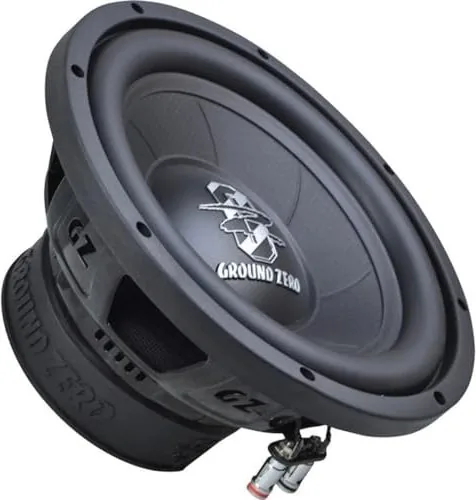
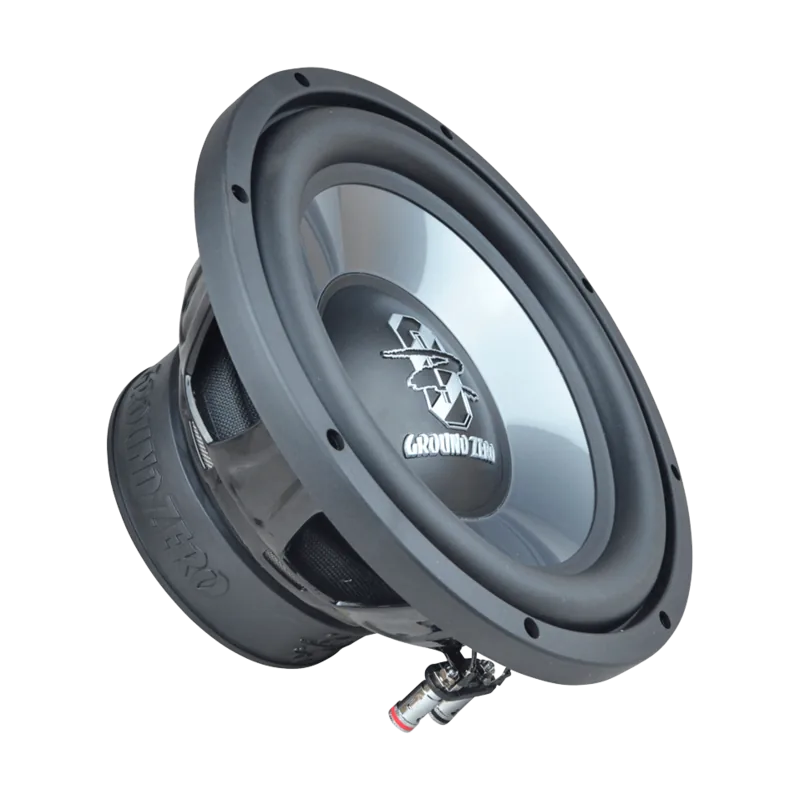
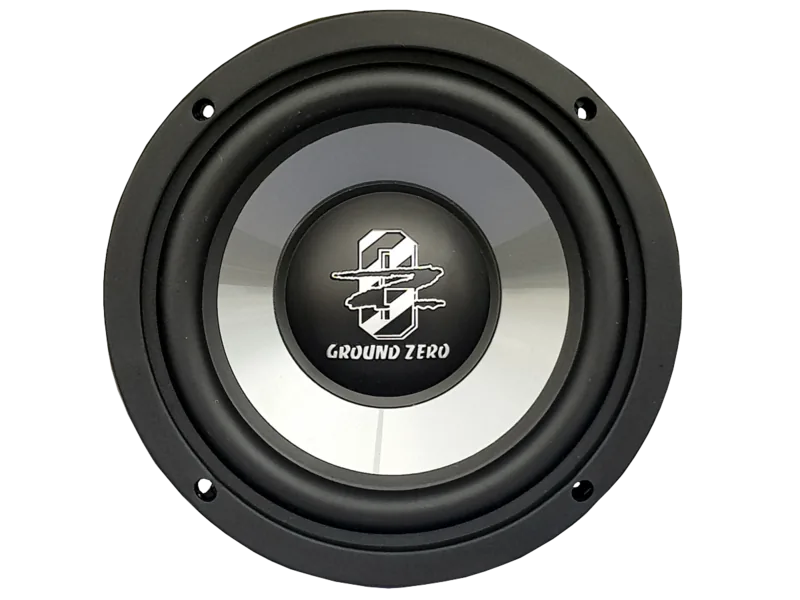
Ground Zero Iridium GZIW 250X-II: Deep, Controlled Bass for Car Audio
The Ground Zero Iridium GZIW 250X-II is a compact, performance-focused subwoofer built for drivers who want strong low-end impact with tight control. Part of the Iridium series, this model combines a stable cone design with an efficient voice coil and an overall build meant to stay consistent under real listening conditions. If you are tuning a system for everyday punch or serious bass sessions, the Ground Zero Iridium GZIW 250X-II Manual highlights the design choices and the practical setup you need to get the best results.
At the core is a 50 mm (2 inch) copper round wire voice coil, paired with a long-excursion setup that reaches 20 mm Xmax. The result is a subwoofer that can move air with authority while maintaining composure. The IMPP cone is designed for stability, and the POLYCOT spider features woven-in lead wires to support precise centering and smoother operation.
For mechanical durability, the surround uses high-roll rubber, helping the driver handle movement over extended sessions. Ground Zero also uses a resonance-free steel basket, which supports structural integrity and helps reduce unwanted vibrations. Connectivity is handled via a push terminal, making installation straightforward while keeping the focus on performance.
The listed electrical and performance figures give you a clear direction for amplifier matching and tuning. With RMS power up to 250 W and recommended amplification in the 200-300 W RMS range at 4 ohms, the GZIW 250X-II is aimed at systems that want clean output rather than guessing. Frequency behavior and control are further supported by the Klippel-optimized design approach, which targets more linear performance and reduced distortion under load.
Tuning the enclosure is a big part of the story. The recommended bass-reflex option uses a 35 liter net (1.24 cu.ft.) chamber, vented with a 23 cm (9.06 in) port and a projected F3 around 38 Hz. If you prefer a more specialized response, a 4th order bandpass configuration is also proposed, using a mix of sealed and vented volumes for a different bandwidth character.
Pros and Setup Notes
- Start with the enclosure type that matches your music and listening habits.
- Port length and final tuning should be adjusted for your vehicle and personal taste.
- Choose amplifier power that sits within the stated RMS recommendation for best control.
Search for 67,706 Manuals online


Type-in Brand or Model