
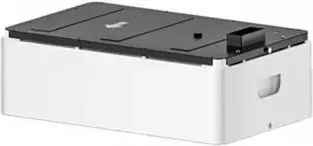
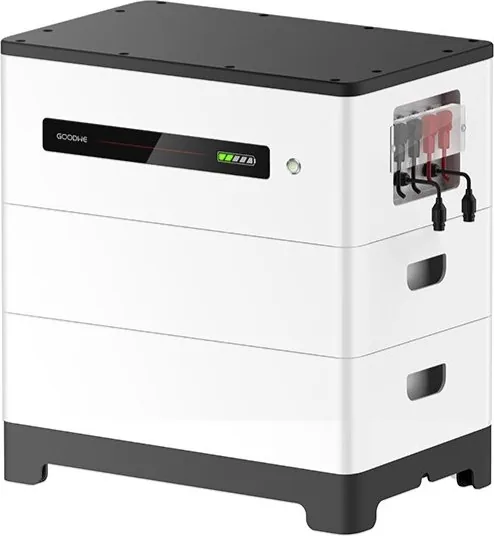
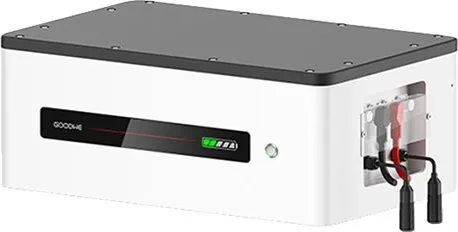
Goodwe Lynx Home F Series Manual
PDF manual · 48 Pages
English



Quick check
Incorrect answer, please try again.
Chat with your Goodwe Lynx Home F Series manual using AI
Get instant AI answers from your Goodwe Lynx Home F Series manual
Ask anything about the Goodwe Lynx Home F Series. Answers come from this manual, with the pages they are based on.
Lynx Home F Series Maintenance Schedule
For stored equipment, perform a charge-discharge cycle every 3 months. Maintain storage SOC at 25%-50%.
Check that locking brackets are secured and tighten them if needed.
Check whether the outer enclosure is broken. Repair damaged paint or contact after-sales service.
Check for exposed cable. Replace exposed cable or contact after-sales service.
Check for dust around the battery module and clean it to avoid affecting heat dissipation.
Check for liquid or pests near the battery to prevent long-term intrusion.
Free maintenance reminders
Timed to your purchase date. Always free, unsubscribe anytime.
Ask a Question
Do you recommend Lynx Home F Series?
Yes NoFrequently Asked Questions
The series offers usable energies of 6.55 kWh, 9.83 kWh, 13.1 kWh and 16.38 kWh achieved by using 2–5 LX F3.3-H modules per system. Systems can be paralleled (up to 8) for larger installations.
Is this answer helpful?
Lynx Home F uses LiFePO4 (LFP) cells. It carries certifications including IEC62619, IEC62040, CE/EMC and complies with UN38.3 transport testing, as well as relevant regional directives like the EU battery and WEEE rules.
Is this answer helpful?
Yes. Each battery system supports up to five modules internally. Up to eight battery systems can be connected in parallel, provided each system has equal usable energy and terminal resistors and communication wiring are correctly installed.
Is this answer helpful?
Install in a sheltered, well-ventilated area below 2000 m altitude, on a non-flammable support able to bear the weight. Use qualified technicians for PE grounding first, correct power cable sizing, proper crimping, CAN communication wiring and terminal resistor placement for parallel clusters.
Is this answer helpful?
Use the SolarGo app to connect to the inverter and select the correct battery model (LX F-H). The app assists with commissioning, status monitoring and parameter settings. Selecting the wrong model can cause communication errors.
Is this answer helpful?
Every six months: check locking brackets, enclosure integrity, cable exposure, dust accumulation and pests. Ensure SOC and storage conditions are followed and contact after-sales for any faults or exposed conductors.
Is this answer helpful?
Avoid contact with leaked electrolyte (corrosive). For exposure, follow first-aid steps and seek medical help. Do not extinguish with water; use CO2, Novec1230 or FM-200 and ensure fire crews wear full protective gear and breathing apparatus.
Is this answer helpful?
Advantages and Disadvantages
Advantages

- Modular and scalable: 2–5 modules per system, up to eight systems in parallel for flexible capacity expansion.
- Safety-certified: LFP chemistry, IP55 rating and compliance with IEC62619, IEC62040, CE/EMC and UN38.3 standards.
- High efficiency and long life: around 96.4% round-trip efficiency and ≥3500 cycles under specified test conditions.
- Clear installation and maintenance guidance: dedicated PCU, SOC indicators, SolarGo app integration and routine checklists.
- Robust protection features: over/under voltage, overcurrent, temperature, interlock and communication fault handling.
Disadvantages

- Weight and footprint: individual systems are heavy (115–244 kg) and require sturdy mounting and space.
- Professional installation required: high-voltage risks, specific crimping specs and grounding demand qualified technicians.
- Compatibility limits: must use approved inverters and correct communication configuration to avoid errors.
- Storage and handling constraints: specific SOC, temperature and humidity ranges plus periodic recharge requirements.
- Potential service dependence: some faults and failures require contacting after-sales service rather than user repair.
Product Specification
Note
Prices partly include 0% VAT tax rates for AT and DE
Battery type
LiFePO4
Display
no
Interfaces
3x RJ-45
Mounting type
freestanding (stackable)
Protection class
IP55
Product Description
GoodWe Lynx Home F Serie — Efficient, Scalable Home Energy Storage
The GoodWe Lynx Home F Serie is a modular Li-ion (LFP) battery system designed for residential solar storage. Available in multiple usable-energy sizes (6.55, 9.83, 13.1, 16.38 kWh), the series pairs battery modules with a Power Control Unit (PCU) to store solar energy, supply loads and integrate with compatible inverters. Each system supports parallel expansion (up to eight systems) and local configuration via the SolarGo app, making it adaptable for single-family homes or larger residential clusters.
Built for safety and durability, Lynx Home F uses LiFePO4 chemistry, offers IP55 protection, and complies with key standards (IEC62619, IEC62040, CE, EMC, UN38.3). The units provide flexible installation options (wall-mounted base, optional adjustable feet for Plus+ models) and clear indicators for state of charge (SOC), status and alarms. Typical installations include a PCU mounted above battery modules, proper grounding, DC and communication cable routing, terminal resistors for cluster setups, and adherence to local wiring and breaker rules.
Operational features emphasize safe commissioning and routine maintenance. The SolarGo app guides battery model selection and monitoring; the system includes protections for over/under voltage, overcurrent, temperature anomalies, interlock and communication faults. Maintenance is straightforward: periodic inspections (every six months) of locking brackets, enclosure integrity, cable exposure, dusting and pest prevention. Storage and transport instructions cover SOC targets (25–50%), temperature and humidity ranges, and handling to prevent damage.
Installation guidance covers environmental and mounting requirements: sheltered, well-ventilated locations, away from heat sources and electromagnetic interference, and below 2000 m altitude. Electrical connection procedures detail PE grounding first, power cable crimping specs, communication pinouts (CAN-based), terminal resistor placement for parallel systems, and required crimp drawing forces to ensure reliable conductors. Safety warnings stress professional installation, PPE use, powering off before service, and steps for emergency response to electrolyte leaks or fire.
Designed for longevity and real-world use, Lynx Home F series deliver high round-trip efficiency (~96.4%) and long cycle life (≥3500 cycles under specified test conditions). Multiple models let homeowners balance capacity, footprint and weight (models range ~115–244 kg). These characteristics make the GoodWe Lynx Home F Serie a strong option for homeowners seeking a certified, expandable, safety-focused residential battery solution.
Notes
- Compatible only with approved inverters — check GoodWe’s approved list.
- Maximum five modules per battery system; up to eight systems parallel.
- Store at 25–50% SOC if not installed; recharge cycle every six months.
- Follow local codes for DC breakers, grounding and cable sizing.
Search for 67,706 Manuals online


Type-in Brand or Model