
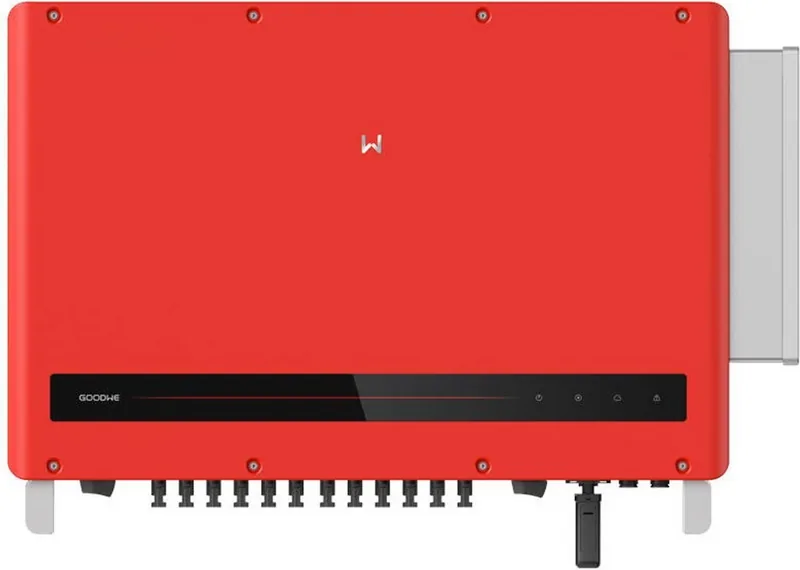
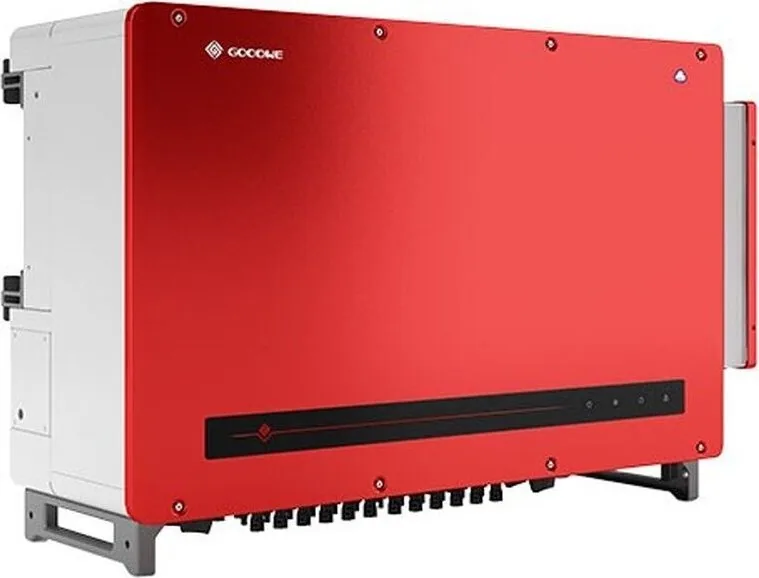
Goodwe HT Series 1100V Manual
PDF manual · 60 Pages
English



Quick check
Incorrect answer, please try again.
Chat with your Goodwe HT Series 1100V manual using AI
Get instant AI answers from your Goodwe HT Series 1100V manual
Ask anything about the Goodwe HT Series 1100V. Answers come from this manual, with the pages they are based on.
HT Series 1100V Maintenance Schedule
Check the heat sink, intake channel, and air outlet for foreign objects or dust. Clean if necessary.
Check that cables are firmly connected. Inspect for broken cables or exposed copper cores.
Check the fan for correct operation, low noise, and intact appearance.
Switch the DC switch on and off ten times consecutively to verify it functions correctly.
Verify all terminals and connections are properly sealed. Re-seal cable entries if they are not tight or too large.
Free maintenance reminders
Timed to your purchase date. Always free, unsubscribe anytime.
Ask a Question
Do you recommend HT Series 1100V?
Yes NoFrequently Asked Questions
The unit supports a maximum DC input voltage of one thousand one hundred volts. This allows for longer string lengths and reduced wiring costs in large arrays while maintaining safety margins.
Is this answer helpful?
No. Only qualified professionals familiar with electrical safety standards should perform installation. Improper handling poses severe shock hazards.
Is this answer helpful?
Maximum efficiency reaches ninety-nine percent in some models. European weighted efficiency scores also remain very high across typical operating conditions.
Is this answer helpful?
Integrated protection circuits detect anomalies and disconnect instantly. Anti-islanding features prevent power feeding during grid failures for public safety.
Is this answer helpful?
Yes. Compatible modules provide WiFi or 4G connectivity for app-based viewing. Data uploads to the SEMS portal enable global tracking.
Is this answer helpful?
Operation is permitted between minus thirty degrees and plus sixty degrees Celsius. Units rated for altitudes up to five thousand meters exist.
Is this answer helpful?
Inspections are recommended once a year. Tasks include cleaning vents, tightening connections, and testing switch functionality.
Is this answer helpful?
Advantages and Disadvantages
Advantages

- High 1100Vdc input reduces cable loss
- Max efficiency reaches 99%
- Multiple MPPT trackers optimize shaded panels
- Built-in surge protection for lightning safety
- Supports remote monitoring via WiFi or 4G modules
Disadvantages

- Professional installation strictly required due to high voltage risks
- Optional comms modules incur extra cost
- Requires adequate spacing for heat dissipation
- Specific AC breaker sizing needed per model
- May trigger alarms on unstable grid frequencies
Product Specification
Note
Prices include partial 0% VAT rates for AT and DE
Type
Solar inverter, without transformer, with fan
Input current max.
30A
Output phases
3-phase
Input
MC4
Output
Terminals
Interfaces
1x RJ-45, 1x RS-485, Modbus RTU
Noise level
<80dB
Protection class
IP66
Ambient temperature
-22°F to +140°F
Dimensions
39.69 x 26.69 x 13.50 in (WxHxD)
Product Description
Exploring the Capabilities of the Goodwe HT Series
The evolution of renewable energy infrastructure demands inverters capable of handling massive power loads efficiently. The Goodwe HT Series represents a significant advancement in photovoltaic conversion technology designed for commercial and industrial applications. These grid-tied inverters boast a nominal power output ranging from seventy-three kilowatts to one hundred thirty-six kilowatts. A defining characteristic of this series is its support for one thousand one hundred volt direct current input. This higher voltage threshold enables optimization of cabling costs and minimizes resistive losses across large solar farms.
Technical Superiority and Efficiency
System owners prioritize energy yield above all else to maximize financial returns. The engineering behind these units achieves maximum efficiencies surpassing ninety-eight point six percent in many models. European efficiency ratings remain consistently high throughout varying load conditions. Internal cooling systems utilize smart fans that adjust speed based on temperature fluctuations. This intelligent regulation balances performance against acoustic output keeping noise emissions below eighty decibels. Such quiet operation makes them suitable for sites located near populated areas.
Safety Protocols and Regulatory Compliance
High voltage systems necessitate strict adherence to safety guidelines during installation and operation. The design integrates numerous protective circuits to guard against shorts and overloads. Grounding procedures are critical for preventing hazardous situations involving leakage currents. Operators should consult the Goodwe HT Series 1100Vdc Manual before initiating any work. Reference documents detail specific torque settings for terminals and recommended fuse sizes for AC sides. Regional grid codes dictate additional requirements such as residual current devices or remote shutdown interfaces.
Digital Connectivity and Remote Oversight
Modern solar assets rely on real-time data streams for optimal management. The inverters support various communication protocols including Modbus RTU and Ethernet options. Wireless modules for WiFi or cellular networks allow seamless integration with mobile devices. Facility managers can track production metrics and alarm states through the SEMS Portal cloud service. Software updates can be pushed remotely to adapt to changing grid regulations without site visits. This flexibility reduces operational overhead significantly for large deployments.
Operational Limits and Maintenance
Environmental durability is crucial for longevity in harsh climates. These units function reliably between negative thirty degrees and sixty degrees Celsius ambient temperature. Elevation ratings accommodate installations up to five thousand meters provided derating calculations are applied. Routine inspections should occur at least annually to clean heat sinks and verify cable integrity. Preventative care helps avoid unexpected downtime caused by dust accumulation or insect intrusion. Proper storage before installation protects internal components from humidity damage.
Troubleshooting and Long Term Care
Maintaining performance requires vigilance regarding error codes displayed on local screens. Common faults related to insulation resistance or fan failures are logged automatically for review. Technicians use serial numbers and software versions to trace warranty claims accurately. Disconnecting switches must be operated in the correct sequence to safely isolate power sources. Delayed discharge periods ensure capacitors lose residual energy before contact occurs. Following these steps mitigates risk of injury and equipment damage. Regular cleaning of external vents preserves airflow capacity essential for thermal stability.
Search for 67,706 Manuals online


Type-in Brand or Model