
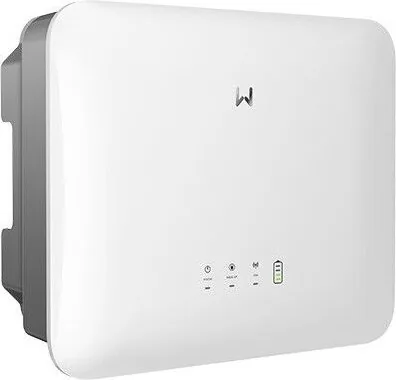
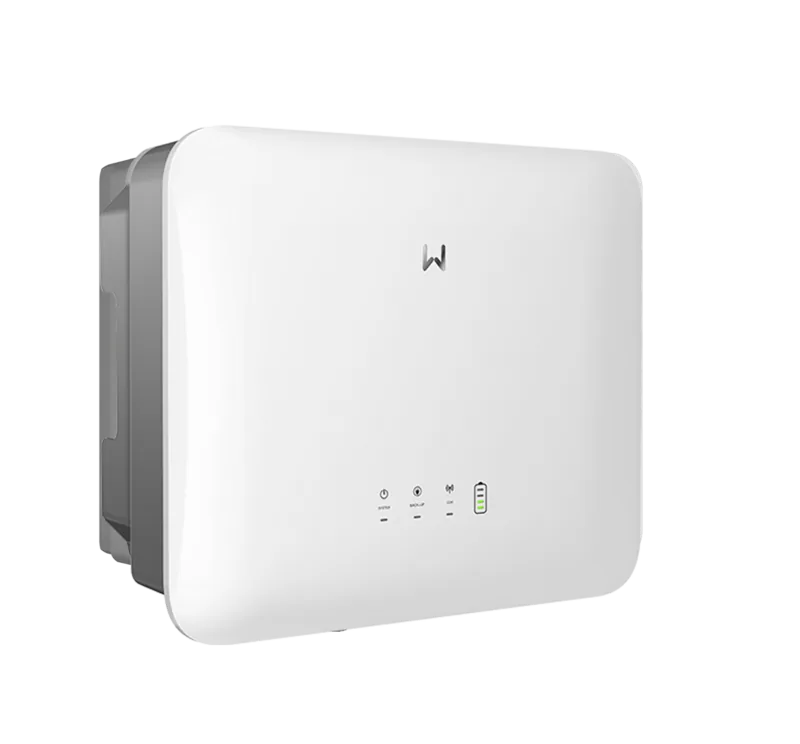
Goodwe ES G2 Series Manual
PDF manual · 77 Pages
English



Quick check
Incorrect answer, please try again.
Chat with your Goodwe ES G2 Series manual using AI
Get instant AI answers from your Goodwe ES G2 Series manual
Ask anything about the Goodwe ES G2 Series. Answers come from this manual, with the pages they are based on.
ES G2 Series Maintenance Schedule
Check the heat sink, air intake, and air outlet for foreign matter or dust.
Check if cables are securely connected, broken, or have exposed copper cores.
Turn the DC switch on and off ten consecutive times to ensure it works properly.
Verify all terminals and ports are properly sealed. Reseal cable holes if necessary.
Free maintenance reminders
Timed to your purchase date. Always free, unsubscribe anytime.
Ask a Question
Do you recommend ES G2 Series?
Yes NoFrequently Asked Questions
The GoodWe ES G2 Series is designed for residential single-phase solar systems that combine PV generation, 48 V battery storage, grid connection, and backup power for selected loads.
Is this answer helpful?
The ES G2 range includes nominal inverter sizes from 3 kW to 6 kW. Available models include 3 kW, 3.6 kW, 5 kW, and 6 kW versions, with certain variants tailored to specific markets.
Is this answer helpful?
Yes. When configured with a compatible battery and suitable reserve loads, the inverter can switch to island operation and supply the reserve output. The stated transfer time is less than 10 ms.
Is this answer helpful?
The series supports self-consumption, economy, and backup modes. These modes prioritize solar use, battery charging and discharge, time-of-use energy savings, or stored energy availability for outages.
Is this answer helpful?
Users can access local settings and operating information through the SolarGo app using Bluetooth or supported communication modules. The SEMS Portal supports remote monitoring through Wi-Fi, LAN, 4G, or GPRS connections.
Is this answer helpful?
No. The inverter should be used only with batteries approved by the manufacturer. Battery voltage, communication wiring, protection devices, and configuration must match the selected inverter and battery model.
Is this answer helpful?
Advantages and Disadvantages
Advantages

- Hybrid design combines solar conversion, battery storage, grid interaction, and backup supply in one unit.
- Models from 3 kW to 6 kW provide options for different single-phase household energy demands.
- Reserve output transfers in less than 10 ms, helping suitable essential loads continue during outages.
- High maximum efficiency of up to 97.6% and MPPT efficiency up to 99.9% support effective solar harvesting.
- SolarGo and SEMS Portal support local setup, remote monitoring, alarm review, and software updates.
Disadvantages

- Backup output has load limits and may not suit devices with high starting current, such as powerful pumps.
- Battery compatibility is restricted to approved models, and battery performance varies with temperature and conditions.
- Professional installation is required because of high DC and AC voltages, grounding, and safety requirements.
- Output can be derated by high temperature, direct sunlight, high input conditions, or installation above 2,000 m.
- PV input is available only on ES hybrid models; SBP AC-coupled models are intended for existing PV inverter setups.
Product Specification
Note
Prices partially include 0% VAT rates for Austria and Germany
Type
Hybrid inverter, transformerless, passive, off-grid capable
Input voltage
90-600 V DC
Maximum input current
16 A
MPP voltage range
60-550 V DC
Number of MPP trackers
2
Output phases
Single-phase
Efficiency
97.6% max., 96.7% EU efficiency
Input
MC4
Output
Terminals
Interfaces
Wi-Fi, LTE, 2 x RJ-45, 1 x RS-485
Noise level
<30 dB
Protection rating
IP65
Ambient temperature
-40 F to +185 F
Dimensions
19.92 x 17.12 x 6.09 in (W x H x D)
Product Description
GoodWe ES G2 Series Manual: Smart Hybrid Solar Energy Management
The GoodWe ES G2 Series is a range of single-phase hybrid solar inverters designed for households that want to use more of their own solar power, add battery storage, and maintain essential power during grid interruptions. Covering models from 3 kW to 6 kW, the series combines photovoltaic generation, battery charging, grid interaction, and backup supply in one compact wall-mounted unit.
Flexible Solar and Battery Operation
A key strength highlighted in the GoodWe ES G2 Series Manual is the ability to direct solar energy where it creates the most value. During the day, generated power can serve household loads first, charge a compatible 48 V battery, and export remaining energy to the grid. At night, stored battery energy can help reduce grid consumption. This self-consumption approach is particularly useful in areas with high electricity prices and limited feed-in incentives.
The ES G2 range supports multiple operating strategies. Self-consumption mode prioritizes daily solar use and battery storage. Economy mode can charge the battery during lower-cost tariff periods for use when electricity prices rise. Backup mode focuses on battery readiness, helping selected loads stay supplied when the grid fails.
Fast Backup and Connected Control
The reserve output provides an uninterruptible-power-supply style transfer time of less than 10 ms, supporting suitable household circuits during a power outage. Load planning remains important: high-starting-current equipment, including powerful pumps, may not be appropriate for backup operation. The available backup capacity depends on the selected inverter model and battery conditions.
For everyday visibility and configuration, the inverter supports Bluetooth and Wi-Fi connectivity, with optional LAN and 4G communication options. SolarGo enables local commissioning, parameter adjustments, alarm checks, and software updates. The SEMS Portal provides remote monitoring for energy production, consumption, battery behavior, and system status.
Designed for Reliable Residential Use
GoodWe ES G2 Series units offer up to 97.6% maximum efficiency and up to 99.9% MPPT efficiency. They use natural convection cooling, produce less than 30 dB of noise, and have an IP65 enclosure rating for protected indoor or outdoor installation. Integrated protections include anti-islanding, residual-current monitoring, PV insulation monitoring, PV reverse-polarity protection, and grid fault safeguards. Arc-fault protection is available as an option.
Notes
Installation, wiring, battery selection, and commissioning should be completed by qualified professionals. Use only approved battery models, ensure correct grounding and cable polarity, and size backup loads within the inverter's rated output limits. Output may be reduced in high temperatures, direct sunlight, high altitude, or other unfavorable conditions.
Search for 67,706 Manuals online


Type-in Brand or Model