
Fujifilm EF-20 Manual
PDF manual · 72 Pages
English


Advantages and Disadvantages
Advantages

- Compact, lightweight design with foldable hot-shoe for pocketable portability.
- Automatic TTL metering with EV ADJUST for quick exposure fine-tuning (+/–0.5, +1).
- Bounce head up to 90° for softer, more natural lighting.
- Wide panel expands coverage to 24mm for wider-angle lenses.
- Good battery flexibility: works with alkaline, lithium or NiMH AA cells; NiMH improves performance.
Disadvantages

- Limited guide number (GN20; GN14 with wide panel) — not ideal for long telephoto or very large scenes.
- Output reduction when bouncing (around 25% of direct output), may require higher ISO or wider aperture.
- Requires AA batteries — reliance on disposables or carrying spares/charger.
- No advanced features like wireless TTL, zoom head, or high-speed sync.
- Overheating risk with successive full-power flashes; needs cooling breaks after heavy use.
Ask a Question
Frequently Asked Questions
The EF-20 uses two AA batteries (alkaline, lithium or Ni-MH). Ni-MH rechargeable AA batteries are recommended because they shorten recycling time and increase the number of full-power flashes.
Is this answer helpful?
Tilt the flash head upward (0–90°) to reflect light off ceilings or walls. Bounce softens shadows but reduces effective output; open aperture, raise ISO, or use EV ADJUST to compensate. Do not tilt beyond 90° to avoid damage.
Is this answer helpful?
EV ADJUST lets you fine-tune TTL flash output in steps (e.g., +0.5, +1 or negative steps) when TTL auto is active. Use it to correct under- or overexposed shots, daylight sync situations, or to boost light for bounce.
Is this answer helpful?
With two AA alkaline cells expect about 200 full-power flashes with ~5s recycle; with two Ni-MH cells expect about 280 flashes with ~4s recycle. Measurements assume new batteries and moderate ambient temperature.
Is this answer helpful?
No — avoid rain, water spray, sand, high humidity, and heavy dust. Exposure to water or sand can damage internal circuits and may make repairs impossible; keep the unit dry and clean.
Is this answer helpful?
No — remove batteries for extended storage to prevent leakage and possible damage. For disposal or long-term storage, insulate battery terminals with tape.
Is this answer helpful?
Do not disassemble the flash. Request internal cleaning/inspection from an authorized dealer roughly every two years to prevent dust buildup. Also avoid extreme temperatures, do not use volatile cleaners, and allow cooling after repeated full-power firing.
Is this answer helpful?
Product Description
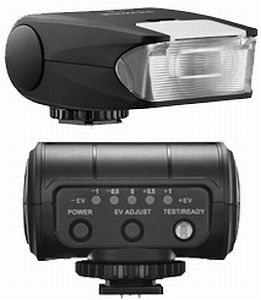
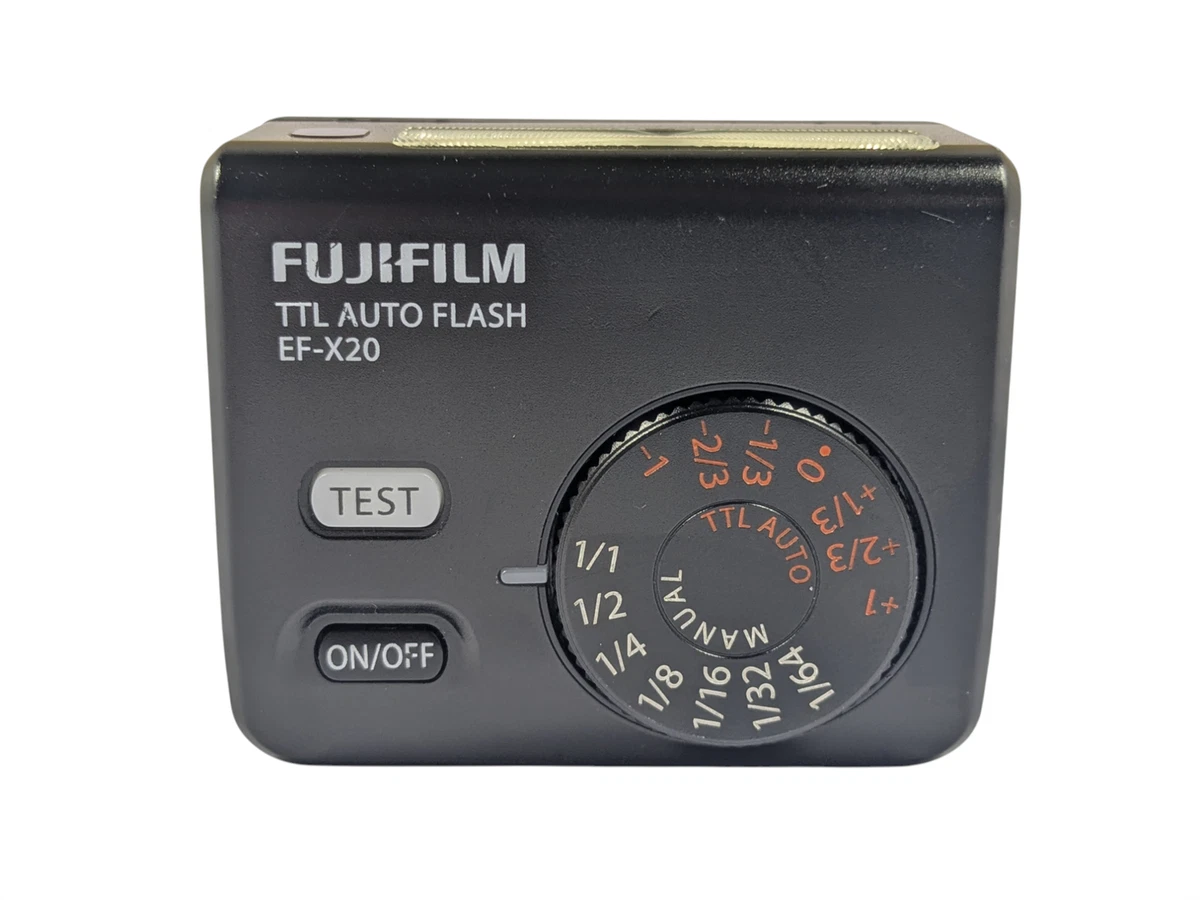
Fujifilm EF-20 Manual: Compact Shoe-Mount Flash for Everyday Shooting
The Fujifilm EF-20 is a lightweight, pocketable shoe-mount flash designed primarily for Fujifilm digital cameras. Engineered for straightforward operation, it offers automatic TTL exposure control, simple EV adjustment, bounce capability up to 90°, and a removable wide panel to support wider focal lengths. Its compact body folds the hot-shoe when stored, making it convenient to carry and quick to mount for on-the-go photography.
Small but capable, the EF-20 delivers a guide number of 20 (ISO100, 1m) and a reduced GN of 14 when using the wide panel. It runs on two AA batteries (alkaline, lithium or NiMH), with NiMH recommended to shorten recycling time and increase flash count. Typical performance at full power is about 200 pops with alkaline AAs and roughly 280 with NiMH, with recycling times near 5s and 4s respectively. The unit weighs roughly 100 g (without batteries) and operates between 0–40°C.
Setting up is intuitive: slide in two AA cells, switch ON, wait for the READY lamp, mount on the camera shoe and lock the ring. A TEST button fires confirmation flashes; the READY lamp blinking indicates charging and may require a few seconds before full power is achieved. The EV ADJUST button provides fine exposure tweaks (+0.5 / +1 / – adjustments) when TTL is active, useful for daylight sync, backlit scenes, or when bounce reduces output.
Bounce shooting is flexible — angle positions include 0°, 45°, 60°, 75°, and 90° upward — producing softer, more natural shadows when reflecting off ceilings or walls. Note that bounce reduces effective light (roughly a 75% output reduction in some setups), so open the lens aperture, raise ISO, or step up EV as needed. The wide panel extends coverage from about 32mm down to 24mm focal length but lowers guide number; attach it by flipping the white diffuser onto the front of the flash head.
Care and safety are emphasized: avoid water, sand, extreme temperatures, and strong magnetic fields. Do not disassemble the unit. Remove batteries for long storage; insulate battery terminals when disposing or storing. For extended successive firing, allow cooling — after around 15 full-power flashes, rest the unit for 10 minutes to avoid overheating and performance degradation. Regular internal cleaning by an authorized service (recommended about every two years) helps prevent dust-related faults.
In short, the EF-20 Manual highlights a user-friendly, travel-ready flash offering automatic TTL metering with manual EV control, bounce and wide-panel options, and dependable battery-powered operation for casual to enthusiast shooters.
Notes
- Recommended batteries: NiMH AA for best recycle time and shot count.
- Wide panel reduces guide number to 14 and is intended for 24mm coverage.
- Avoid bending the flash head beyond 90° and expose unit to water or sand.
Search for 371 Manuals online


Type-in Brand or Model