
Fronius Wattpilot Manual
PDF manual · 64 Pages
English



Quick check
Incorrect answer, please try again.
Chat with your Fronius Wattpilot manual using AI
Get instant AI answers from your Fronius Wattpilot manual
Ask anything about the Fronius Wattpilot. Answers come from this manual, with the pages they are based on.
Ask a Question
Do you recommend Wattpilot?
Yes NoVideo Manual
How-To | Inbetriebnahme des Wattpilot
Frequently Asked Questions
The Fronius Wattpilot is an EV charger for battery electric and plug-in hybrid vehicles. It is offered in portable Go versions and a permanently installed Home version, with Type 2 vehicle charging connectivity and app-based controls.
Is this answer helpful?
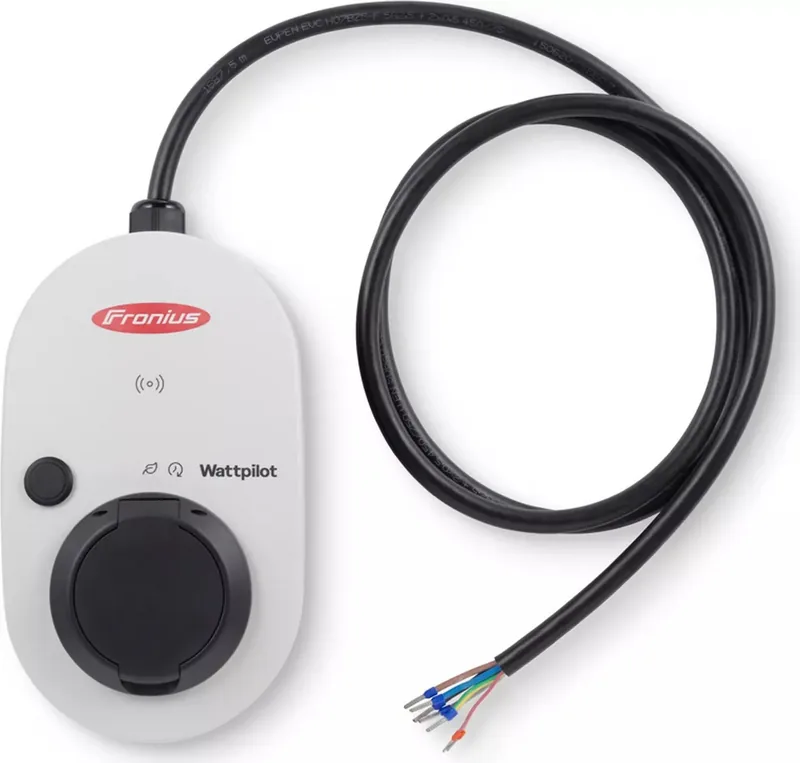
Wattpilot Go is portable and uses a CEE plug, making it suitable for travel or changing locations. Wattpilot Home is designed for fixed connection to an electrical supply and should be installed by a qualified electrician.
Is this answer helpful?
Yes. Solar surplus charging is available when the charger is connected with a compatible Fronius inverter, a Fronius Smart Meter at the grid connection point, and the required network communication. It can adjust charging power to available surplus.
Is this answer helpful?
Eco Mode charges an EV when photovoltaic surplus energy and/or electricity below a configured price threshold is available. If neither source is available, charging may pause until conditions improve.
Is this answer helpful?
Next Trip Mode uses a selected departure time and desired energy amount to plan charging as economically as possible. It considers configured solar surplus and flexible tariff settings, aiming to complete the requested charge at least one hour before departure.
Is this answer helpful?
Yes. The charger supports RFID ID chips and app-based authorization. Authentication can be required before charging begins, and charging quantities can be recorded for individual ID chips.
Is this answer helpful?
Advantages and Disadvantages
Advantages

- Portable Go models and fixed Home model cover different charging requirements.
- PV surplus charging can increase self-consumption with compatible Fronius equipment.
- Eco Mode and Next Trip Mode support cost-aware charging schedules.
- RFID access control tracks charging energy for up to 10 ID chips.
- Built-in residual-current detection, temperature monitoring, and cable locking improve safety.
Disadvantages

- PV optimization requires a compatible inverter, Smart Meter, and correct network setup.
- Eco Mode may not charge if neither solar surplus nor low-priced electricity is available.
- Home installation must be performed by a qualified electrical professional.
- Flexible tariff functions depend on internet access and supported electricity providers.
- Maximum charging power depends on the model, vehicle, supply, and local installation.
Product Specification
Number of charging points
1
Number of phases
3-phase
Voltage
400 V (AC)
Connector type
Type 2
Connection type
Socket
Authorization
App, RFID
Interfaces
Wi-Fi (WLAN)
Product Description
Fronius Wattpilot - Read, Download & Print Free
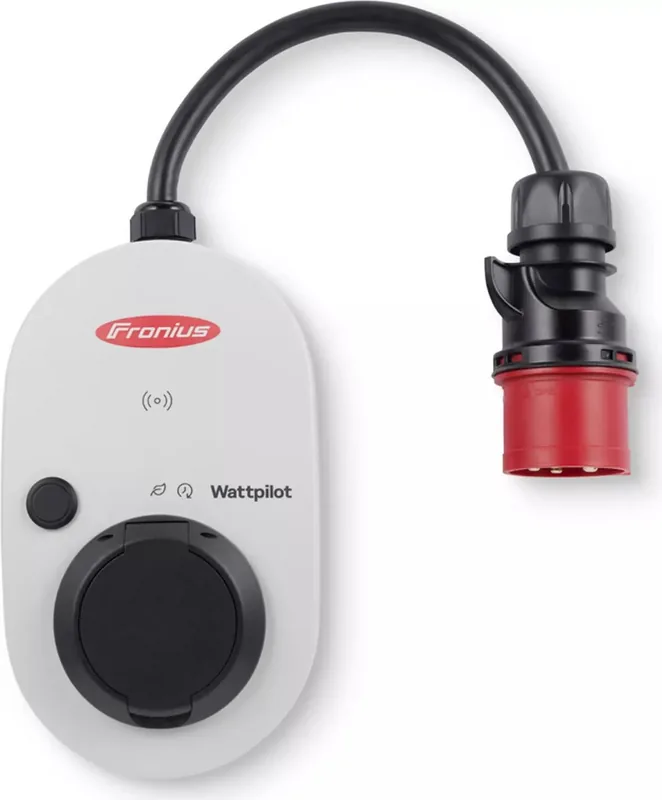
The Fronius Wattpilot is a smart EV charging solution designed for drivers who want practical, flexible, and energy-aware charging at home or on the move. Available as the portable Wattpilot Go 11 J and Go 22 J, plus the fixed-installation Wattpilot Home 11 J, it supports battery electric vehicles and plug-in hybrids through a Type 2 connection.
Flexible Charging for Everyday EV Use
The portable Go models connect to compatible CEE outlets and can be used in different locations with original adapter sets. The Home 11 J is intended for permanent installation by a qualified electrician. Charging power ranges up to 11 kW for the Go 11 J and Home 11 J, while the Go 22 J can deliver up to 22 kW where the electrical supply supports it.
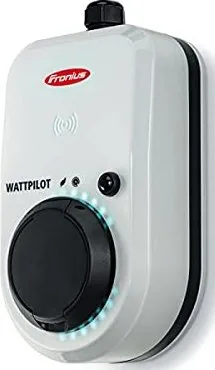
A clear LED ring communicates charging current, operating mode, charging progress, and potential faults. A physical button lets users change charging modes or current levels directly at the charger, while the Fronius Solar.wattpilot app provides deeper control through Wi-Fi.
Smarter Use of Solar Energy and Tariffs
A key benefit of the Fronius Wattpilot is its ability to use photovoltaic surplus energy. With a compatible Fronius inverter and Fronius Smart Meter, the charger can direct excess solar production into an EV rather than exporting it to the grid. Automatic switching between one-phase and three-phase charging helps make use of lower solar surpluses before moving to higher charging power when more energy is available.
Eco Mode charges when solar surplus or low-cost electricity is available. Next Trip Mode plans charging to reach a selected energy amount by a chosen departure time while aiming for the most economical charging window. Support for selected flexible electricity tariffs can further improve cost control.
Control, Access, and Safety
The app can configure charge limits, schedules, LED behavior, cable locking, vehicle-specific charging settings, and firmware updates. RFID ID chips can restrict access and track energy use by individual users. This is useful for shared households, workplaces, or private parking areas.
Built-in safety features include AC and DC residual-current detection, grounding and phase checks, temperature monitoring, cable locking, and adapter recognition. Correct installation, suitable circuit protection, original accessories, and safe cable routing remain essential for reliable operation.
Notes
- PV surplus charging requires compatible networked equipment and a Fronius Smart Meter.
- Eco Mode does not guarantee charging when cheap electricity or solar surplus is unavailable.
- Electrical installation and repairs should be completed by qualified professionals.
Search for 67,706 Manuals online


Type-in Brand or Model