
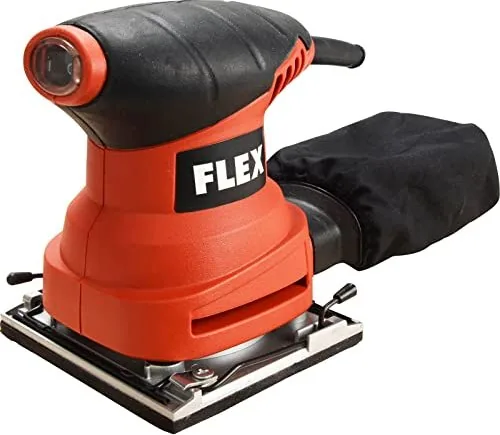
Flex MS 713 Manual
PDF manual · 66 Pages
English



Quick check
Incorrect answer, please try again.
Chat with your Flex MS 713 manual using AI
Get instant AI answers from your Flex MS 713 manual
Ask anything about the Flex MS 713. Answers come from this manual, with the pages they are based on.
MS 713 Maintenance Schedule
Use dry, compressed air to clean all ventilation openings. Wear safety glasses when using compressed air.
Clean off buildup resulting from sanding green or sappy wood to maintain tool performance.
Remove and empty the dust bag periodically. Clean with dry compressed air; do not wash with water.
Take tool to authorized service for cleaning, inspection, replacement of worn parts, relubrication, and new brushes.
Ask a Question
Do you recommend MS 713?
Yes NoFrequently Asked Questions
The sander accepts two types of abrasives: Velcro-backed sheets measuring 102 mm by 115 mm, and standard sheets measuring 115 mm by 140 mm that are secured with clamping brackets.
Is this answer helpful?
Use the included paper punch to create eight holes in your sandpaper. Connect the dust container or a vacuum hose to the extraction port to remove dust directly from the source.
Is this answer helpful?
Yes, the MS 713 is designed for coarse, medium, and fine sanding of wood, plaster, metal, and plastics, making it highly versatile for various workshop tasks.
Is this answer helpful?
No. The normal weight of the machine is sufficient. Applying extra pressure slows the pad, reduces efficiency, strains the motor, and can cause the tool to jump.
Is this answer helpful?
You should have the tool inspected by an authorized service center after approximately 200 hours of operation to check brushes, lubricate the mechanism, and replace worn parts.
Is this answer helpful?
You must wear safety goggles to protect your eyes from flying debris and a dust mask or respirator approved by NIOSH/OSHA to avoid inhaling fine dust particles.
Is this answer helpful?
Advantages and Disadvantages
Advantages

- Lightweight at 1.3 kg for reduced operator fatigue
- Includes a dedicated paper punch for efficient dust extraction
- Compatible with both Velcro and standard clamped sandpaper
- High speed of 13,000 strokes per minute for fast material removal
- Class II protection ensures high electrical safety standards
Disadvantages

- Requires specific maintenance every 200 hours of use
- Dust container must be emptied frequently during heavy use
- Not suitable for sanding lead-based paint without specialist help
- Must use original parts to keep warranty valid
- Excessive pressure reduces efficiency and may damage the motor
Product Specification
Type
Random orbital sander
Power
220W (230V)
No-load speed
13,000 rpm
No-load stroke rate
14,000 strokes/min
Oscillation diameter
0.06 inches
Sandpaper size
4.5x4.1 inches (Velcro)
Tool attachment
Hook and loop
Features
Soft grip, dust extraction
Weight
2.65 lbs
Package contents
Dust bag
Product Description
Master the Art of Sanding with the Flex MS 713 Electric Oscillating Sander
The Flex MS 713 Electric Oscillating Sander Manual represents a pinnacle in professional finishing tools, designed specifically for the demanding needs of industry and craftsmanship. This versatile machine is an ideal companion for sanding wood, plaster, metal, and plastics with precision and efficiency. Whether you are tackling coarse pre-sanding or aiming for a flawless fine finish, this oscillating sander delivers consistent results.
Designed for commercial use, the MS 713 excels at leveling joints between gypsum boards, refining cabinet surfaces, and ensuring precise fits for doors and windows. Its lightweight design, weighing only 1.3 kg, reduces user fatigue during extended projects. The device operates at a no-load speed of 13,000 strokes per minute, powered by a robust motor that consumes 220 watts while delivering 120 watts of output power.
One of the standout features of this tool is its flexibility regarding abrasive materials. It accommodates both Velcro-backed sheets measuring 102 mm by 115 mm and standard sheets sized 115 mm by 140 mm. To maximize performance, the unit includes a specialized paper punch that creates eight holes in the sandpaper. These perforations allow dust to be extracted directly through the pad, keeping your work area clean and improving visibility. A dedicated dust container can be attached to the connection port, or a vacuum system can be connected via the included hose adapter for superior dust management.
Safety is paramount in the design of the Flex MS 713. The manual emphasizes strict adherence to safety protocols, including wearing eye protection and respiratory masks to avoid inhaling harmful particles like silica or asbestos dust. The tool is built to Class II protection standards, ensuring electrical safety. Users are advised never to apply excessive pressure; the weight of the machine alone is sufficient for effective sanding. Applying extra force can slow down the pad, strain the motor, and cause the tool to jump off the workpiece.
Maintenance and Longevity
To ensure the longevity of your Flex MS 713, regular maintenance is essential. Keep the cooling vents clear by blowing them out with dry compressed air periodically. Remove any buildup from working with green or sap-rich wood using a damp cloth on plastic parts, but never use solvents. After approximately 200 hours of operation, it is recommended to have the tool inspected by an authorized service center for brush replacement and lubrication.
Important Notes
- Always disconnect the power plug before changing abrasives or performing maintenance.
- Do not wash the dust container; use compressed air to clean it instead.
- Use only original FLEX spare parts to maintain warranty coverage.
- Ensure proper ventilation when sanding materials that generate hazardous dust.
Search for 67,732 Manuals online


Type-in Brand or Model