
Endress ESE 3000 i Manual
PDF manual · 452 Pages
English



Quick check
Incorrect answer, please try again.
Chat with your Endress ESE 3000 i manual using AI
Get instant AI answers from your Endress ESE 3000 i manual
Ask anything about the Endress ESE 3000 i. Answers come from this manual, with the pages they are based on.
ESE 3000 i Maintenance Schedule
Check for visible external defects such as damaged insulation, connectors or cables, leaks, and unusual noise before start-up.
Have a qualified electrician perform the recurring electrical-safety test.
Check the oil level before every commissioning, with the generator level and the engine cooled.
Change oil after the run-in period to remove abrasion material, no later than three months.
Change the engine oil every 100 operating hours, at the latest annually.
Clean the air-filter insert and replace it if necessary. A dirty filter increases fuel use, emissions, and engine wear.
Clean the fuel tank and fuel filter, replacing them if necessary.
Check fuel lines for cracks and damage, and replace them if necessary.
Check electrode gap and clean the spark plug; replace it if necessary.
Check exhaust tightness and seals. Check and clean the spark screen; replace parts if necessary.
Check choke function, pull starter cable and operation, and all fastenings for secure fit or damage; replace if necessary.
Free maintenance reminders
Timed to your purchase date. Always free, unsubscribe anytime.
Ask a Question
Do you recommend ESE 3000 i?
Yes NoFrequently Asked Questions
It provides 3,000 W of continuous power and up to 3,300 W of maximum power. Check both running wattage and starting wattage of the connected appliance before use.
Is this answer helpful?
Its inverter generator system electronically stabilizes the output voltage and frequency, making it suitable for compatible electronic equipment as well as general electrical loads.
Is this answer helpful?
The 6.8 litre tank provides approximately five hours of operation at 75% load. Running time depends on load level, environmental conditions, and the equipment being powered.
Is this answer helpful?
ECOtronic automatically reduces engine speed when demand is low. This can reduce fuel use, emissions, and noise. Switch it off before using appliances that need high starting power.
Is this answer helpful?
No. Operate it outdoors only in a well-ventilated location. Never connect it directly to public power wiring, solar installations, other generators, or enclosed-space electrical systems.
Is this answer helpful?
Check oil before use. Change oil after the first 25 hours or three months, then every 100 hours or yearly. Clean the air filter every 50 hours and inspect the spark plug and spark screen every 100 hours or annually.
Is this answer helpful?
Advantages and Disadvantages
Advantages

- 3,000 W continuous and 3,300 W maximum inverter output supports many portable power needs.
- Electric start and recoil backup provide flexible starting options.
- ECOtronic can lower fuel use, emissions, and noise at lighter loads.
- ECD 03 display shows voltage, frequency, and operating hours.
- Includes 230 V sockets, 12 V DC charging, USB output, wheels, and transport handles.
Disadvantages

- Designed for one connected electrical consumer at a time.
- At 41 kg, it may require two people to carry across rough ground.
- Must be operated outdoors only because exhaust contains carbon monoxide.
- High-starting-current appliances may require ECO mode to be switched off.
- Regular oil, filter, spark plug, battery, and spark screen maintenance is required.
Product Specification
Type
Gasoline generator
Engine Power
4.2 kW, 5.62 hp, 10.43 cu in, 3,000 rpm, 4-stroke
Rated Power
3 kW (230 V)
Output
1 x outlet (230 V), 1 x outlet (12 V), 1 x USB charging port
Fuel Tank Capacity
1.8 gal
Features
Inverter technology, transport wheels, carrying handle, overload protection, low-oil shutdown
Protection Rating
IP23
Noise Level
93 dB(A)
Dimensions
23.15 x 17.8 x 17.4 in (W x H x D)
Weight
90.39 lb
Product Description
Endress ESE 3000i Gasoline Generator - Read, Download & Print Free
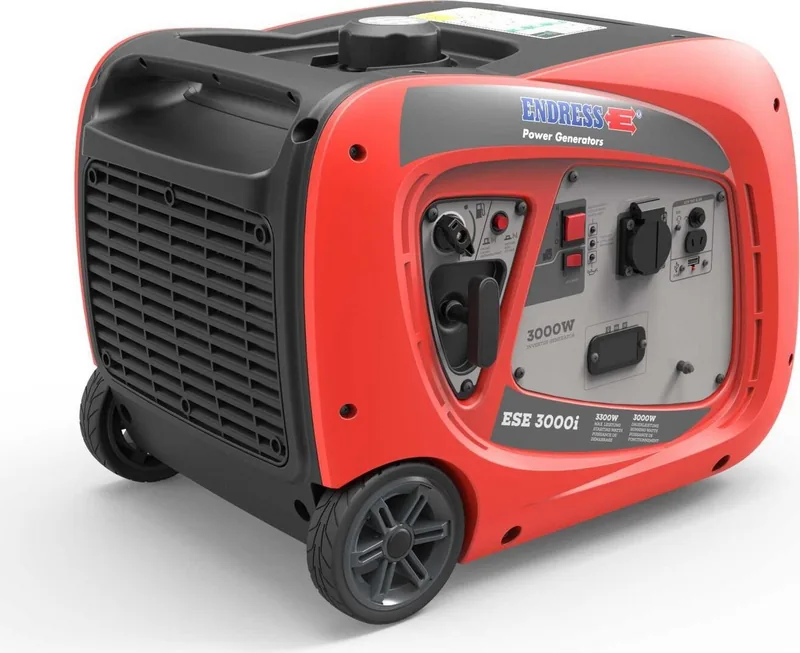
The Endress ESE 3000i Gasoline Generator is a portable inverter generator designed to provide dependable 230 V power where a fixed electricity supply is unavailable. With 3,000 W continuous output and up to 3,300 W maximum output, it is suited to tools, mobile work areas, leisure equipment, and other compatible single-phase electrical devices. Its inverter technology helps maintain stable voltage and frequency for sensitive equipment as well as everyday loads.
Compact Power for Mobile Use
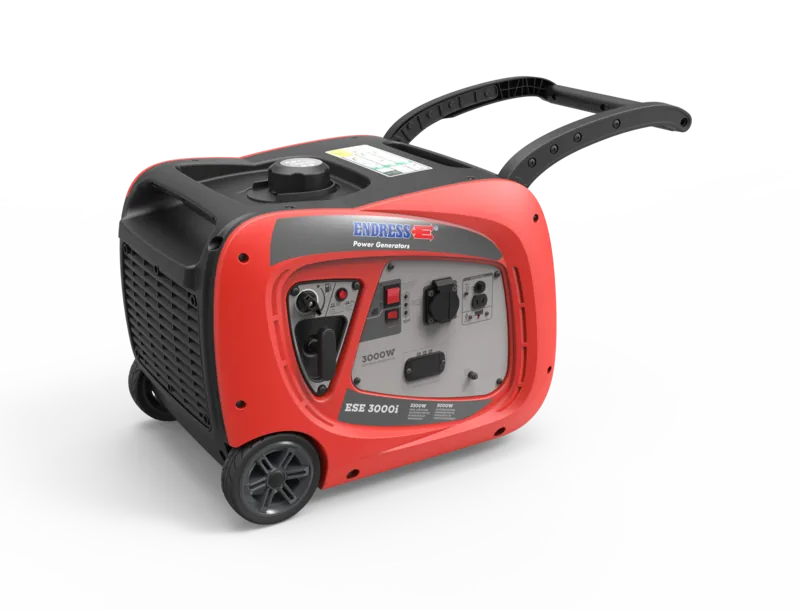
This model combines a 171 cc, air-cooled, four-stroke OHV engine with a protective, noise-reducing housing. Ready for operation, it weighs approximately 41 kg and includes transport wheels plus fixed and folding handles to make repositioning easier. A 6.8 litre fuel tank supports an approximate running time of five hours at 75% load, though actual consumption varies with operating conditions and connected equipment.
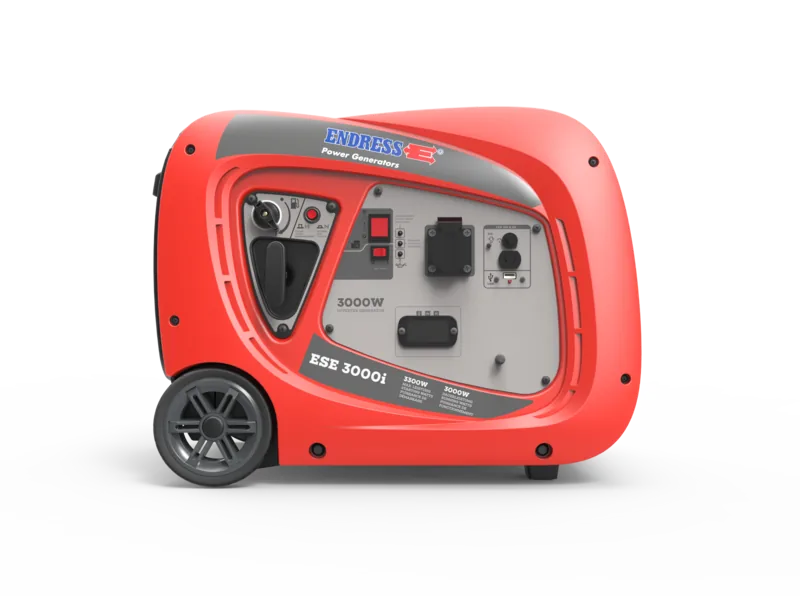
Electric start provides convenient everyday operation, while a recoil starter offers a useful manual backup. The control panel includes two 230 V / 16 A sockets, a 12 V DC charging outlet, a USB charging outlet, overload protection, operating indicators, and a multifunction display. The ECD 03 display can show output voltage, frequency, and operating hours, helping users monitor generator status during use.
Efficient Output Management
ECOtronic idle-speed control adjusts engine speed to match demand when lower loads are connected. This can reduce fuel consumption, emissions, and operating noise. For high-starting-current equipment, such as certain saws or blowers, ECO mode should be switched off so full engine speed and power are immediately available.
The generator is intended for use outdoors only, with adequate ventilation and a level, stable surface. It must not be connected directly to public electrical networks, solar systems, or another generator. It is designed for one electrical consumer at a time, and the connected load must remain within the stated power limits. Carbon monoxide in exhaust gases is dangerous, so operation in enclosed rooms, vehicles, pits, or poorly ventilated spaces is unsafe.
Care and Practical Ownership
Routine care supports reliable performance. Check the oil level before operation, clean the air filter every 50 hours, and inspect the spark plug and spark screen every 100 hours or annually. The first oil change is due after 25 operating hours or three months, followed by changes every 100 hours or annually. The engine uses 0.6 litres of suitable four-stroke engine oil.
Notes
- Allow the generator to warm up before applying load after long storage or cold starts.
- Let it run without load for about two minutes before shutdown.
- Refuel only when the engine is off and cool, away from flames, sparks, and smoking.
- Keep ventilation openings clean and never use a hose or pressure washer for cleaning.
Search for 67,706 Manuals online


Type-in Brand or Model