
EASYmaxx KA-SA03 Manual
PDF manual · 40 Pages
English



Quick check
Incorrect answer, please try again.
Chat with your EASYmaxx KA-SA03 manual using AI
Get instant AI answers from your EASYmaxx KA-SA03 manual
Ask anything about the EASYmaxx KA-SA03. Answers come from this manual, with the pages they are based on.
Ask a Question
Do you recommend KA-SA03?
Yes NoFrequently Asked Questions
The motion detector requires 4 x 1.5 V AA batteries (not included). Each remote control uses 3 x 1.5 V LR44/AG13 button cells; six LR44 cells are supplied for the two remotes.
Is this answer helpful?
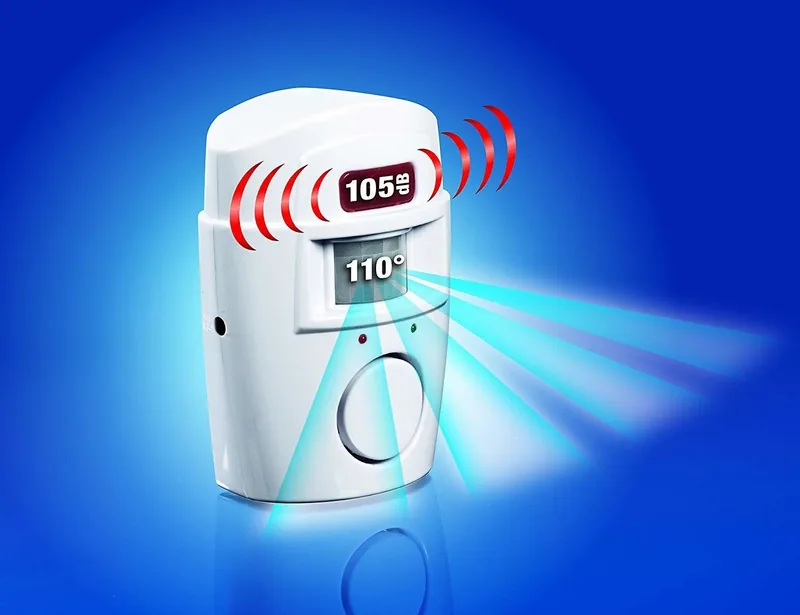
The KA-SA03 covers approximately 110° horizontally with a detection range up to 8 meters. It detects movement speeds between about 0.6 and 1.5 m/s, making it suitable for typical indoor monitoring of rooms and corridors.
Is this answer helpful?
Yes. The manual warns that pets can activate the PIR sensor and cause false alarms. Position the detector away from pet activity or adjust mounting height and angle to reduce false triggers.
Is this answer helpful?
When movement is detected the red LED flashes and the unit emits a continuous alarm of approximately 40–50 seconds at over 105 dB. After the alarm period it returns to standby but remains armed and will trigger again on further motion.
Is this answer helpful?
No. A DC 6 V mains adapter is not included. The detector can run on 4x AA batteries or be powered via a compatible DC 6 V adapter which must be purchased separately.
Is this answer helpful?
Mount the supplied bracket using fixings appropriate for your wall. Clip the detector into the bracket and use the ball joint to adjust the angle for optimal coverage. Ensure the mounting location avoids moisture, heat sources, and hidden pipes or wiring.
Is this answer helpful?
Dispose of the device at an electronic waste recycling center — do not place it in household waste. Remove batteries before disposal and hand them in at appropriate battery collection points as required by local regulations.
Is this answer helpful?
Advantages and Disadvantages
Advantages

- Simple installation: wall bracket and adjustable ball joint for quick setup.
- Loud alarm (>105 dB) provides a clear audible deterrent and notification.
- Dual remote controls for convenient arming/disarming from up to 5 m.
- Battery or optional DC 6 V mains power offers flexible power choices.
- Wide coverage: 110° detection angle and up to 8 m range suitable for rooms and halls.
Disadvantages

- Not pet-immune: animals can trigger false alarms if placed in pet paths.
- Requires 4x AA batteries for the detector (not included), adding ongoing cost.
- Not intended as a professional-grade security system for commercial use.
- Alarm retriggers automatically after each detection; may be disruptive in high-traffic areas.
- Mains adapter not included; must be purchased separately if desired.
Product Specification
Type
Motion detector
Sensors
Infrared
Alarm zones
1
Detection range
26.25 ft
Detection angle
110°
Power supply
Battery (4x AA)
Dimensions
4.88x3.50x2.01 in
Special features
Siren (105dBA), Remote control
Product Description
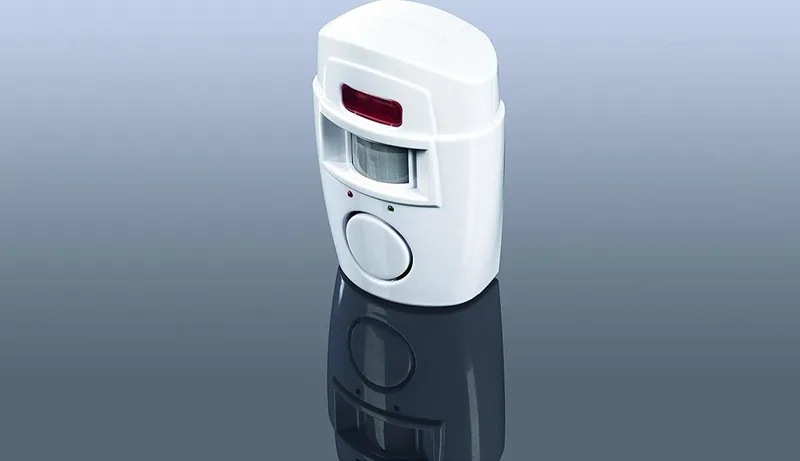
EASYmaxx KA-SA03 PIR motion detector with alarm signal, white Manual
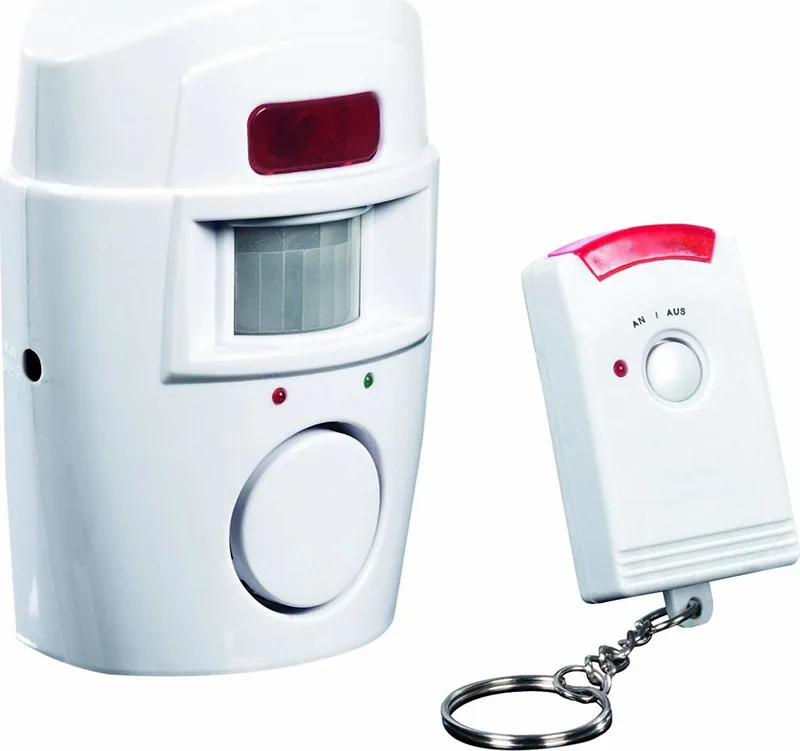
The EASYmaxx KA-SA03 PIR motion detector is a compact indoor security device designed for simple home protection. Sleek in white, it combines a passive infrared sensor with a loud alarm and remote controls to detect motion within an 8 m range and a 110° field of view. The unit can be wall-mounted or freestanding and offers flexible power options: four AA batteries (not included) or an optional 6 V DC mains adapter. Two handheld remotes are supplied, each powered by three LR44 button cells, allowing easy arming and disarming from a distance of up to about 5 m.
Driven by convenience and safety, the KA-SA03 features visible LED indicators: a green LED for armed/standby confirmation and a red LED that flashes when motion is detected. When triggered, the alarm emits a continuous tone of over 105 dB for approximately 40–50 seconds, then resets to standby while remaining ready to retrigger. The detector senses movement speeds between 0.6 and 1.5 m/s and warns that pets may cause false alarms. Installation is straightforward: mount the included bracket with suitable fixings, secure the detector into the cradle, and adjust aim via the ball joint.
Practical guidance in the manual stresses safe battery handling and maintenance: use only specified battery types, replace all cells together, observe polarity, and remove batteries for long-term storage. The manual also covers basic cleaning, placement away from heat or moisture, and precautions before drilling to avoid pipes or wiring. Leaking batteries must be removed immediately and contacts cleaned before inserting new cells. For environmental responsibility, the device and batteries must be disposed of via appropriate recycling channels, not household waste.
For everyday use, the KA-SA03 is targeted at private households seeking a low-cost, easy-to-install alarm option for rooms, corridors, garages, or temporary monitoring. It’s not intended as a professional security system but is useful for notifying occupants of unexpected motion. The package includes the motion detector, two remotes, and LR44 cells for the remotes; AA cells for the detector are required separately. Customer support details and manufacturer information are provided for spare parts, service, and questions.
Notes:
- Pets can trigger the alarm; position the sensor with this in mind.
- Use suitable wall anchors for secure mounting depending on wall material.
- Regularly check battery condition to ensure reliable operation.
- The mains adapter is optional; confirm DC 6 V compatibility before use.
- Dispose of device and batteries per local electronic waste regulations.
Search for 67,706 Manuals online


Type-in Brand or Model
nicole51
9 months ago
Does this motion sensor really have useful range, and can it stop an intruder if the alarm is triggered late or the battery is weak?
Manual.ly
9 months ago
Based on feedback, the effective detection range is limited. With the supplied low-capacity batteries (or when batteries are weak), the sensor may only detect movement over a very short distance. Using good quality, fresh standard batteries can improve performance, and the manufacturer typically cites a maximum range around 5 m, but real-world results depend on placement and conditions (mounting height, line of sight, and ambient interference). For best reliability, install it firmly in a visible spot, use fresh alkaline batteries, and do not expect it to protect against an intruder who is already directly at the device. If you need broader coverage, choose a sensor designed for longer reach.