
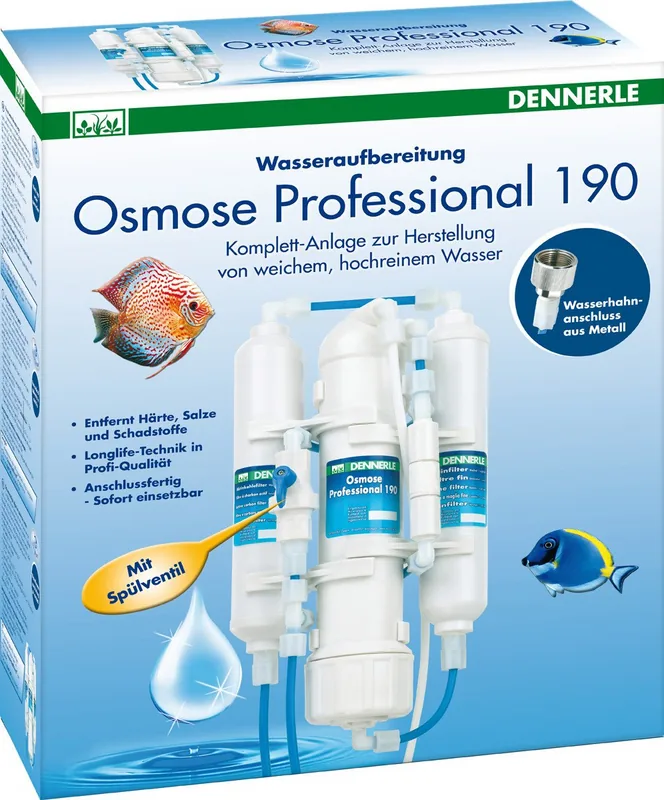
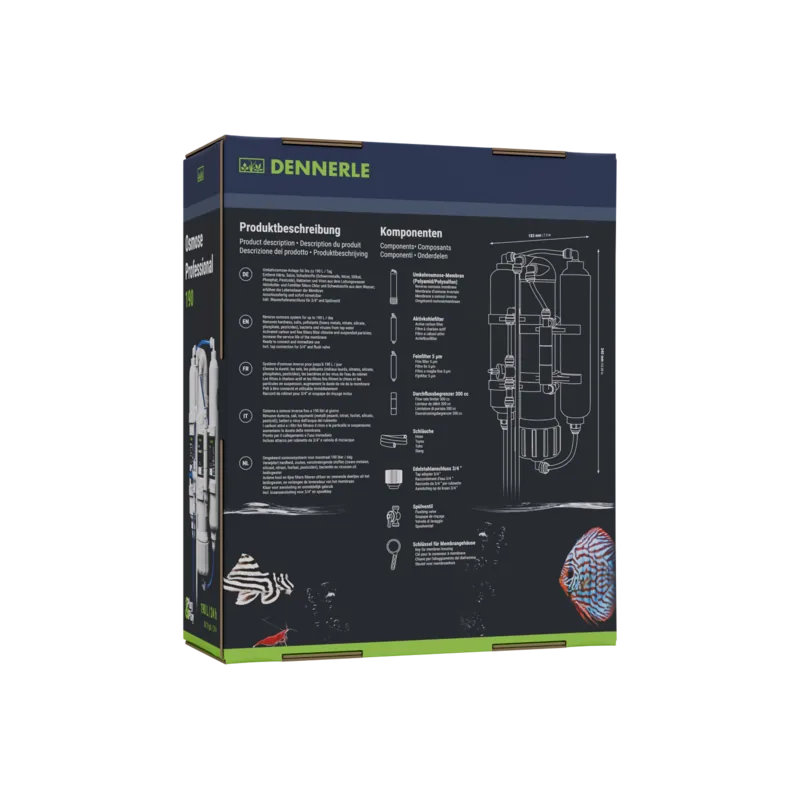
Dennerle Osmosis Professional 190 Manual
PDF manual · 17 Pages
English



Quick check
Incorrect answer, please try again.
Chat with your Dennerle Osmosis Professional 190 manual using AI
Get instant AI answers from your Dennerle Osmosis Professional 190 manual
Ask anything about the Dennerle Osmosis Professional 190. Answers come from this manual, with the pages they are based on.
Osmosis Professional 190 Maintenance Schedule
Open flushing valve and rinse for 15 minutes every 4 weeks if total hardness is under 7 degrees dH.
Open flushing valve and rinse for 15 minutes every 3 weeks if total hardness is 7 to 14 degrees dH.
Open flushing valve and rinse for 15 minutes every 2 weeks if total hardness is 14 to 21 degrees dH.
Open flushing valve and rinse for 15 minutes every week if total hardness is over 21 degrees dH.
Rinse the membrane for 1 minute before and after each osmosis water production cycle.
Replace the active carbon filter every 6 months if tap water smells strongly of chlorine.
Replace the fine filter once a year or more often if flow rate drops below 1 liter per minute.
Replace the active carbon filter once a year if tap water is not heavily chlorinated.
Free maintenance reminders
Timed to your purchase date. Always free, unsubscribe anytime.
Ask a Question
Do you recommend Osmosis Professional 190?
Yes NoFrequently Asked Questions
The unit can produce up to 190 liters per day at optimal conditions of 25 degrees Celsius and 4 bar pressure. Under practical conditions, output ranges from 100 to 170 liters daily depending on temperature and pressure variables.
Is this answer helpful?
The fine filter and active carbon filter should generally be replaced once per year. If water quality is poor or chlorine content is high, replace the carbon filter every six months to prevent damage to the membrane.
Is this answer helpful?
No. The device is designed for tap water conforming to drinking water norms. Well or spring water contains high iron levels which will clog the membrane within a short time, rendering the system unusable.
Is this answer helpful?
The osmosis system carries a 36 month warranty period for the unit. The membrane itself is a wearing part with a 6 month warranty. Claim requires proof of purchase and proper usage conditions.
Is this answer helpful?
Yes. Osmosis water is very pure and lacks buffering capacity needed for stable pH levels. You should add specific minerals or mix with tap water before using it in an aquarium for long term fish health.
Is this answer helpful?
After installation, run the system for 2 to 3 hours. The water produced during this time contains preservatives and must be drained away. Do not use this initial water for your aquarium or fish.
Is this answer helpful?
Advantages and Disadvantages
Advantages

- Produces up to 190 liters of 95% pure water daily
- Modern membrane lasts 3-8 years with proper maintenance
- Integrated flushing valve simplifies routine cleaning tasks
- Wall mounting brackets allow space saving installation
- High purity water suitable for sensitive fish species
Disadvantages

- Requires minimum 3 bar water pressure to operate correctly
- Residual water constitutes 4 times more volume produced
- Filters must be replaced annually for peak efficiency
- Cannot be used with well water due to iron content
- Membrane must remain moist during long shutdown periods
Product Specification
Category
Reverse Osmosis, Water Treatment
Type
Reverse Osmosis System
Specifications
50.19 Gal/d, Rejection Rate >95%, Waste Water Ratio 1:4
Suitability
Freshwater, Seawater
Consumables
Replacement Membrane (Dennerle 7028), Fine Filter (Dennerle 7023), Activated Carbon Filter (Dennerle 7027)
Power Consumption
N/A
Manufacturer Warranty
3 Years
Product Description
Transforming Aquarium Water Quality
Maintaining a healthy aquarium starts with pristine water. The Dennerle Osmosis Professional 190, 190l Manual highlights the capabilities of this advanced reverse osmosis system. It transforms hard tap water into soft, highly pure liquid ideal for sensitive fish. This unit relies on a precision membrane that filters out harmful substances like heavy metals, nitrates, and salts with at least 95 percent efficiency. By removing bacteria and viruses, aquarists gain control over water chemistry.
Advanced Filtration Technology
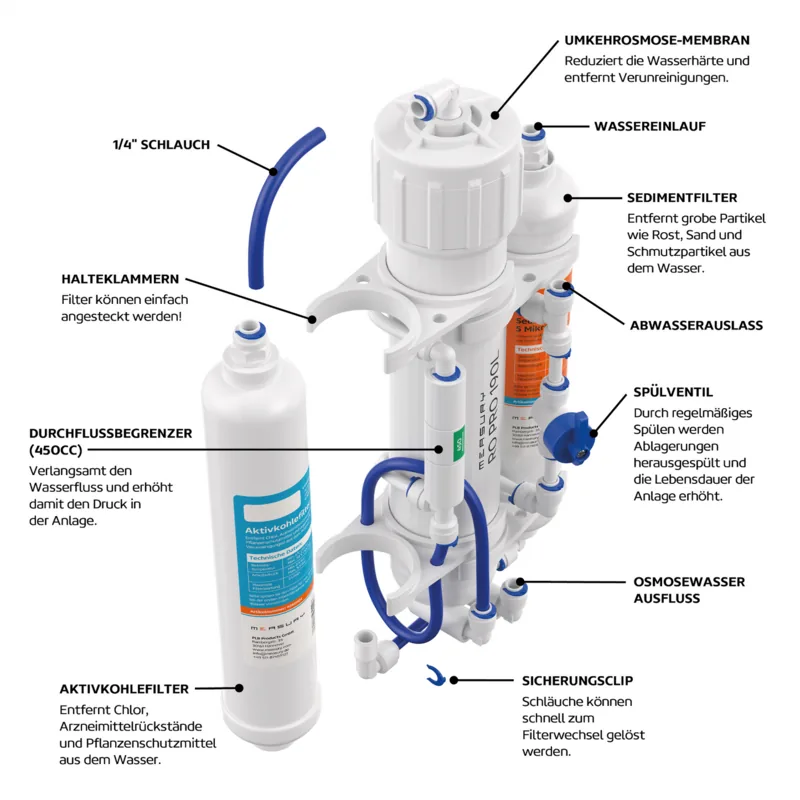
The system features a standard fine filter with 5 microns to catch particles and an active carbon filter to protect against chlorine. A precision flow restrictor ensures a 1 to 4 ratio between produced osmosis water and remaining wastewater. This optimization extends the membrane lifespan significantly for years. You should store all parts away from direct sunlight or freezing temperatures to maintain performance. The design includes wall mounting brackets for secure placement. Proper drainage underneath is essential to prevent water damage from leaks. Operating pressure must be between three and six bar for best results.
Ideal for Demanding Species
Osmosis water is practically pure but lacks buffering capacity. Therefore, mineralization is often necessary to stabilize pH levels. Users appreciate the flexibility to mix this water with tap water or add DENNERLE ReMineral+ for specific needs. Whether keeping discus or marine fish, the water parameters become adjustable to natural habitats. The machine produces up to one hundred ninety liters per day under optimal pressure conditions. Practical output ranges from one hundred to one hundred seventy liters daily depending on ambient temperature.
Maintenance and Setup
Installation involves wall mounting using provided brackets and connecting to a standard cold water tap. Regular flushing using the integrated valve prevents lime scale buildup on the membrane. Spare parts like filters and membranes are easily accessible. Always ensure hoses remain straight and drains are free flowing. The device comes with a three year warranty for the unit itself. Membrane replacement is required if conductivity exceeds twenty five percent of tap water levels. Filters should change annually to maintain efficiency. Always check for leaks at fittings and hose connections immediately after setup. Ensure Teflon tape is used correctly on threads to prevent seepage issues later on. The flow rate may vary slightly based on seasonal pressure changes at your home supply. Adhering to these guidelines keeps the system running smoothly for years.
Usage Tips
During initial activation, run the water for two hours to remove preservatives. Residual water can be repurposed for cleaning or gardening. Avoid using well water due to potential iron content clogging the system. Keep the membrane moist during long periods of inactivity. This robust equipment ensures consistent water quality for your aquatic environment. Routine checks on valve functionality ensure longevity. Water temperature should stay below twenty five degrees Celsius.
Search for 67,706 Manuals online


Type-in Brand or Model