
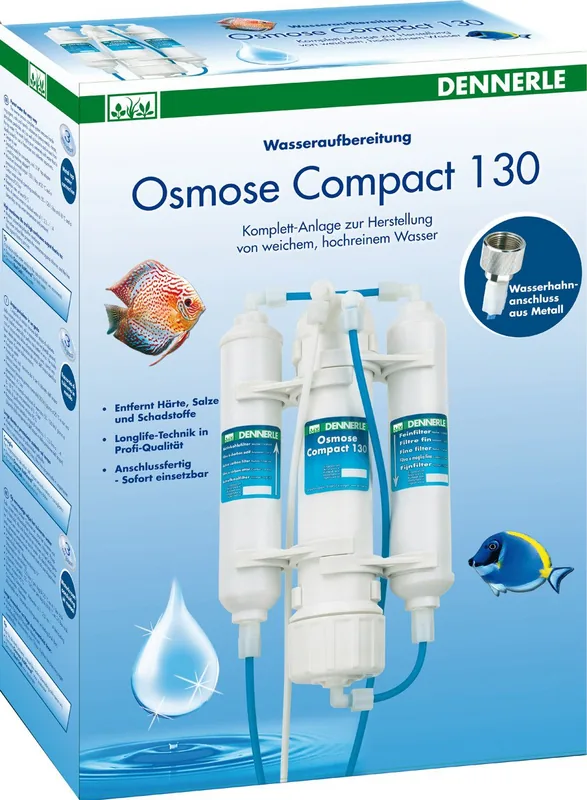
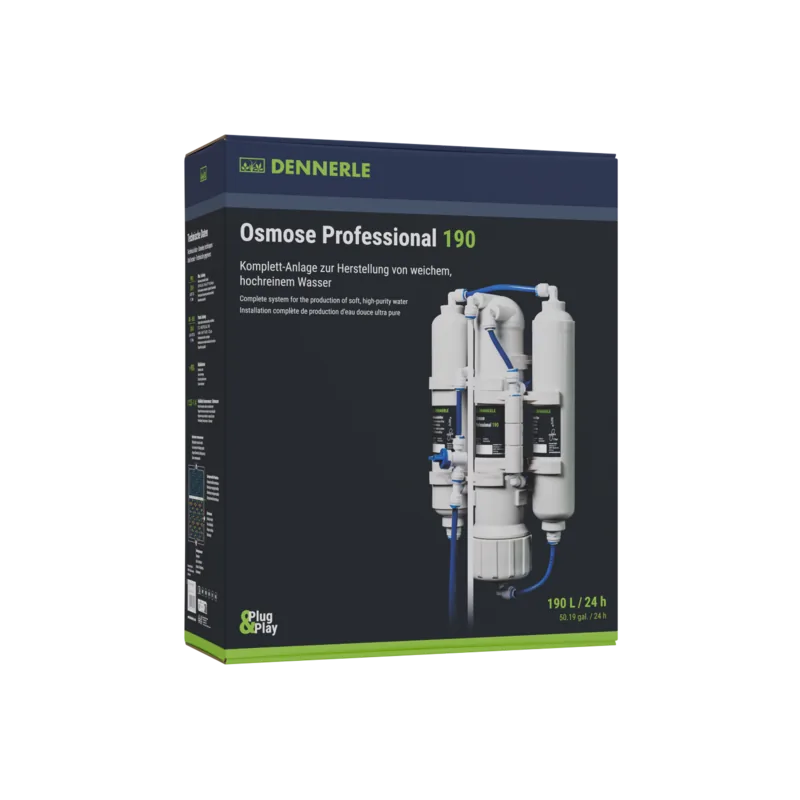
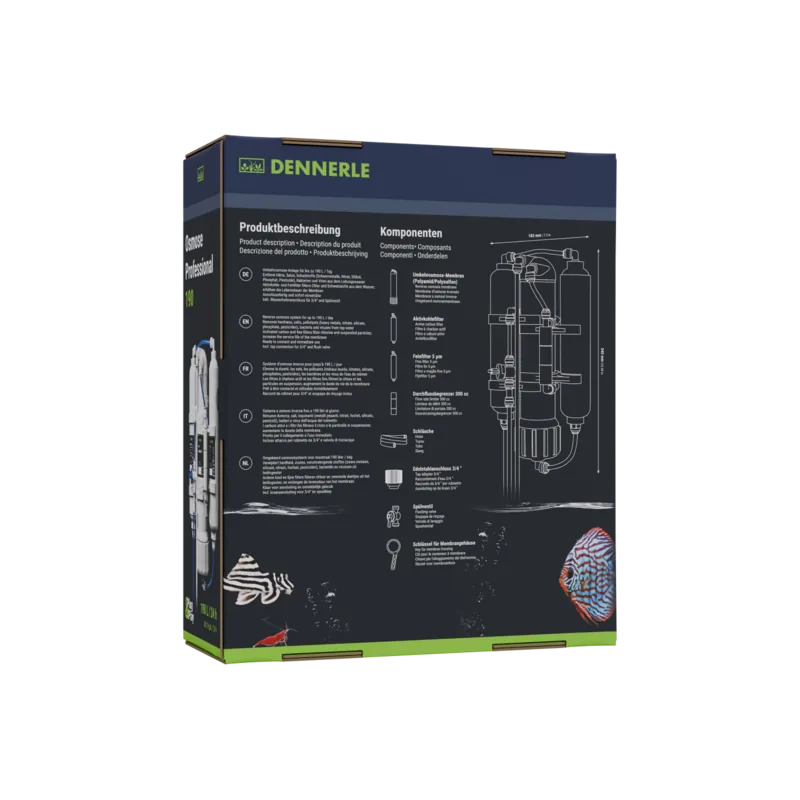
Dennerle Osmosis Compact 130 Manual
PDF manual · 17 Pages
English


Quick check
Incorrect answer, please try again.
Chat with your Dennerle Osmosis Compact 130 manual using AI
Get instant AI answers from your Dennerle Osmosis Compact 130 manual
Ask anything about the Dennerle Osmosis Compact 130. Answers come from this manual, with the pages they are based on.
Osmosis Compact 130 Maintenance Schedule
Open tap and rinse for 15 minutes if total hardness is above 21 degrees.
Open tap and rinse for 15 minutes if total hardness is between 14 and 21 degrees.
Open tap and rinse for 15 minutes if total hardness is between 7 and 14 degrees.
Open tap and rinse for 15 minutes if total hardness is below 7 degrees.
Replace every 6 months if tap water is heavily chlorinated.
Replace annually or more often if water quality is poor or flow drops below 1 liter per minute.
Replace once a year under normal conditions.
Free maintenance reminders
Timed to your purchase date. Always free, unsubscribe anytime.
Ask a Question
Do you recommend Osmosis Compact 130?
Yes NoFrequently Asked Questions
The system produces up to 130 liters daily at optimal temperatures. In practice, expect 70-120 liters.
Is this answer helpful?
No, the manual specifies tap water only to avoid iron clogging the membrane.
Is this answer helpful?
Pre-filters should be replaced annually, or more often if water quality is poor.
Is this answer helpful?
Check pressure, kinked hoses, or a blocked fine filter before replacing the membrane.
Is this answer helpful?
Yes, osmosis water has no minerals, so use ReMineral+ before adding fish.
Is this answer helpful?
It is enclosed in a housing with active carbon and fine filters for protection.
Is this answer helpful?
The system has a 36-month warranty, while the membrane has six months.
Is this answer helpful?
Advantages and Disadvantages
Advantages

- High removal rate of contaminants exceeding 95 percent for safe fishkeeping.
- Extended membrane lifespan of three to eight years with proper care.
- Includes precise flow restrictor to balance water production and efficiency.
- Versatile residual water usage for cleaning or watering household plants.
- Simple maintenance with easy accessible filter replacement steps.
Disadvantages

- Requires minimum water pressure of 3 bar to operate correctly.
- Membrane must not dry out during long periods of inactivity.
- Fine filter maintenance is needed annually to prevent flow restriction.
- Not suitable for well water or spring water due to iron content risks.
- Initial cost includes regular filter and membrane replacements over time.
Product Specification
Category
Reverse Osmosis, Water Purification
Type
Reverse Osmosis System
Specifications
34.34 US gal/day, Rejection Rate >95%, Waste Water Ratio 1:4
Application
Freshwater, Seawater
Consumables
Replacement Membrane (Dennerle 7022), Fine Filter (Dennerle 7023), Activated Carbon Filter (Dennerle 7027)
Energy Consumption
N/A
Manufacturer Warranty
3 years
Product Description
Transform Your Aquarium Water Quality
Achieving the perfect aquatic environment requires more than just filtering; it demands precision purity. The Dennerle Osmosis Compact 130, 130l system delivers exceptionally soft, highly pure water by utilizing advanced reverse osmosis technology. This process forces tap water through a specialized membrane with ultrafine pores, allowing only water molecules to pass while blocking harmful substances. As a result, contaminants such as heavy metals, nitrates, phosphates, and pathogens are reduced by at least 95 percent.
Understanding the Filtration System
This unit features a robust filtration setup designed to protect the core membrane. A standard fine filter with a 5-micrometer pore size removes sediment, while the active carbon filter safeguards against aggressive chlorine which could otherwise damage the sensitive membrane. A precision flow restrictor maintains an optimal ratio of one part osmosis water to four parts residual water. This balance ensures extended membrane life and efficient daily production, reaching up to 130 liters per day under ideal conditions.
Maintenance and Care
Proper maintenance is key to longevity. The membrane typically lasts between three and eight years depending on water quality and pressure. Regular rinsing removes lime scale buildup on the membrane surface, preventing premature failure. Owners who treat the setup procedures seriously, often referencing the details found in the Dennerle Osmosis Compact 130, 130l Manual content, extend equipment life significantly. It is crucial to avoid using the unit with well water or spring water due to high iron content risks. If output drops, check pressure or kinked hoses first.
Versatility for Fish and Plants
The resulting water is virtually free of impurities but lacks necessary minerals. This allows hobbyists to control hardness levels precisely by mixing with tap water or adding DENNERLE Osmose ReMineral+. This flexibility supports sensitive species like Discus or marine fish that require specific water parameters. The residual water is not wasted and can be repurposed for cleaning or gardening, making the system economical and eco-friendly. Whether keeping colorful tropicals or delicate shrimp, the water quality produced here supports life.
Conclusion
Selecting a high-quality osmosis unit provides peace of mind regarding water safety. The durability of the polyamide and polysulfone membrane resists bacterial decomposition effectively. For those maintaining demanding aquariums, having control over water chemistry is paramount. By adhering to maintenance schedules and understanding the technical capabilities, aquarists ensure their stock thrives.
Search for 67,706 Manuals online


Type-in Brand or Model
Thomas Klein
8 months ago
How long does it take to produce water with hard water, and is it cheaper than buying bottled water?
Manual.ly
8 months ago
For hard water around 10 KH, production takes approximately 2 hours to generate 5 liters of osmosis water. The concentrate is suitable for plants. Users find it far more economical than buying water, often paying 18 cents per liter previously. With travel costs factored in, the unit pays for itself quickly.