
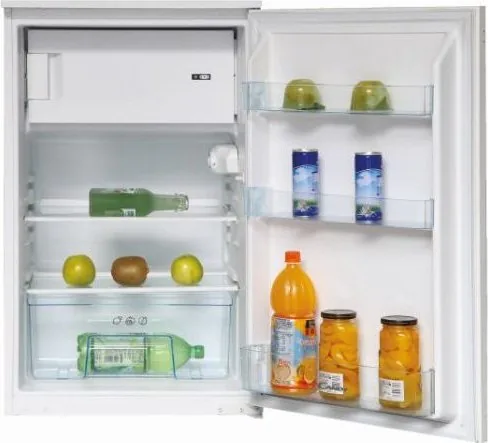
Candy CBO 150 NE/N Manual
PDF manual · 120 Pages
English



Quick check
Incorrect answer, please try again.
Chat with your Candy CBO 150 NE/N manual using AI
Get instant AI answers from your Candy CBO 150 NE/N manual
Ask anything about the Candy CBO 150 NE/N. Answers come from this manual, with the pages they are based on.
CBO 150 NE/N Maintenance Schedule
Unplug appliance, remove food, leave door open to melt ice. Dry interior and reconnect. Do not use sharp objects or heat sources.
Keep the drainage pipe clean to prevent water accumulation at the bottom of the fridge compartment.
Vacuum the rear area after unplugging the appliance to maintain energy efficiency and prevent overheating.
Wipe with warm water and baking soda or neutral soap. Do not use solvents, ammonia, bleach, or abrasives.
Ask a Question
Do you recommend CBO 150 NE/N?
Yes NoFrequently Asked Questions
If transported horizontally, wait at least four hours. If moved vertically, wait at least two to three hours to allow the compressor oil to settle.
Is this answer helpful?
No, do not store medicines or research materials here. They require strict temperature control which this unit may not provide, risking deterioration.
Is this answer helpful?
Frost is normal in static freezers. Defrost manually when the layer exceeds three millimeters to improve energy efficiency and cooling performance.
Is this answer helpful?
Yes, the door can be reversed to open from the left or right, but this must be done by qualified technical personnel.
Is this answer helpful?
Do not open the lid immediately. If the outage lasts under 20 hours, food remains safe. If longer, check food and consume or cook it promptly.
Is this answer helpful?
No, do not use extension cords or adapters. Plug directly into a grounded socket to ensure safety and proper voltage supply.
Is this answer helpful?
Advantages and Disadvantages
Advantages

- Eco-friendly refrigerant gas (R600a) reduces environmental impact
- LED lighting offers long life and energy efficiency
- Simple mechanical thermostat is durable and easy to use
- Automatic defrosting saves time in the refrigerator compartment
- Reversible door allows flexible installation in various kitchens
Disadvantages

- Manual defrosting required for the freezer compartment if frost exceeds 3mm
- No digital display for precise temperature monitoring
- Requires a waiting period after transport before initial use
- Not suitable for commercial retail sales environments
- Warranty void if used outside of residential or similar approved settings
Product Specification
Type
integrated
Energy efficiency class
F (A to G)
Energy consumption
194.3 kWh/year
Front color
white
Usable volume cooling zone
26.4 gal
Usable volume freezing zone
4.2 gal
Total usable volume
30.7 gal
Star rating
4
Freezing capacity in 24h
4.4 lbs
Storage time during malfunction
11 hours
Display
no
Features
vegetable compartment, LED lighting
Climate class
N
Sound level
39 dB(A)
Airborne sound emission class
C (A to D)
Door system
right-hand door swing
Dimensions
21.3x34.3x21.5 inches (WxDxH)
Product Description
Candy CBO 150 NE/N: Your Ultimate Cooling Companion
Welcome to the world of efficient cooling with the Candy CBO 150 NE/N. This appliance is designed specifically for households and similar environments like small offices, farmhouses, hotels, and bed and breakfasts where reliable food storage is essential. It serves as a dedicated unit for preserving the freshness of your groceries, ensuring that your fruits, vegetables, and frozen goods remain in perfect condition.
The Candy CBO 150 NE/N features a robust design that prioritizes safety and performance. Inside, you will find a sophisticated refrigeration system utilizing eco-friendly gases like isobutane R600a and cyclopentane. These components work together to maintain optimal temperatures while being kind to the environment. The unit includes both a refrigerator compartment and a freezer section, offering versatile storage solutions for all your culinary needs.
Operating this device is straightforward even without a digital display. A simple mechanical thermostat knob allows you to adjust the temperature settings based on the season or ambient conditions. Whether it is the heat of summer or the chill of winter, you can easily switch between positions to ensure your food stays fresh. The appliance also comes equipped with LED lighting, providing bright illumination inside while consuming less energy than traditional bulbs.
Maintenance is hassle-free thanks to automatic defrosting in the refrigerator compartment. The freezer requires manual defrosting only when frost buildup exceeds three millimeters, a process that is quick and easy to perform. Regular cleaning with mild soap and water keeps the interior hygienic, while keeping the rear dust-free ensures maximum efficiency. Always remember to store food properly, avoid placing hot items inside, and keep doors closed to save energy.
This product is built for longevity and reliability. It complies with strict European safety standards regarding electrical equipment and waste management. If you need to leave the appliance unused for an extended period, simply turn it off, clean it thoroughly, and leave the doors open to prevent odors. With its reversible door option, you can customize the opening direction to fit your kitchen layout perfectly.
Important Notes
- Do not use sharp objects to remove ice from the freezer.
- Wait at least four hours after transport before plugging in the unit.
- Keep the ventilation grilles clear of obstructions.
- Do not store flammable materials near the appliance.
- Ensure the power cord is not damaged or pinched.
Search for 67,706 Manuals online


Type-in Brand or Model