
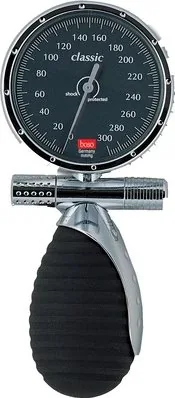
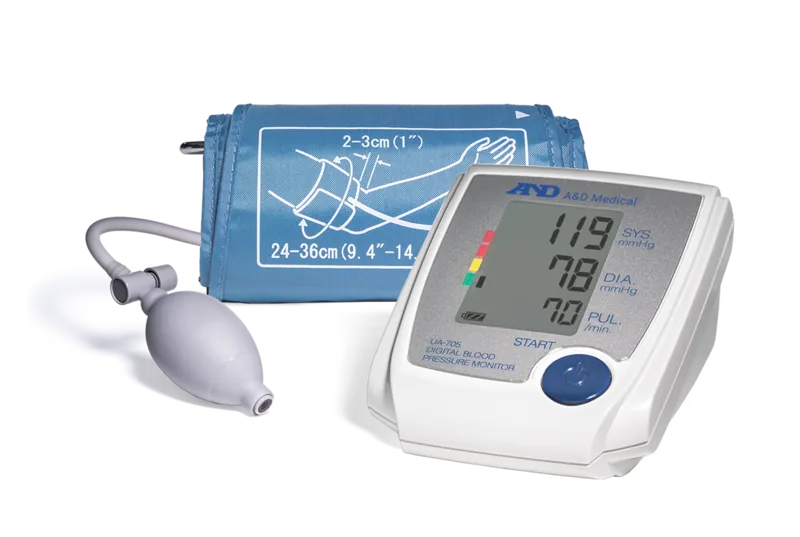
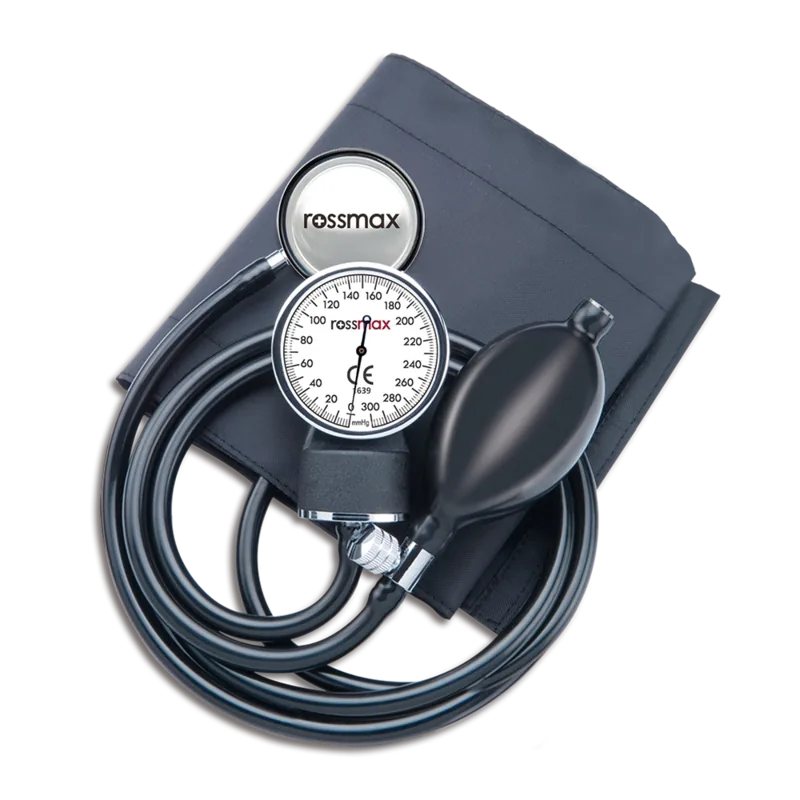
Boso Classic Privat Manual
PDF manual · 25 Pages
English



Quick check
Incorrect answer, please try again.
Chat with your Boso Classic Privat manual using AI
Get instant AI answers from your Boso Classic Privat manual
Ask anything about the Boso Classic Privat. Answers come from this manual, with the pages they are based on.
Classic Privat Maintenance Schedule
The device must undergo a metrological check at least every 2 years by the manufacturer or authorized service providers.
Disinfect the device (wipe, min. 5 min exposure) and the cuff (spray) after each measurement on a patient.
Free maintenance reminders
Timed to your purchase date. Always free, unsubscribe anytime.
Ask a Question
Do you recommend Classic Privat?
Yes NoDo you recommend Classic Privat?
Yes NoFrequently Asked Questions
A metrological check ensures accuracy compliance with regulations. This can be done by the manufacturer or authorized service providers.
Is this answer helpful?
No, do not change medication dosage without doctor advice. Self-measurement does not equate to therapy.
Is this answer helpful?
The device measures from 0 to 300 mmHg with an accuracy of plus or minus 3 mmHg or 2 percent of the reading.
Is this answer helpful?
Wipe the device with a soft dry cloth. Remove the rubber bag from the cuff to wash the cover by hand at max 30 degrees centigrade.
Is this answer helpful?
We provide a three-year quality warranty from the date of purchase. Proof of purchase must be shown for claims.
Is this answer helpful?
Yes. Do not measure on fresh wounds, venous access, or lymphedema areas like after mastectomy.
Is this answer helpful?
The measuring time should not exceed 2 minutes. A break of at least 2 minutes is needed between two measurements.
Is this answer helpful?
Advantages and Disadvantages
Advantages

- High accuracy analog reading without battery dependence
- Durable construction with 3 year quality warranty
- Includes integrated stethoscope for auscultation
- Complies with ISO 81060-1 international standards
- Simple cleaning and maintenance procedures
Disadvantages

- Requires manual skill to operate correctly
- No memory storage for past readings
- Cuff must match arm circumference exactly
- Manual inflation requires physical effort
- Reading depends on user vision and skill
Product Specification
Operating Mode
without Battery
Measurement Type
Upper Arm
Analysis Data
Systolic, Diastolic
Memory Function
No
Display
No
Product Description
Monitoring Health with Precision
Taking control of your cardiovascular health begins with reliable equipment. The Boso Classic Private Analog Blood Pressure Monitor stands out as a trusted companion for individuals seeking precise measurements without digital complexity. This device utilizes traditional auscultatory methods, ensuring accuracy through mechanical precision rather than electronic sensors that may drift over time. Designed for home use, it includes a stethoscope integrated directly onto the cuff, streamlining the process for users familiar with manual pressure assessment techniques.
Health professionals often recommend analog monitors for their robustness and clarity. The gauge provides a clear view of systolic and diastolic readings, eliminating confusion associated with digital screens that might flash errors. With a pressure range extending up to 300 mmHg and an accuracy within plus or minus 3 mmHg, this monitor offers reliability suitable for tracking hypertension or hypotension trends. The accompanying carrying case ensures your equipment stays protected and organized, ready for transport or travel to doctor visits.
Proper usage is key to success with this analog system. Users must inflate the cuff manually and listen for Korotkoff sounds to determine the correct blood pressure value. It is important to measure in a seated position with arms supported and legs uncrossed. Avoid crossing your legs during measurement to ensure circulation remains unobstructed. Regular monitoring helps establish a baseline, providing valuable data to share with your healthcare provider. The device complies with international safety standards, giving peace of mind regarding its performance and longevity. Users should not modify the device or accessories to prevent measurement errors.
For those prioritizing accuracy and durability, this analog device remains a gold standard in non-invasive blood pressure assessment. It empowers patients to participate actively in their own care routine with confidence. Remember to consult a physician regarding medication changes based on these home readings. Do not change medication dosage without doctor advice. The machine does not function as therapy but aids in diagnosis. Regular maintenance includes keeping the gauge dry and ensuring the cuff is not damaged by sharp objects like needles or scissors. Cleaning is simple with a cloth for the device and hand washing the cover at low temperatures for the cuff.
The manufacturer provides a three-year warranty against material and manufacturing faults. This coverage reinforces the commitment to quality found in the Bosch and Sohn engineering. By keeping a log of your daily readings, you can spot patterns that might indicate underlying health issues early. Always wait two minutes between measurements to allow circulation to normalize. For accurate results, measure on the arm with higher values consistently. Staying informed and proactive about your vitals is the best way to maintain a healthy lifestyle. Please be aware that environmental factors matter. Store the unit away from strong vibrations and moisture to prevent damage. Temperature extremes can affect performance, so keep it within recommended operating ranges. Do not overinflate beyond 300 mmHg as this may harm the mechanism.
Notes Ensure arm circumference matches the cuff size. Check for pointer alignment before each use. Disinfect after every patient contact.
Search for 67,732 Manuals online


Type-in Brand or Model