
Bosch DIY PMF 220 CE Manual
PDF manual · 120 Pages
English



Quick check
Incorrect answer, please try again.
Chat with your Bosch DIY PMF 220 CE manual using AI
Get instant AI answers from your Bosch DIY PMF 220 CE manual
Ask anything about the Bosch DIY PMF 220 CE. Answers come from this manual, with the pages they are based on.
PMF 220 CE Maintenance Schedule
Keep the machine and ventilation slots clean to ensure safe and proper operation.
Clean Riff application tools regularly using a wire brush to maintain performance.
Ask a Question
Do you recommend PMF 220 CE?
Yes NoFrequently Asked Questions
It is a multi-function DIY tool for sawing, cutting, sanding, and scraping. It works well on wood, plastic, drywall, soft tiles, and non-ferrous metals, especially in tight or hard-to-reach areas.
Is this answer helpful?
Yes, it is beginner-friendly when used with the correct accessory and speed setting. Features like soft start and variable speed help improve control, but safe mounting and proper technique still matter.
Is this answer helpful?
Yes. With the right sanding sheet, it can handle paint, varnish, filler, and wood. For best results, use dust extraction and choose the grit based on whether you want coarse removal or fine finishing.
Is this answer helpful?
Yes. It is designed for plunge cuts in suitable materials such as wood and drywall. The depth stop and the right blade help control cut depth and improve accuracy.
Is this answer helpful?
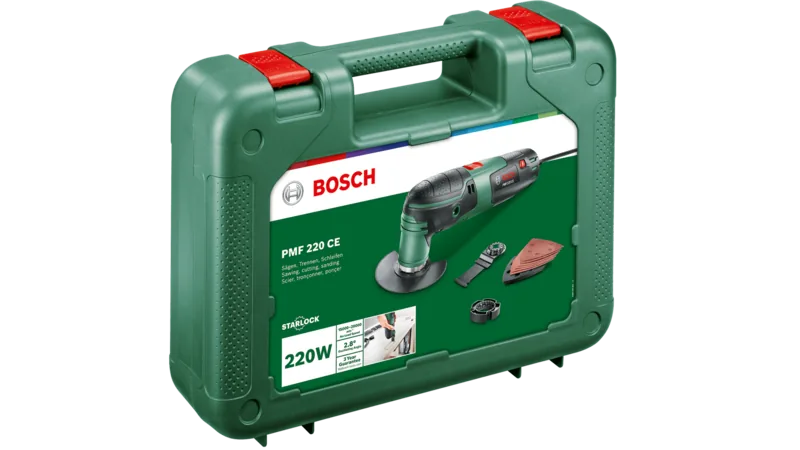
The case makes storage and transport easier and helps keep the tool and accessories organized. It is especially handy for users who move between rooms, sites, or projects often.
Is this answer helpful?
Use the correct accessory, wear protection, and disconnect power before changing parts. For sanding, connect dust extraction. The tool should be used dry only, and blades must be firmly secured.
Is this answer helpful?
Advantages and Disadvantages
Advantages

- Versatile tool for sawing, sanding, cutting, and scraping in one compact unit.
- Good for edge work, corners, and narrow spaces where standard tools struggle.
- Variable speed and soft start improve control and help match the task.
- Case included for easier storage, transport, and organization of accessories.
Disadvantages

- Best for small to medium DIY tasks, not heavy-duty continuous demolition.
- Some jobs require buying extra accessories to unlock the tool’s full range.
- Dust extraction is mainly useful for sanding, so not every attachment benefits from it.
- Careful setup is needed because the performance depends on correct blade and accessory choice.
Product Specification
Power
220 W
No-load speed
15000-20000/min
Oscillation angle
2.8 degrees left/right
Tool holder
Starlock, Hexagon socket
Features
Speed control, Constant electronics, Depth stop, Soft grip
Weight
2.43 lb
Scope of delivery
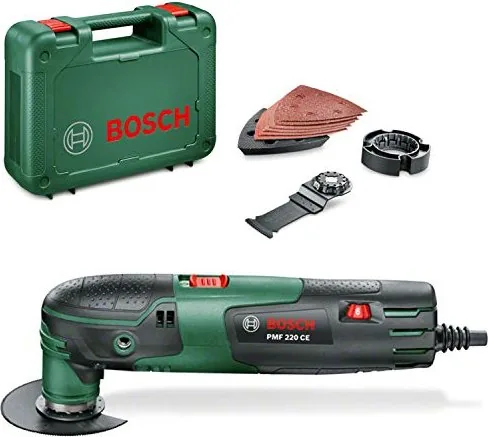
Case, Delta sanding pad, Plunge cut saw blade Wood, Segment saw blade Wood and Metal, Sandpaper set
Product Description
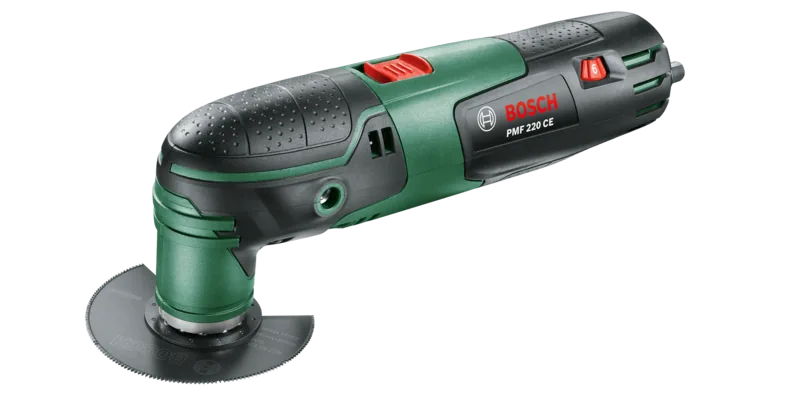
Bosch DIY PMF 220 CE Electric Multi-Function Tool incl. Case
The Bosch DIY PMF 220 CE Electric multi-function tool incl. case is a compact all-rounder built for everyday renovation, repair, and finishing work. Designed for sawing, cutting, sanding, and scraping, it brings several tasks into one handy machine, making it especially appealing for DIY users who want flexibility without filling the workshop with separate tools.
What makes this model stand out is its ability to handle tight spots and edge work with confidence. Whether you are trimming installed skirting boards, making plunge cuts in soft materials, sanding corners, or removing adhesive residue, the tool is made for precision in places that are often awkward to reach. Its oscillating motion helps deliver controlled results, while the variable speed setting lets you match performance to the material at hand.
The tool is also practical in daily use. Soft start improves control when switching on, and constant electronic regulation helps keep performance steady under load. The included case adds convenience for storage and transport, while the accessory system supports a wide range of tasks, from wood and plastic to drywall, soft tiles, and non-ferrous metals. For sanding work, the dust extraction option helps keep the workspace cleaner and makes longer sessions more comfortable.
Safety and comfort are clearly part of the design philosophy. An auxiliary handle can be fitted for better grip and stability, and the machine is intended for dry sanding only, helping reduce risk in operation. The Bosch DIY PMF 220 CE Electric multi-function tool incl. case Manual also emphasizes correct blade selection, secure mounting, and careful use of accessories, which is useful for getting cleaner results and extending tool life.
For homeowners, hobby renovators, and anyone tackling mixed-material projects, this tool offers a smart balance of power, control, and versatility. It is not just about cutting faster; it is about working cleaner, neater, and more confidently across a variety of common jobs.
Notes
- Best suited for detail work, edge finishing, and small renovation tasks.
- Use the right accessory for each material to improve performance.
- Dust extraction is strongly recommended when sanding.
- Check blade and accessory fit before every use.
Search for 67,706 Manuals online


Type-in Brand or Model