
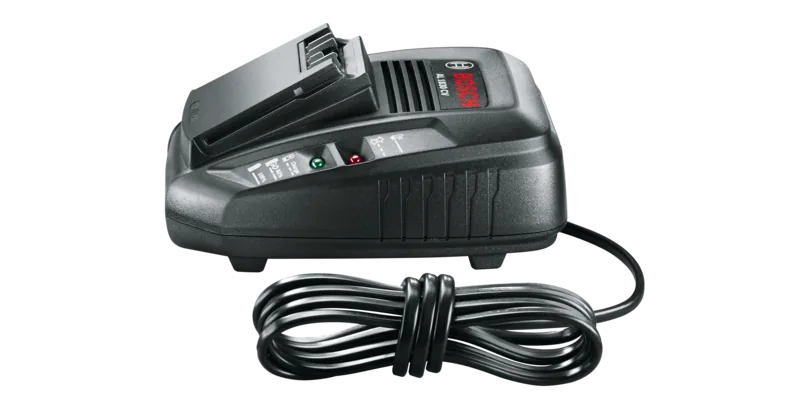
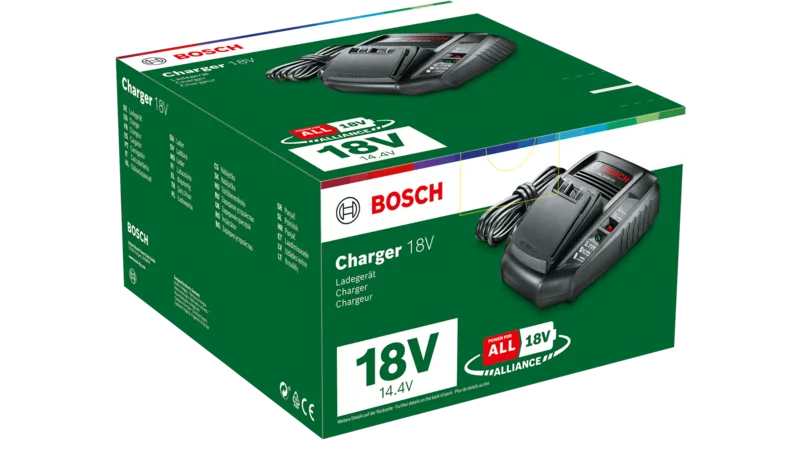
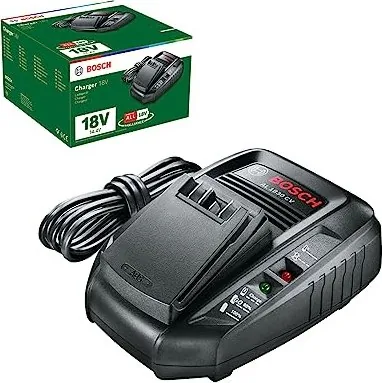
Bosch DIY AL 1830 CV Manual
PDF manual · 222 Pages
English



Quick check
Incorrect answer, please try again.
Chat with your Bosch DIY AL 1830 CV manual using AI
Get instant AI answers from your Bosch DIY AL 1830 CV manual
Ask anything about the Bosch DIY AL 1830 CV. Answers come from this manual, with the pages they are based on.
AL 1830 CV Maintenance Schedule
Check for damage before every use. Do not use if damaged.
Clean dirty contacts by repeatedly inserting and removing the battery or replace the battery if necessary.
Keep the charger clean to avoid the risk of electric shock from dirt.
Ask a Question
Do you recommend AL 1830 CV?
Yes NoFrequently Asked Questions
It is designed for Bosch rechargeable Li-Ion batteries and POWER FOR ALL system batteries in the PBA 18V range, starting from 1.5 Ah and 4 cells. Non-rechargeable batteries should not be charged.
Is this answer helpful?
A fast flashing green indicator means rapid charging is active. The charger automatically adjusts current based on battery temperature and voltage for efficient charging.
Is this answer helpful?
Yes. When the green light flashes slowly, the battery is typically around 80% charged and can be removed for immediate use if needed.
Is this answer helpful?
A steady red light usually means the battery temperature is outside the allowed charging range. A flashing red light points to another charging problem, such as poor contact or a faulty battery.
Is this answer helpful?
Common reasons include incorrect battery placement, dirty contacts, a defective battery, or a loose power connection. Re-seat the battery, clean the contacts, and check the mains plug and outlet.
Is this answer helpful?
Yes. The charger is designed to keep a compatible battery fully charged when stored in it, so it can remain connected as long as the battery and charger are in proper condition.
Is this answer helpful?
Advantages and Disadvantages
Advantages

- Automatic charging adjusts to battery voltage and temperature for better battery care.
- Clear LED indicators make charging status easy to read at a glance.
- Compatible with Bosch Li-Ion and POWER FOR ALL PBA 18V batteries.
- Lightweight, compact, and easy to use in home workshops or garages.
Disadvantages

- Works only with specific Bosch-compatible rechargeable batteries.
- Charging speed is moderate compared with higher-output Bosch chargers.
- Battery temperature limits can pause or delay the charging process.
- No advanced display or extra smart features beyond basic charge indicators.
Product Specification
Type
Charger
Suitable for
Bosch DIY
Battery voltage
14.4-18V
Battery type
Li-Ion
Weight
0.88 lb
Product Description
Bosch DIY AL 1830 CV Charger: Practical Power for Bosch 18V Batteries
The Bosch DIY AL 1830 CV Charger is a compact and dependable charging solution built for everyday Bosch users who want steady performance without unnecessary complexity. If you are looking for the Bosch DIY AL 1830 CV Charger Manual, the key message is simple: this charger is designed to keep compatible Bosch Li-Ion batteries ready for work, whether you are maintaining tools at home or powering through a weekend project.
One of the charger’s strongest qualities is its intelligent charging approach. It automatically detects the battery condition and adjusts the charging current to match the battery’s voltage and temperature. That means the charging process is not only efficient, but also kinder to the battery over time. For users who rely on Bosch 18V tools, this is a useful balance between speed, safety, and battery care.
The AL 1830 CV supports Bosch Li-Ion batteries and POWER FOR ALL system batteries in the PBA 18V range, making it a practical fit for many DIY setups. The LED indicators keep things easy to understand: a fast green light means rapid charging, a slow green light shows the battery is around 80% ready, and a steady green light confirms a full charge. A red light can point to temperature limits or another charging issue, so the status is always visible at a glance.
With its lightweight build and straightforward design, this charger is easy to store, move, and use in a small workshop or garage. It is also built with safety in mind, including protection against improper use, overheating risks, and unsuitable battery types. That makes it a sensible everyday accessory for Bosch tool owners who want reliable charging with minimal fuss.
Notes
- Use only compatible Bosch Li-Ion or POWER FOR ALL 18V batteries.
- Keep the charger dry, clean, and well ventilated.
- A battery can often be removed once it reaches about 80% charge.
- If charging stops, check battery placement, contacts, and temperature.
Search for 67,706 Manuals online


Type-in Brand or Model
oebert60
7 months ago
The charger works great, but why does Bosch save the front or rear contacts on the new batteries so I need a new charger even with compatible batteries? Can I still charge my older Bosch batteries with this model?
Manual.ly
7 months ago
Thanks for the feedback. Bosch can use different contact and battery-series designs between charger and battery generations. Even if batteries look similar, a charger may only work with batteries that match its specific contact layout and safety electronics. For best results, check the battery series and compatibility information for both your battery and charger model number. If your older battery does not match, you will typically need the corresponding charger for that battery series. If you share the exact battery and charger model numbers, our team can help confirm which combination is compatible and what the correct replacement option is.