
Batavia Giraffe Air Manual
PDF manual · 128 Pages
English



Quick check
Incorrect answer, please try again.
Chat with your Batavia Giraffe Air manual using AI
Get instant AI answers from your Batavia Giraffe Air manual
Ask anything about the Batavia Giraffe Air. Answers come from this manual, with the pages they are based on.
Giraffe Air Maintenance Schedule
Carry out a sight check of the ladder for damage and safe use at the beginning of every workday in which the ladder must be used.
Remove contaminants such as dirt, paint residues, oil or snow from rungs and beams after each use and before retracting the ladder.
Retract the ladder completely after every use and secure it with the aid of the strap to prevent accidental extension.
Ask a Question
Do you recommend Giraffe Air?
Yes NoFrequently Asked Questions
The ladder supports a maximum load of 150 kg including the user weight. Do not exceed this limit for safety.
Is this answer helpful?
Pull rungs up from bottom for partial heights. Pull from top for full length to lock sections correctly.
Is this answer helpful?
Maintain an inclination angle between 65 and 75 degrees to ensure stability and prevent tipping risks.
Is this answer helpful?
No, it is made of conductive aluminum material. Do not use near live power lines or voltage.
Is this answer helpful?
Use a damp cloth and mild soap. Avoid harsh chemicals or metal brushes that damage surfaces.
Is this answer helpful?
Only one person is permitted on the climbable side of the ladder at any given time.
Is this answer helpful?
Store in a dry location. Keep away from children and direct sunlight to prevent damage.
Is this answer helpful?
Advantages and Disadvantages
Advantages

- TUV Rheinland certification ensures high safety standards for professional use
- Adjustable angle indicator helps maintain correct 65 to 75 degree positioning
- High 150 kg load capacity supports heavy tools plus user
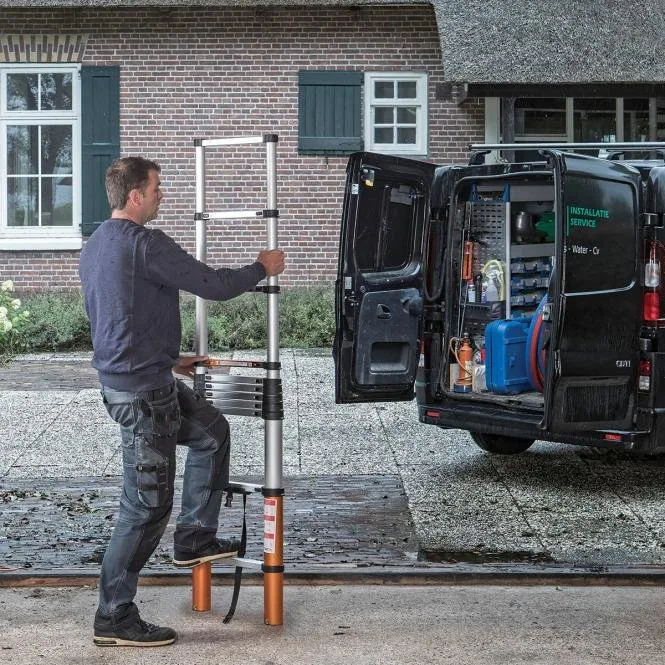
- Compact retracted size fits easily in vehicle transport areas
- Includes locking mechanism to secure rungs during extension
Disadvantages

- Only one user is permitted on the ladder at any time
- Requires manual assembly of support feet before initial use
- Conductive material cannot be used for live electrical work tasks
- Must be stored dry to prevent metal corrosion over time
- Retracting requires careful finger placement to prevent crushing injuries
Product Specification
Type
Telescopic Ladder
Material
Aluminum
Platform Height
None
Load
max. 330.69 lbs
Product Description
Discover the Power of the Batavia Giraffe Air Telescopic Ladder
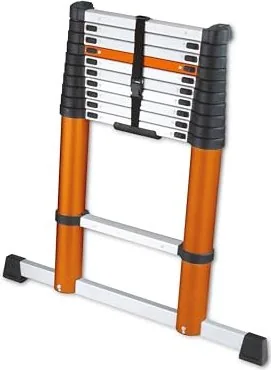
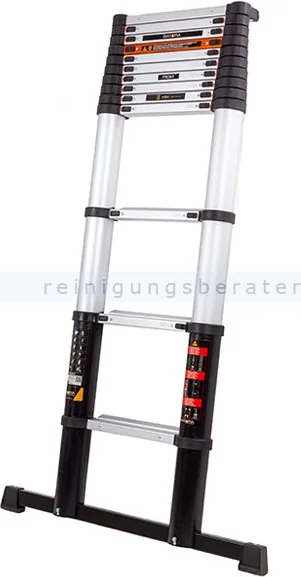
When working at heights, safety and efficiency are paramount for any professional or homeowner. The Batavia Giraffe Air Telescopic Ladder stands out as a modern solution designed to save space while providing exceptional reach. This sturdy aluminum ladder is engineered to reach significant heights safely while maintaining portability for easy transport. With a maximum extended length of 3.81 meters, it provides ample reach for various tasks around the home or on the construction site.
Safety Features That Build Trust in the Ladder
Safety is the top priority when using any climbing aid. Always read the Batavia Giraffe Air Telescopic Ladder Manual before starting. This ladder features a built-in angle indicator to ensure the correct inclination is maintained during operation. You must set it up between 65 and 75 degrees to prevent tipping hazards. The TUV Rheinland certification confirms it meets strict European safety standards. It supports a maximum load of 150 kg, which includes the weight of one person climbing at a time. Always check the rungs are locked before use. The locking device turns red when secure, preventing accidental collapse during operation.
Easy Operation and Maintenance for Longevity
Extending the ladder is straightforward once you understand the mechanism. For partial lengths, pull from the bottom up until the desired height. For full extension, pull from the top down rung by rung. Retracting requires pressing unlock keys on the rungs carefully. Ensure fingers are clear to avoid pinching during the process. Cleaning is simple with a damp cloth and mild soap. Do not use harsh chemicals that might damage the aluminum surface. Store it dry and secured with the included strap to prevent accidental extension.
Practical Storage and Transport Solutions
Transport requires the ladder to be fully retracted. Secure it with the supplied strap to keep it compact. Store the ladder in a location out of reach of children. Do not leave it exposed to direct sunlight for long periods. Always hang it or place it flat to maintain structural integrity. This ensures the ladder remains in perfect condition for future use. The compact design makes it ideal for vans or garages.
Electrical Hazards and Weather Conditions
Be aware of electrical hazards when working near power lines. The ladder is made of conductive material. Do not use it for live electrical work. Avoid using the ladder outdoors during adverse weather conditions like strong wind or storms. Ensure the floor is solid and level without oil or water contamination. These precautions protect you from serious injury. The manufacturer accepts no liability for improper use. Always perform a risk assessment before starting work.
Search for 67,706 Manuals online


Type-in Brand or Model